Does a phone mount damage a phone screen from bike vibration?

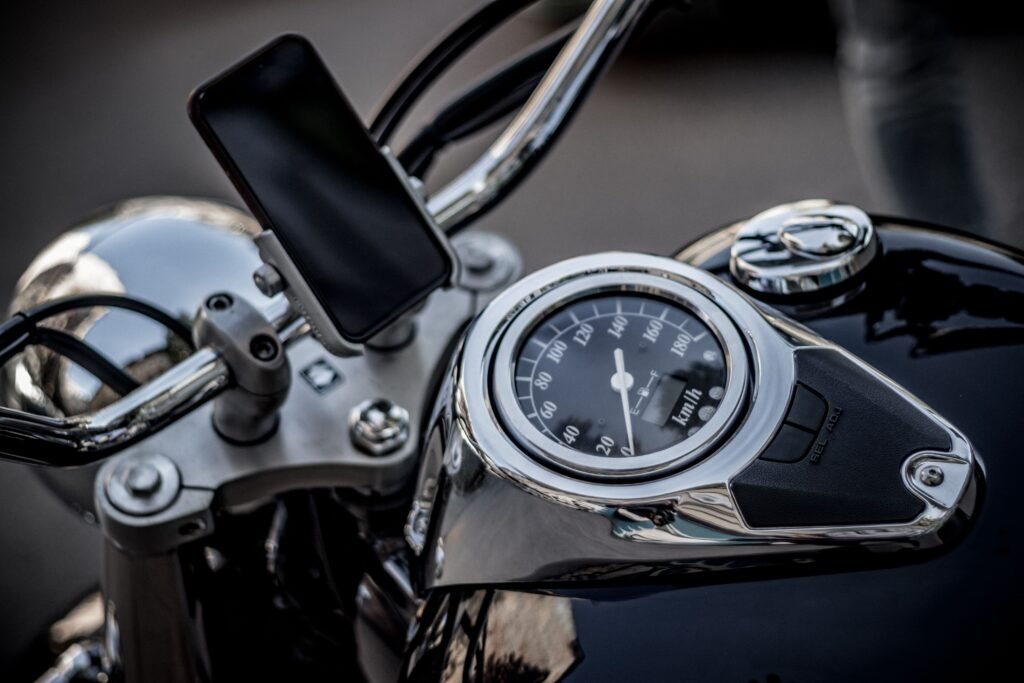
You are at a fuel station, topping up before a long ride, and the rider at the next pump points at your handlebar phone mounts and says something like, “That vibration is going to wreck your screen, you know.” This piece of biker folklore repeats so often that it starts to feel like an established fact. Everyone has heard a version of it. Almost nobody has actually checked whether it is true.
Here is the honest answer, backed by what phone manufacturers have actually said on the record: your phone’s screen is not really the part at risk from bike vibration. Another component inside the phone is at risk, and it is important to understand which one, because the actual cost to repair this risk is likely higher than fixing a cracked screen.
The Screen Itself Is Genuinely Tough Against Vibration
Modern phone screens are solid, bonded, flat panel assemblies. There are no moving parts inside a screen in the way most people imagine. The glass, the display layer, and the touch-sensing layer are all fused together into a single rigid unit. Vibration, even sustained engine vibration over a long ride, does not have much to work with structurally since there is nothing inside a screen that vibration can shake loose, misalign, or wear out the way it would with a mechanical component.
This is genuinely good news, and it is also why the rider at the fuel station was only half right. Continuous engine buzz transmitted through a rigid mount is not, on its own, going to crack your screen or degrade your display quality.
Mechanical looseness, rather than vibration frequency, almost always causes damage to screens on a bike mount. If the mount’s grip is too loose, the phone can rattle slightly inside the holder, and that repeated small movement against the edges of the clamp or against the mount’s plastic lip is what eventually causes scuffing, fine scratches, or in genuinely catastrophic cases, a hairline crack from thousands of tiny repeated impacts over months of riding. That is a fit and mount-quality problem, not a vibration-frequency problem, and the fix is straightforward: use a mount with a secure four-point grip and check the tension periodically.
If the screen is mostly in good condition, what are the specific concerns people have, and are those concerns warranted?
What Is Genuinely at Risk: The Camera
The real, documented concern with mounting a phone on a bike is not the screen. It is the camera module, specifically two delicate internal systems that modern smartphone cameras rely on to take sharp, blur-free photos.
Apple addressed the issue directly in an official support document, which is unusual, since companies do not typically publish a formal warning unless the underlying issue is real and they are managing genuine support and warranty volume around it. Apple states plainly that exposing an iPhone to high-amplitude vibrations within certain frequency ranges, specifically those generated by high-power motorcycle engines, can degrade the performance of the camera system and that this degradation can be permanent.
The two specific systems at risk are optical image stabilization, commonly abbreviated OIS, and closed-loop autofocus, abbreviated AF. Both have been standard in iPhones since the iPhone 7, and equivalent systems exist across most modern Android flagships too, since this is an industry-wide camera technology rather than something unique to Apple.
The article explains how optical image stabilization works and discusses the negative impact of vibration on its performance.
OIS uses a small internal gyroscope-driven mechanism that physically shifts tiny lens elements inside the camera module to counteract hand shake in real time, which is how modern phones manage to take sharp photos and smooth video even when your hand is not perfectly still. This mechanism is engineered and tested for the kind of vibration a phone experiences in normal daily use: being carried, occasionally dropped a few centimeters, jostled in a pocket or bag, or used handheld while walking.
This system is not intended for prolonged, high-frequency vibrations that are transmitted directly and continuously through a rigid mount bolted to an engine-powered vehicle for extended periods. Apple describes this distinction clearly, noting that long-term direct exposure to high-amplitude vibrations within certain frequency ranges can degrade the performance of these systems, leading to reduced image quality in photos and videos.
How Closed-Loop Autofocus Adds to the Problem
Closed-loop autofocus works differently but suffers from a similar underlying vulnerability. It uses onboard magnetic sensors to measure the lens position with precision, allowing the camera to focus accurately and quickly. Like OIS, this system relies on small moving parts and sensitive sensors that were never engineered with sustained engine-frequency vibration in mind.
The combined effect of OIS and AF degradation is usually described by affected users in a fairly consistent way: photos and videos that come out visibly blurry or shaky even when the phone itself was perfectly still at the moment of capture because the internal stabilization mechanism itself has been thrown out of correct alignment or its components have physically worn down.
This Is Not Limited to iPhones.
It would be easy to read all of this information and assume it is an Apple-specific quirk, perhaps a design flaw unique to iPhone cameras. That is not accurate. Android phone owners have reported strikingly similar symptoms after long-term motorcycle mount use: cameras that lose autofocus accuracy or develop persistent shake in video recording after months of being mounted on a bike’s handlebar.
The reason this happens across brands is that OIS and closed-loop autofocus are not Apple inventions. They are industry-standard camera technologies used across nearly every mid-range and flagship smartphone sold today, built around fundamentally similar mechanical and sensor-based principles. A phone’s brand does not meaningfully change the underlying physics of small, precisely calibrated moving parts inside a camera module being subjected to sustained mechanical vibration. What does change the risk level is the engine itself, which brings us to the part of the equation that actually matters for deciding how worried to be.
Does the bike type actually change the risk?
Yes, the type of bike significantly affects the risk, and this important detail is often overlooked in casual warnings about the topic.
High-power and high-displacement motorcycles, including most 150cc and above petrol motorcycles with a noticeably buzzy engine character, particularly single-cylinder and twin-cylinder designs, generate higher amplitude vibration that transmits more aggressively through the handlebar and into a rigidly mounted phone. This is the category Apple specifically singles out as carrying the most risk, advising against mounting an iPhone on these bikes at all without a dampening solution.
Mopeds, scooters, and electric two-wheelers generate comparatively lower-amplitude vibration, since their engines, or in the case of electric vehicles, their motors, are inherently smoother and less mechanically buzzy than larger combustion engines. Apple’s own guidance acknowledges this distinction directly, noting that attaching a phone to vehicles with small-volume or electric engines leads to comparatively lower-amplitude vibrations, while still recommending a vibration-dampening mount and avoiding prolonged regular use to further reduce the risk.
In practical terms, if you ride a 100- to 125-cc scooter like an Activa, an Access, or a Jupiter, your realistic risk level is significantly lower than someone riding a 350-cc single-cylinder motorcycle with a noticeably rattling idle. It is not zero, but it is a different category of concern, and the precautions below are worth scaling to match how your specific bike actually behaves.
A Simple Way to Judge Your Bike’s Risk Level
You do not need a vibration meter or any special equipment to get a rough sense of how much risk your specific bike poses to a mounted phone. Place your hand flat on the handlebar grip while the engine is idling, then again while revving moderately in neutral. If you can feel a strong, persistent buzz through your palm, the kind that makes your fingers tingle slightly after a few seconds, your bike falls into the higher-risk category, and a vibration-dampening mount is genuinely worth the investment.
If the vibration feels mild, more of a gentle hum than an aggressive buzz, you are likely in the lower-risk category that scooters and smoother engines typically fall into, though the precautions are still worth taking if you ride daily and care about your camera’s long-term performance.
What Actually Helps Reduce the Risk
Use a vibration-dampening mount.
This is the single most effective fix available, and it works by inserting a rubber, silicone, or specially engineered isolator between the rigid mount base and the phone holder itself, absorbing a meaningful portion of the vibration before it ever reaches the phone. Quad Lock’s vibration dampener has built a strong reputation specifically for this purpose among motorcycle riders and has reportedly been tested against a wide variety of motorcycles to evaluate its effectiveness. It is worth being honest that even excellent dampening mounts are not a complete guarantee, since some riders using dampened mounts have still reported camera issues over very long-term, high-mileage use, but the risk reduction is real and meaningful.
Avoid leaving the phone mounted for extended periods.
Apple’s own guidance specifically recommends avoiding regular use for prolonged periods as an additional way to lessen the risk, separate from whatever mount you use. A short city commute naturally limits cumulative exposure. If you are doing multi-hour highway rides with the phone mounted the entire time, the cumulative vibration exposure adds up considerably faster, and removing the phone from the mount during long fuel or rest stops, rather than leaving it clamped on continuously, is a small habit that meaningfully reduces total exposure time.
Consider a tank bag. Instead of a handlebar mount
A phone placed in a tank bag with a clear top pocket, rather than clamped rigidly to the handlebar, experiences considerably less direct vibration, since the tank bag itself, along with the bike’s frame geometry, naturally absorbs and dampens a meaningful amount of engine vibration before it reaches the bag’s contents. The obvious trade-off is convenience: a tank bag position is less ideal for quick glances at navigation compared to a handlebar mount positioned directly in your line of sight. For riders genuinely worried about camera longevity and willing to accept the small convenience trade-off, this option is a legitimate alternative worth considering.
Choose a Mount With Some Built-In Flex
Not every mount needs a dedicated vibration isolator accessory to help. Mounts using a rubberized ball joint or a slightly flexible arm, rather than a fully rigid metal clamp bolted directly to the handlebar, inherently absorb a small amount of vibration through their material flex before it reaches the phone. This is a more modest improvement than a dedicated dampening accessory, but it is a meaningful difference compared to the stiffest, most rigid mount designs on the market.
What to Do If You Suspect Your Camera Is Already Affected
The most common symptoms reported by riders include blurry or shaky videos and photos, even when the phone was completely still at the moment of capture, as well as autofocus that takes noticeably longer to lock onto a subject than it did previously. If you notice either of these symptoms developing gradually after months of regular bike mounting, it is worth testing the camera while the phone is handheld and stationary, away from the bike entirely, to confirm whether the issue is consistent or specific to mounted use.
Unfortunately, once OIS or closed-loop autofocus components have genuinely degraded from sustained vibration exposure, the problem is generally not something that resolves on its own or improves with a software update, since the damage is mechanical and physical rather than a calibration issue that can be reset remotely. Repair typically means a camera module replacement, which on most modern phones means a dedicated repair shop or manufacturer service center, since the camera module is not something most riders can practically replace themselves.
Frequently Asked Questions
Q1: Is my screen ever at risk from bike vibration in any way?
The screen itself is structurally resistant to vibration-frequency damage, since it has no internal moving parts. The genuine screen risk comes from a loose-fitting mount allowing the phone to rattle and scuff against the clamp’s edges over time, which is a mount-fit issue rather than a vibration-frequency issue. A snug, four-point spring grip mount largely eliminates this specific risk.
Q2: Does a phone case offer any protection against vibration-related camera damage?
A case offers no meaningful protection against this specific issue, since the damage occurs to internal components, the OIS gyroscope mechanism, and the autofocus magnetic sensors, which a case cannot physically isolate or dampen in any way. A case protects against drops and surface scratches, which is a separate and unrelated category of risk.
Q3: How long does it usually take for vibration damage to show up?
The timeline varies considerably based on engine vibration intensity, how often the phone is mounted, and the specific phone model, since different camera module designs have different tolerance levels. Some riders report noticeable symptoms within a few months of frequent daily mounting on high-vibration motorcycles, while others ride for years on smoother-engined bikes or scooters without ever developing an issue. There is no fixed timeline that applies universally.
Q4: Are older phone models with simpler cameras safer to mount, since they may lack OIS entirely?
In a strict technical sense, yes, since a phone without optical image stabilization or closed-loop autofocus has no equivalent delicate mechanism to damage in the first place. This is part of why some riders deliberately keep an older, simpler phone specifically for navigation duty on the bike, reserving their primary phone for use only when off the vehicle.
Q5: Is this a genuine, widespread problem, or are most cases isolated and exaggerated online?
It is a real, manufacturer-acknowledged issue rather than pure internet exaggeration, given that Apple published an official support document specifically addressing it rather than leaving it as an unofficial forum topic. That said, not every rider who mounts a phone on a motorcycle experiences camera damage, and the actual risk level depends heavily on engine type, mounting duration, and whether any vibration dampening is used, so it is a genuine risk worth managing rather than a certainty to panic over.
The fear that a bike mount will crack your phone’s screen is mostly misplaced, since LCD screens handle vibration far better than most riders assume. The genuine concern sits one layer deeper, inside the tiny moving parts of your camera that keep your photos sharp and steady. Match your precautions to your bike’s actual vibration character, and lean toward a dampening mount if you ride something with real engine buzz, and you will protect the one part of your phone that vibration can actually wear down over time.

My work focuses on finding the human stories behind the headlines, from documenting unique cultural traditions to covering stories from communities across Bengal. Previously, I worked as an SEO Content Writer with Penning Down and Collegedunia, combining digital content expertise with newsroom journalism.
I believe impactful journalism is built on accuracy, empathy, and stories that stay with readers.
- Cocoa Butter Formula, Body Massage Lotion for Stretch Marks - April 9, 2016
- Ultra-calming makeup removing wipes - April 9, 2016
- Eczema therapy hand cream - April 9, 2016
Blog Insights
View All CouponTalk Blogs
12 Best LED Lighting Brands In India

10 Best Water Pump Brands In India

10 Best RO Membrane Brands In India

10 Best Electric Wire Brands In India

10 Best Electric Pressure Cooker Brands In India

10 Best Air Fryer Brands In India





Best Hindware Commodes In India

14 Different Types of Jewelry In India


Nine Types of locks: