5 Types of Solar Collectors: Flat-Plate, Evacuated Tube, and Concentrating

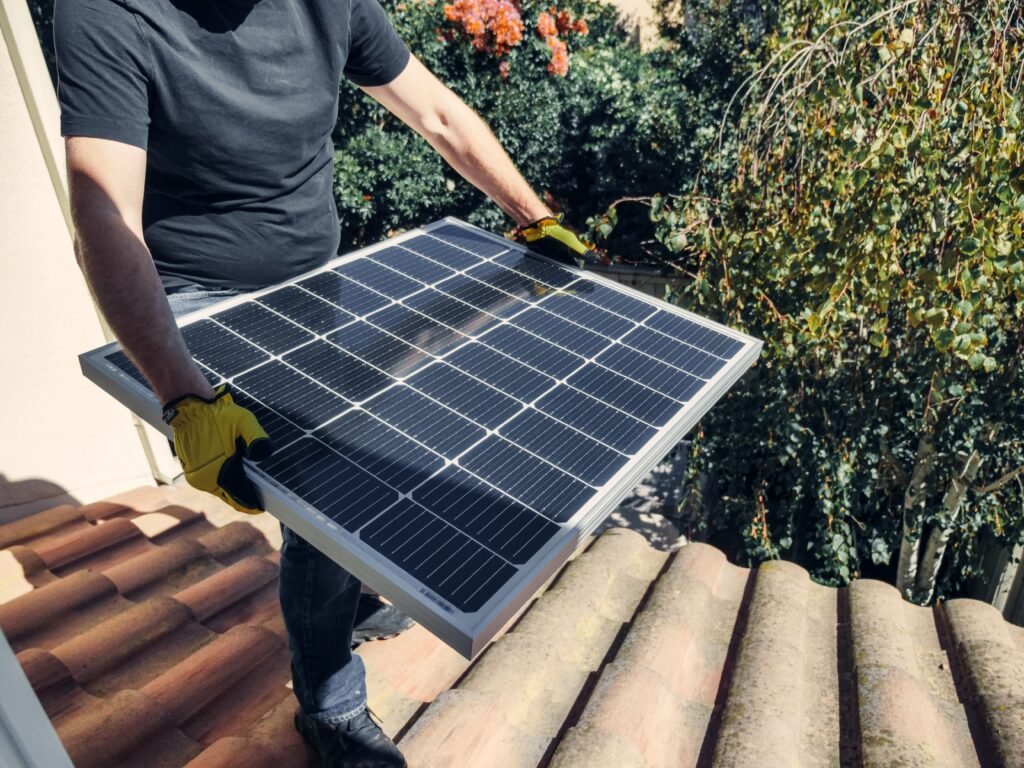
A hotel in Coimbatore installs flat-plate solar collectors on its rooftop to heat water for its rooms. A research facility in Jodhpur uses a parabolic trough to generate enough heat to run an industrial process. A family in Shimla puts evacuated tube collectors on their sloped roof because nothing else holds up through the winter cold.
Each of them is using the sun to collect heat. Each of them made a different choice. And each of those choices was right for the place, the temperature target, and the application it was meant to serve.
Solar collectors get lumped together in most buying guides as though they are roughly interchangeable. They are not. The difference between a flat-plate collector and a concentrating parabolic dish is not a matter of degree. It is a difference in operating temperature, in mechanical complexity, in what the collected heat can actually be used for, and in how much engineering goes into keeping the whole thing working.
Here is a clear-eyed look at the five main types of solar collectors, what each one does, and where each one belongs.
First, a Word About What a Solar Collector Actually Does
A solar collector is not the same thing as a solar panel. A solar panel, the kind you see on rooftops generating electricity, converts sunlight into electrical current through the photovoltaic effect. A solar collector converts sunlight into heat, which is then transferred into a fluid, usually water or a specialised heat transfer fluid, and moved to wherever that heat is needed.
The heat can be used directly for domestic hot water, space heating, or swimming pool heating. It can feed an industrial process that requires elevated temperatures. Or it can drive a heat engine to generate electricity, which is how large concentrating solar power plants work.
The useful temperature range a collector can reach is what separates the five types more than anything else. Some collectors are designed to produce warm water in the 40 to 80 degrees Celsius range. Others can reach several hundred degrees. One type, under the right conditions, can approach temperatures of several thousand degrees. Where your application sits on that temperature scale is the first question worth answering before any other.
1. Flat-Plate Collectors
A flat-plate collector is exactly what the name suggests: a flat, insulated box with a dark absorber plate inside, covered by a transparent glass or polycarbonate cover on top. Sunlight passes through the cover, hits the absorber plate, and converts to heat. The cover traps that heat inside the box, similar to the greenhouse effect, and a fluid circulating through pipes bonded to the absorber plate carries the heat away.
They are the most common type of solar collector in the world, and in India, they dominate the domestic and small commercial rooftop market. The reasons are straightforward. They have no moving parts. They require minimal maintenance beyond an occasional cleaning of the glass cover. They work well for applications in the 40 to 80 degree Celsius range, which covers domestic hot water, hotel and hostel water heating, low-temperature space heating in mild climates, and swimming pool heating.
Their main limitation is also straightforward. On cold days or under heavy cloud cover, the temperature difference between the absorber plate and the surrounding air works against them. Heat losses from the glazed cover increase as the gap between collector temperature and ambient temperature widens, so their efficiency drops in colder weather in ways that evacuated tube collectors handle better.
Best suited for: Domestic hot water systems in warm and temperate climates. Hotels, hostels, hospitals, and residential apartments across most of peninsular India. Locations where ambient temperatures stay above about 10 degrees Celsius through most of the year.
2. Evacuated Tube Collectors
An evacuated tube collector replaces the flat insulated box with a row of glass tubes, each consisting of an inner tube coated with an absorber material and an outer tube, with the space between them evacuated to create a vacuum. That vacuum is the key detail. It removes the air that would otherwise carry heat away from the absorber, which is the same reason a thermos flask keeps a drink hot for hours while an open cup does not.
The result is a collector that holds onto its collected heat far more effectively than a flat-plate collector, especially when the outside temperature is low or the wind is strong. In Shimla, Dehradun, Srinagar, and other locations where winter temperatures drop well below what flat-plate collectors handle comfortably, evacuated tube systems continue producing useful hot water through conditions that would leave a flat-plate system struggling.
They can also reach slightly higher temperatures than flat-plate collectors, typically into the 80 to 120 degree Celsius range, which opens them up to a wider set of applications, including some low-grade industrial process heat.
The trade-off is fragility and cost. The glass tubes are more delicate than a flat-plate collector’s glazed cover, and individual tubes can be broken by hailstones or careless cleaning. The good news is that individual tubes are replaceable without taking the entire system offline, which limits the damage from a single breakage.
Best suited for: Colder climates in northern and northeastern India, including Himachal Pradesh, Uttarakhand, Jammu and Kashmir, and Sikkim. Any application where flat-plate efficiency in low ambient temperatures is a known problem. Also appropriate for applications requiring temperatures in the 80 to 120 degree Celsius range.
3. Unglazed Flat-Plate Collectors
Unglazed collectors are the simplest solar collector design in existence. They are essentially dark-coloured mats or panels made from plastic or rubber, through which water flows directly. No glass cover. No insulation underneath. Just a dark surface, water pipes, and sunlight.
They work because they do not need to. The application they are designed for, heating swimming pools, requires raising water temperature by a relatively small amount, typically 5 to 15 degrees above ambient. Because the temperature difference between the collector and the surrounding air is small, heat losses from an uncovered surface are manageable. Adding glazing and insulation would add cost and complexity without adding meaningfully to the output for this specific use case.
They are almost always the right choice for pool heating and almost always the wrong choice for anything else. Attempting to use an unglazed collector for domestic hot water in a climate with cool nights will produce disappointing results, because the same uncovered surface that loses heat acceptably when you only need a small temperature rise loses heat very quickly when you need a large one.
Best suited for: Swimming pool heating everywhere. Aquaculture water temperature management. Any low-temperature application where the target temperature is close to ambient and the cost per unit area matters more than insulation quality.
4. Parabolic Trough Collectors
From here, the technology shifts in a fundamental way. The first three types on this list are non-concentrating collectors. They capture sunlight falling on their entire surface area and convert it to low to moderate temperature heat. Parabolic troughs and the dish collector that follows are concentrating collectors. They use curved reflective surfaces to focus sunlight onto a much smaller target, which generates much higher temperatures.
A parabolic trough collector is a long curved mirror shaped like the cross-section of a parabola, oriented so that sunlight striking the mirror from a specific direction reflects and converges onto a receiver tube running along the focal line of the mirror. A heat transfer fluid circulating through that receiver tube picks up heat at temperatures that can reach 400 degrees Celsius or higher.
These temperatures make parabolic troughs useful for something the previous three types cannot manage: industrial process heat and electricity generation. Large-scale concentrating solar power plants across Rajasthan and Gujarat use parabolic trough fields covering hundreds of acres to generate steam that drives turbines. Smaller industrial installations use them for process heat in food processing, chemical manufacturing, and textile operations, where temperatures above what flat-plate systems can reach are a genuine requirement.
They also require something the previous three types do not: a single-axis sun-tracking system that rotates the mirror throughout the day to keep sunlight focused on the receiver tube as the sun moves. That tracking mechanism adds moving parts, maintenance requirements, and upfront cost that make parabolic troughs inappropriate for small or domestic installations.
Best suited for: Industrial process heat applications requiring temperatures from 150 to 400 degrees Celsius. Large commercial and utility-scale electricity generation. Institutional applications like large hospitals or industrial facilities with both the space and the technical capacity to manage a tracking solar thermal system.
5. Parabolic Dish Collectors
A parabolic dish collector takes the concentrating principle of a trough and extends it in two dimensions. Instead of a long curved mirror focusing sunlight onto a line, a parabolic dish is a bowl-shaped mirror that focuses sunlight from its entire surface onto a single point at the dish’s focal spot. That single-point focus produces temperatures dramatically higher than a trough system can reach, from 500 degrees Celsius to over 1,500 degrees Celsius in high-performance systems, and experimental dish setups have exceeded 3,000 degrees under controlled conditions.
The receiver sitting at the focal point of a dish can drive a Stirling engine placed directly there to generate electricity, or it can feed a high-temperature industrial or research process. Because the concentration is so intense at a single point, dish collectors are typically used as individual units rather than in large fields. However, arrays of dishes exist for utility-scale applications.
They require two-axis tracking rather than the single-axis tracking of a parabolic trough, since the dish must follow the sun in both altitude and azimuth throughout the day. That adds mechanical complexity and maintenance requirements above even what a trough system demands.
In India, parabolic dish systems are used in research institutions, in some industrial cooking applications (large community kitchens and institutional canteens have used dish concentrators for high-temperature cooking), and in niche off-grid power generation contexts.
Best suited for: Research and development applications requiring very high temperatures. Institutional cooking at scale. Off-grid electricity generation in high-irradiance areas where a simple, standalone generation unit is preferable to a large field of panels or mirrors.
How to Actually Choose Between These
If you need hot water for a house, a hostel, or a hotel in most of peninsular India, a flat-plate collector is the right answer. It is simple, durable, widely serviced, and perfectly matched to the temperature range domestic hot water requires.
If you are in a cold climate in northern India and your winters genuinely challenge flat-plate performance, evacuated tube collectors are worth the additional cost. The vacuum insulation pays for itself in places where ambient temperatures work against uncovered absorber surfaces.
If you need pool heating and nothing else, an unglazed collector is the most cost-effective option available. Do not spend money on glazing and insulation you do not need.
If you run an industrial operation that needs process heat above 150 degrees Celsius, or if you are planning a commercial power generation installation, parabolic troughs become the relevant technology. They require space, tracking systems, and maintenance infrastructure that are only justified at an industrial scale.
If your application requires extremely high temperatures for research, large-scale cooking, or experimental power generation, a parabolic dish system is the only collector type that reaches those temperature ranges reliably.
What Collector Type Cannot Fix on Its Own
Choosing the right type of collector is only part of the decision.
Orientation and tilt matter as much as collector type for actual output. A perfectly chosen evacuated tube collector installed on a north-facing slope in India will underperform a flat-plate collector on a south-facing roof at the optimal tilt angle every day of the year.
Storage is usually the missing piece in residential solar thermal discussions. A collector heats fluid when the sun shines, but hot water is needed at night and in the early morning. The insulated storage tank paired with the collector matters as much to daily performance as the collector itself.
Shading from nearby trees, water tanks, or adjacent buildings reduces output in ways that no collector type can overcome. A site assessment before installation is not optional on anything larger than a small domestic system.
Finally, scale and maintenance capacity should guide the decision between concentrating and non-concentrating systems more than any other single factor. Tracking mechanisms on parabolic systems need regular calibration and mechanical upkeep. A household that cannot service that system locally should not be buying one, regardless of the temperature potential it offers.
Frequently Asked Questions
Q1: What is the difference between a solar collector and a solar panel?
A solar panel converts sunlight into electricity through the photovoltaic effect. A solar collector converts sunlight into heat, which is then transferred to a fluid and used for water heating, space heating, or industrial processes. They use the same energy source but produce fundamentally different outputs.
Q2: Which type of solar collector is most common for domestic hot water in India?
Flat-plate collectors dominate the domestic market across most of India. Evacuated tube collectors are more common in colder northern states where flat-plate efficiency in low ambient temperatures becomes a real limitation.
Q3: Can solar collectors generate electricity?
Not directly in most cases. Non-concentrating collectors like flat-plate and evacuated tube types produce low to moderate temperature heat suited to water and space heating. Concentrating collectors like parabolic troughs and dishes can produce high enough temperatures to drive steam turbines or Stirling engines for electricity generation, which is how utility-scale concentrating solar power plants work.
Q4: How long do solar collectors last?
Flat-plate collectors typically have a service life of 15 to 25 years with minimal maintenance beyond periodic cleaning. Evacuated tube collectors have a similar lifespan, with individual tubes replaceable as needed. Concentrating collectors with tracking mechanisms require more regular mechanical maintenance and have more components that may need attention over time.
Q5: Are solar collectors eligible for government subsidies in India?
Solar water heating systems using flat-plate or evacuated tube collectors are covered under various state-level and central government subsidy schemes. Industrial solar thermal systems may be eligible under separate MNRE programmes. Eligibility and subsidy amounts vary by state and application type, so confirming current scheme details with the state nodal agency before purchasing is a necessary step.
Final Thoughts
The hotel in Coimbatore, the research facility in Jodhpur, and the family in Shimla all made the right choice. Not because any one of them picked the best solar collector in some absolute sense, but because each of them matched the technology to the temperature they needed, the climate they were in, and the maintenance they could actually manage.
That is the entire logic of this list. Solar collection is not a single technology with a single right answer. It is a range of tools, each designed for a specific part of the temperature scale, and the right one is simply the one that fits where you are and what you need the heat for.

My work focuses on finding the human stories behind the headlines, from documenting unique cultural traditions to covering stories from communities across Bengal. Previously, I worked as an SEO Content Writer with Penning Down and Collegedunia, combining digital content expertise with newsroom journalism.
I believe impactful journalism is built on accuracy, empathy, and stories that stay with readers.
Blog Insights
View All CouponTalk Blogs
12 Best LED Lighting Brands In India

10 Best Water Pump Brands In India
10 Best RO Membrane Brands In India

10 Best Electric Wire Brands In India

10 Best Electric Pressure Cooker Brands In India

10 Best Air Fryer Brands In India







7 Best Car Battery Brands In India