Induction Cooktop vs Gas Stove: Which Saves More Money in India? (2026 Guide)

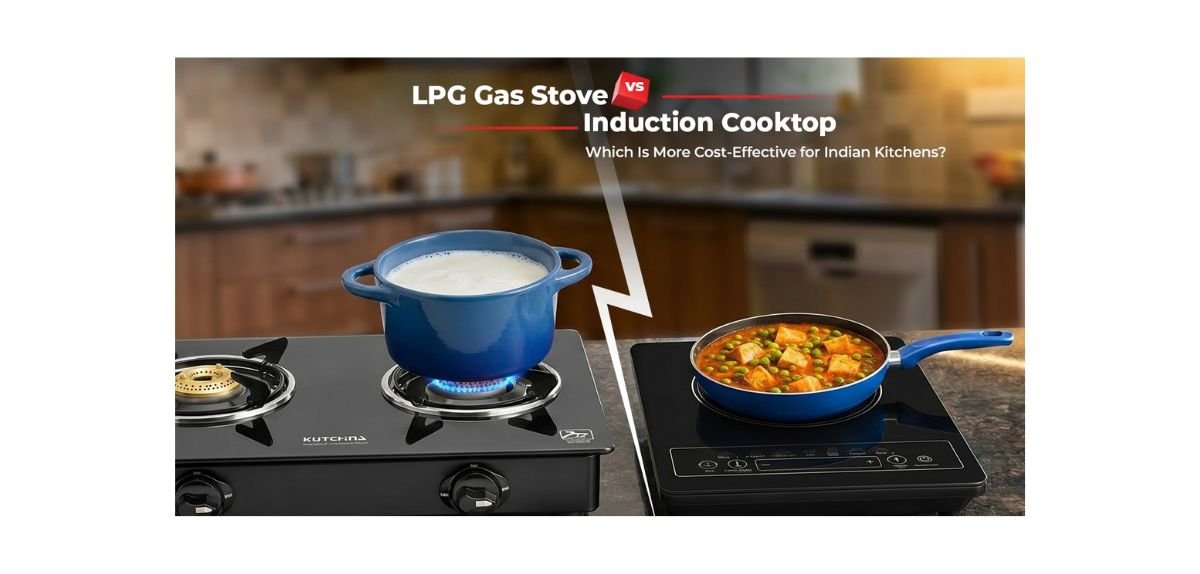
Every time the LPG cylinder price goes up, the same thought crosses your mind while you are stirring the dal: “Should we just switch to induction and save money?” You are not alone. With cylinders now crossing Rs 900 in most cities, lakhs of Indian families are asking whether an induction cooktop is finally the cheaper way to cook, or whether it will quietly inflate the electricity bill instead.
Here is the problem with most answers you will find online. One blog swears induction is 40 per cent cheaper, the next insists gas still wins, and a third tells you it does not matter. They cannot all be right, and the reason they disagree is that they all hide behind a single average. The truth is that the induction cooktop vs gas stove answer varies from home to home because it depends on the one number nobody asks about: the rate you actually pay per unit of electricity, which can differ by more than double between a subsidised home and a high-slab one.
This guide does it differently. Instead of one tidy figure that is wrong for half the country, we show you the real 2026 numbers, the efficiency science in plain language, a simple way to calculate your own monthly cost in under a minute, and the hidden costs like cookware that most comparisons skip. By the end, you will know exactly which option saves money in your kitchen, not in some imaginary average household.
So before you spend a single rupee on a new cooktop or write off your gas connection, read on. The honest answer might be cheaper, simpler, and more flexible than you expect.
Best Induction Cooktop vs Gas Stove
How an Induction Cooktop and a Gas Stove Work
Before comparing costs, it helps to understand why these two cook so differently, because the mechanism is exactly what drives the savings later.
How an induction cooktop works
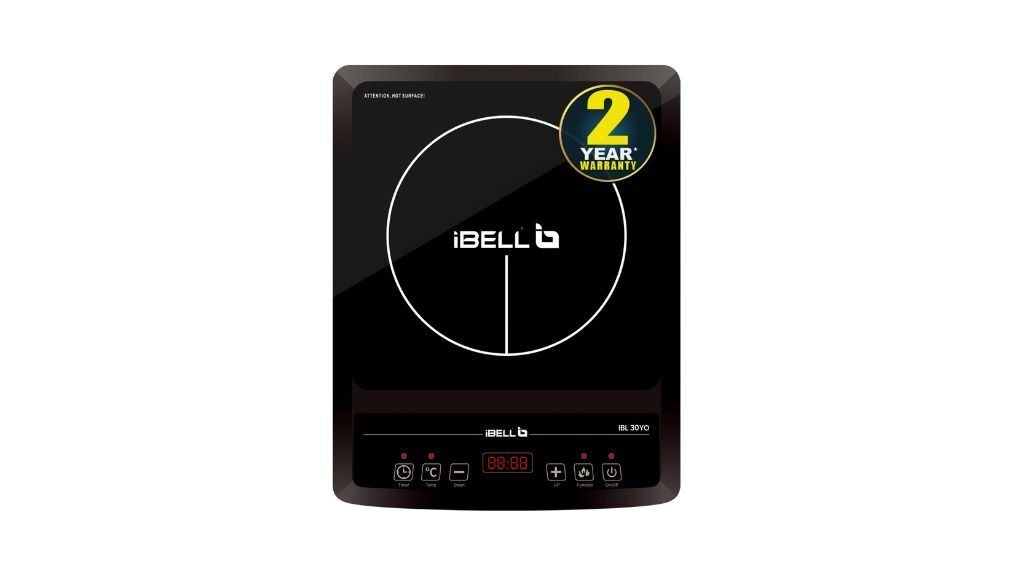
An induction cooktop creates an electromagnetic field under its glass surface. When you place a magnetic base vessel on it, the field heats the vessel’s metal directly and quickly. The glass itself stays relatively cool, and the cooktop switches off automatically when you lift the vessel off. Because the heat is generated inside the cookware rather than under it, very little energy is wasted.
How a gas stove works
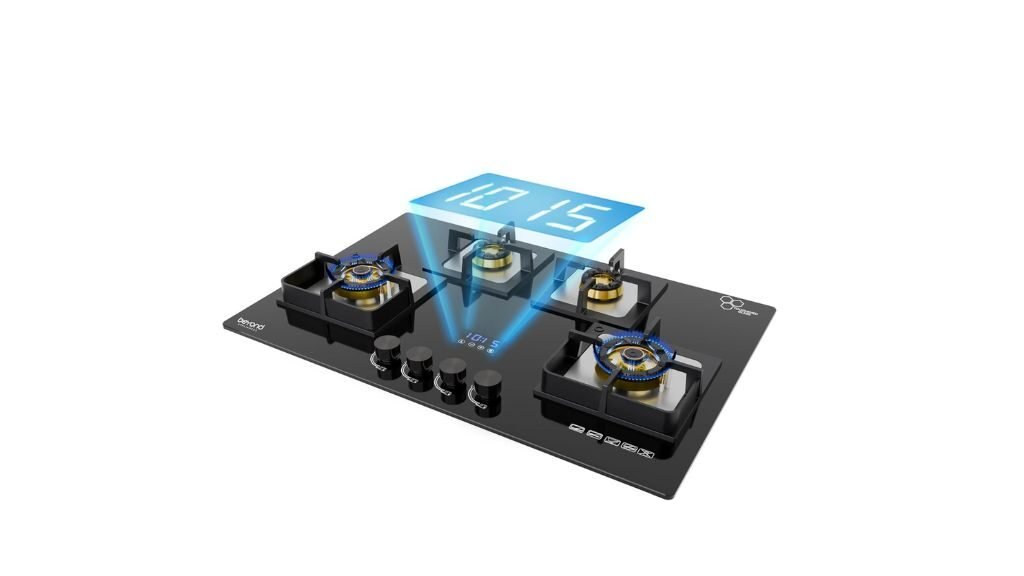
A gas stove burns LPG or piped natural gas to produce an open flame that heats the vessel from below. You control the flame by hand using the knob. It works with any cookware and needs no electricity, which is why it keeps running during a power cut. The trade-off is that a good share of the flame’s heat slips around the sides of the vessel and warms the kitchen rather than the food.
Induction Cooktop vs Gas Stove: Energy Efficiency Explained
The entire money argument starts with wasted heat. When you cook over a gas flame, a large portion of the heat radiates off the sides of the vessel and dissipates into the air. Induction avoids this by using an electromagnetic field to heat the cookware itself, so almost all the energy goes into your food. This single difference is why the induction cooktop vs gas stove debate usually leans towards induction on efficiency.
| What we are measuring | Gas Stove (LPG) | Induction Cooktop |
| Energy that actually reaches the food | About 30 to 40 per cent | About 85 to 90 per cent |
| Heat is lost to the kitchen | High, warms the room | Very low |
| Time to boil 1 litre of water | About 7 to 9 minutes | About 4 to 5 minutes |
| Heat control | Instantly judged by eye | Instant, set by number |
There is a catch that almost no comparison explains, though. Induction’s electricity is simply more expensive per unit to begin with. Burning LPG provides useful cooking heat at roughly Rs 11-12 per unit. Induction at a low Rs 6-per-unit tariff delivers it at about Rs 7, which is a clear win. But at Rs 11 per unit, induction’s effective cost rises to about Rs 12.5 per useful unit, which is actually worse than gas. In short, efficiency wins the race only until your electricity gets expensive enough to hand the lead back to LPG.
Monthly Running Cost: Induction Cooktop vs Gas Stove
Let us use a realistic baseline for India: a family of three to four that finishes roughly one 14.2 kg cylinder a month. Industry data backs this up: a standard domestic cylinder typically lasts an average household around 25 to 40 days, depending on family size, number of meals, and stove condition. Doing the same amount of cooking on induction requires about 85-90 units of electricity per month, or roughly 2-4 units per day. Here is what that costs at different tariffs, next to the current cylinder price.
| Your electricity rate | Induction per month | LPG per month | Cheaper option |
| Rs 6 per unit (low slab) | About Rs 535 | About Rs 920 | Induction saves ~Rs 385 |
| Rs 7 per unit (national avg) | About Rs 625 | About Rs 920 | Induction saves ~Rs 295 |
| Rs 8 per unit | About Rs 715 | About Rs 920 | Induction saves ~Rs 205 |
| Rs 9 per unit | About Rs 805 | About Rs 920 | Induction saves ~Rs 115 |
| Rs 11 per unit (top slab) | About Rs 980 | About Rs 920 | Gas is cheaper |
Note: Figures are rounded for a one-cylinder-a-month household using May 2026 LPG prices (about Rs 913 in Delhi, Rs 912 in Mumbai, Rs 939 in Kolkata and Rs 965 in Hyderabad). Heavy cooks who use two cylinders will roughly double the gas column height, which strongly pushes the verdict towards induction.
The pattern is the thing to remember in the induction cooktop vs gas stove cost question: induction wins comfortably on cheap and average power, the margin shrinks as your rate rises, and somewhere around Rs 10 to Rs 11 per unit, the two cross over. That single insight is what the common headline ‘induction is 30 to 40 per cent cheaper’ overlooks for millions of homes on higher tariffs.
How to Estimate Your Own Induction vs Gas Cost
You do not need an average to settle the induction cooktop vs gas stove question for your home. You can calculate your own monthly figure in three quick steps, then compare it to your last cylinder bill.
- Find your electricity rate. Check the per-unit rate on your latest electricity bill, ideally the rate for your highest slab. Most Indian homes fall between Rs 6 and Rs 11 per unit.
- Estimate your induction units. A family that does all cooking on induction uses about 85-90 units per month. A smaller household or one that only boils and reheats may use 50 to 60 units. A large family can touch 110 to 120 units.
- Do the simple sum. Multiply your units by your per-unit rate. That is your induction monthly cost. Compare it with what you currently spend on cylinders in a month.
Quick example: 90 units at Rs 7 per unit equals about Rs 630 a month on induction. If your cylinder costs Rs 913 and lasts a month, gas is costing you Rs 913. In that case induction saves you roughly Rs 280 a month, or about Rs 3,400 a year on running costs alone.
Tip: A handy quick reference is that a 2000-watt induction cooktop draws about 2 units per hour at full power, but real cooking rarely runs flat out, so your actual usage is usually lower.
Initial Cost and Cookware: What Each Option Really Needs
Monthly fuel is only half the story. To know what each option truly costs over a couple of years, you have to add the one-time items. This is where the gap between gas and induction widens or narrows, depending on what you already own.
| One-time cost | Gas Stove | Induction Cooktop |
| The appliance | 2 to 3 burner: Rs 1,500 to Rs 4,0004 burner: Rs 3,700 to Rs 10,000 | Single plate: Rs 2,000 to Rs 4,500Built-in hob: Rs 25,000 to Rs 50,000 |
| Cookware | Works with all your existing pots and pans | May need magnetic flat base vessels: Rs 3,000 to Rs 8,000 |
| Backup during power cuts | Works on its own | Needs an inverter, or keep gas anyway |
| Ease of operation | Very familiar to most Indian cooks | Simple, with presets and auto shutoff |
Popular budget induction models people shortlist in India include the Prestige PIC 20 Neo (around Rs 2,950), the Philips Daily Collection (around Rs 4,099), and options from Pigeon, Bajaj and Havells. On the gas side, Prestige, Glen, Sunflame and Elica are commonly compared.
Induction Cooktop vs Gas Stove for Indian Cookware
An induction cooktop only works with flat-bottomed magnetic vessels. Your curved kadhai, the aluminium patila and the brass or copper handi will not work on it. There is an easy test: stick a fridge magnet to the base of a vessel. If it grips firmly, the vessel is induction-ready. If it does not, that vessel needs to be replaced, and a basic induction-friendly set costs Rs 3,000-8,000. Budget for this before you count any savings.
Pros and Cons: Gas Stove vs Induction Cooktop
Cost is not the only factor in the induction cooktop vs gas stove decision. Each option does some jobs far better than the other, and for many Indian dishes, the cooking method genuinely matters.
Gas Stove: Strengths and Limits
- Works during power cuts, which matters in areas with frequent outages or voltage problems.
- Ideal for heavy-duty cooking, such as deep frying or slow-simmering in large pots for a joint family.
- Best for open flame cooking, such as puffing phulkas and rotis, roasting brinjal for bharta, and charring papad and capsicum.
- Works with any cookware, including curved kadhais, large tawas and traditional vessels.
- Limitations: lower efficiency, open-flame and gas-leak risk, and combustion fumes that require good kitchen ventilation.
Induction Cooktop: Strengths and Limits
- Cooks faster and keeps the kitchen cooler, since there is no open flame heating the room.
- No indoor gas emissions, which improves air quality in closed kitchens.
- Safer by design, with auto shutoff timers, precise temperature control and a surface that only heats where the vessel sits.
- Lower running costs on average tariffs, especially for boiling, pressure cooking and reheating.
- Limitations: unusable during power cuts, needs magnetic flat base cookware, and cannot do open flame tasks like roasting or puffing rotis.
Which Is Better for Indian Cooking, Induction or Gas?
Most everyday Indian dishes cook well on induction, including dal, rice, sabzi and curries. The exceptions are the flame-based tasks that are central to Indian kitchens. You cannot puff a phulka, roast a brinjal directly, char a papad, or use a round-bottomed kadhai on an induction surface. For those, gas remains the better tool. This is exactly why so many Indian families end up keeping both.
Lifespan and Maintenance: Which Lasts Longer?
Running cost is recurring, but durability decides how often you replace the appliance itself, which is a real part of the long-term spend that most comparisons ignore.
- Gas stove: A good quality unit lasts about 10 to 15 years. It has few electronic parts, so it is less prone to faults. Maintenance means cleaning the burners, checking the pipe and regulator, and keeping the flame ports clear.
- Induction cooktop: typically lasts about 8 to 10 years. It has minimal moving parts and is very easy to wipe clean, but it is sensitive to voltage fluctuations, which are common in many parts of India. Pairing it with a voltage stabiliser can meaningfully extend its life.
In short, gas usually lasts a little longer and is cheaper to maintain, while induction is far easier to clean day-to-day, thanks to its flat glass surface.
The Smartest Money Move: Use Both
The genuinely money-smart move for the majority of homes is not ‘switch fully to induction’. It has a gas main stove, plus a single induction plate as a cheap second burner. You shift high-volume jobs like boiling water, milk, dal, and rice to the cheaper, more efficient induction, while keeping gas for rotis, dosas, tadka, and roasting. A basic single induction cooktop for this costs only Rs 2,000 to Rs 4,500 and usually pays for itself within a few months of lower cylinder use.
Induction Cooktop vs Gas Stove: Verdict by Household Type
| If your home is like this | Best pick for saving money |
| Stable power, average or low tariff, cost is the priority | Gas plus an induction plate, lean on induction |
| Frequent power cuts or voltage problems | Gas as primary, induction optional |
| Very high tariff (Rs 10 or more per unit) | Gas stays cheaper to run |
| Single person, small kitchen, mostly boiling and reheating | A single induction plate on its own |
| Lots of rotis, dosas and roasting every day | Gas first, always |
| New modular kitchen, looks matter | Built-in induction hob (premium) |
Conclusion
In the induction cooktop vs gas stove comparison, induction usually wins on monthly running cost, but only when your electricity is reasonably priced. On low to average tariffs of Rs 6 to Rs 8 per unit, induction can save a typical family a few hundred rupees a month, which adds up to a few thousand rupees a year. At tariffs above Rs 10-11 per unit, that advantage fades, and gas can even work out cheaper to run.
Step back, and the full picture is clear. Induction is more efficient, faster, safer, and easier to clean, and it reduces your running costs on most tariffs. Gas is cheaper upfront, works with every vessel you own, keeps cooking through a power cut, and is irreplaceable for rotis, dosas and roasting. Neither is the single right answer, because they are good at different things.
That is why the smartest, most economical choice for the vast majority of Indian homes is not one or the other. It is keeping your gas stove for flame-based cooking and adding an affordable induction plate for boiling, pressure cooking and reheating. You get induction’s efficiency and safety, where it helps the most, while gas covers everything it does better. For a one-time cost of a few thousand rupees, this hybrid setup quietly trims your cylinder bill month after month.
Your next step is simple. Run your own numbers using the three-step method in this guide, check them against your last cylinder bill, and you will know exactly which option, or which combination, saves the most money in your kitchen.
At last, before you finalise your purchase, it’s worth checking for active deals and coupon codes. Platforms like CouponTalk often list updated discounts on kitchen appliances like induction cooktops, gas stoves, and OTGs. A quick check can sometimes save you a few hundred to a few thousand rupees on the same product.
Frequently Asked Questions
1. Is induction cheaper than gas in India in 2026?
In the induction cooktop vs gas stove comparison, induction is usually cheaper to run, but modestly. For a one-cylinder-a-month family, induction runs about Rs 350 to Rs 750 a month versus Rs 912 to Rs 965 for LPG when electricity costs Rs 6 to Rs 8 per unit. The savings shrink as your tariff rises and roughly disappear above Rs 10-Rs 11 per unit.
2. How many units of electricity does an induction cooktop use?
A 2000-watt cooktop draws about 2 units per hour at full power, but real cooking rarely runs flat out. A typical family doing all their cooking on induction uses roughly 85 to 90 units a month, or about 2 to 4 units a day. A single dish like dal usually takes under 1.5 units.
3. How long does a 14.2 kg LPG cylinder last?
For an average Indian family of three to four cooking two to three meals a day, a 14.2 kg cylinder lasts about 25 to 40 days, most often close to one month. Smaller households or lighter cooking can stretch it to five or six weeks.
4. Why did my electricity bill jump after switching to induction?
Because Indian power is billed in rising slabs. Moving all your cooking to induction adds 85 to 90 units and can push your household into a costlier slab, so those units get charged at a higher rate. Always estimate using your top slab rate, not the lowest.
5. Can I use my existing utensils on an induction cooktop?
Only if they are flat-bottomed and magnetic. Stainless steel and cast iron usually work, while aluminium, brass, copper, and curved-base vessels do not. Test with a fridge magnet. If it sticks firmly to the base, the vessel is induction-ready.
6. Does an induction cooktop work during a power cut?
No. Induction needs electricity, so it stops in an outage unless you have an inverter or generator sized for it, since it is a heavy load. This is the main reason homes with frequent cuts keep a gas stove as backup.

Blog Insights
View All CouponTalk Blogs
12 Best LED Lighting Brands In India

10 Best Water Pump Brands In India

10 Best RO Membrane Brands In India

10 Best Electric Wire Brands In India

10 Best Electric Pressure Cooker Brands In India

10 Best Air Fryer Brands In India