Pigeon vs Philips Air Fryer: Which One Should You Actually Buy in 2026?

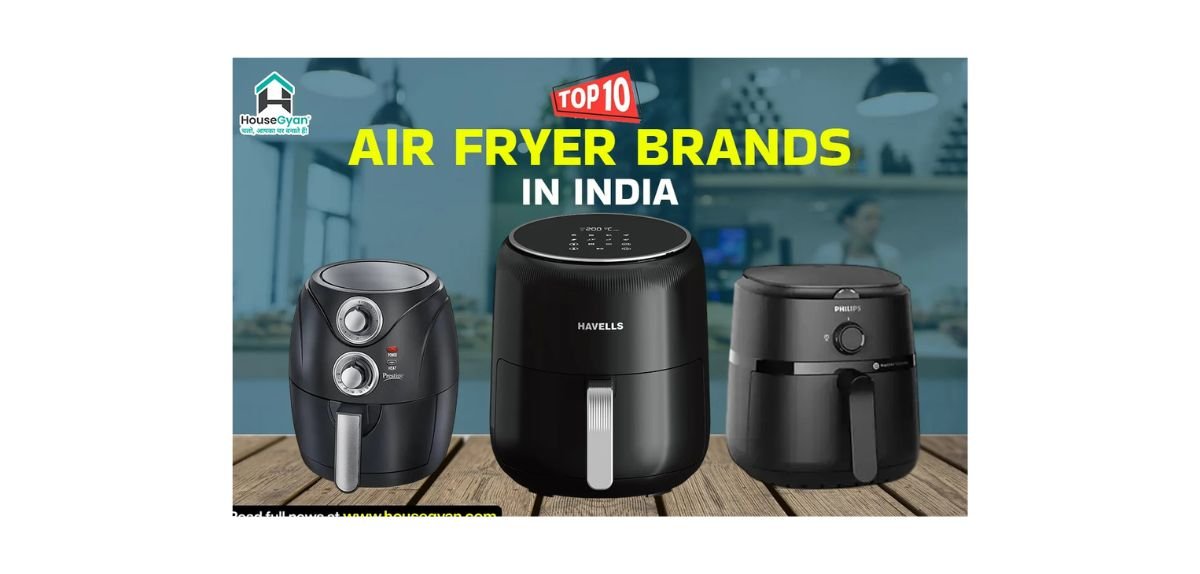
Short answer: Compare capacity, controls, ease of cleaning and the service you can get in your city. Check the warranty on the exact model. This page puts a Pigeon and a Philips air fryer side by side.
Reviewed by Hemant Kumar, CouponTalk. Last reviewed: 7 Oct 2026. We compare listings and buyer information; we have not tested these products ourselves.
Buying an air fryer sounds simple until you start comparing options. One model is under ₹3,000. Another costs nearly ₹2,000 more. Both have thousands of reviews, strong ratings, and loyal buyers claiming they made the right choice.
That leaves most shoppers stuck with the same question: Is the cheaper option genuinely good enough, or will choosing it mean compromising on cooking performance, durability, and long-term value?
The problem is that most comparison guides focus on specifications instead of ownership. They tell you the wattage and basket size but rarely explain how these air fryers perform after months of making samosas, fries, paneer tikka, and everyday family meals.
This guide takes a different approach. We’ll compare the Pigeon Healthifry and Philips NA120/00 where it actually matters: cooking results, build quality, ease of use, warranty support, and overall value for money. By the end, you’ll know exactly which one deserves a place in your kitchen and why.
Best Pigeon vs Philips Air Fryer
TL;DR
- Best air fryer under ₹3,000: Pigeon Healthifry.
- Best air fryer under ₹5,000: Philips NA120/00.
- Better cooking consistency: Philips NA120/00.
- Better value for occasional users: Pigeon Healthifry.
- Best overall choice for most Indian families: Philips NA120/00.
Understanding the Pigeon Healthifry and Philips NA120/00
If you’ve been browsing air fryers for more than a few minutes, you’ve probably come across both of these models already. They are two of the most visible options in their segment and are regularly recommended to first-time buyers.
Before putting them side by side, let’s quickly get familiar with each one.
Pigeon Healthifry Digital Air Fryer (4.2L)
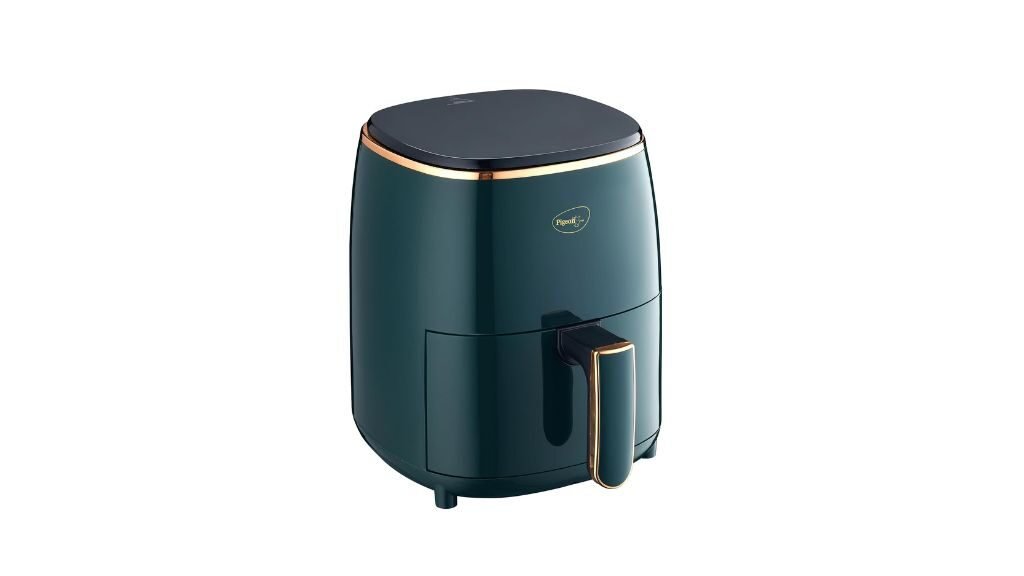
Made by StoveKraft, an Indian brand known for gas stoves and pressure cookers, the Healthifry is the budget bestseller in the category. It packs a 4.2L basket, a 1200W motor, 360° air circulation, and a digital touch panel, usually for under ₹3,000. Its biggest claim to fame is sheer popularity: with more than 11,600 reviews, it is one of the most-bought air fryers in India. It is aimed squarely at first-time buyers who want to try air frying without spending much.
Philips Air Fryer NA120/00 (4.2L)
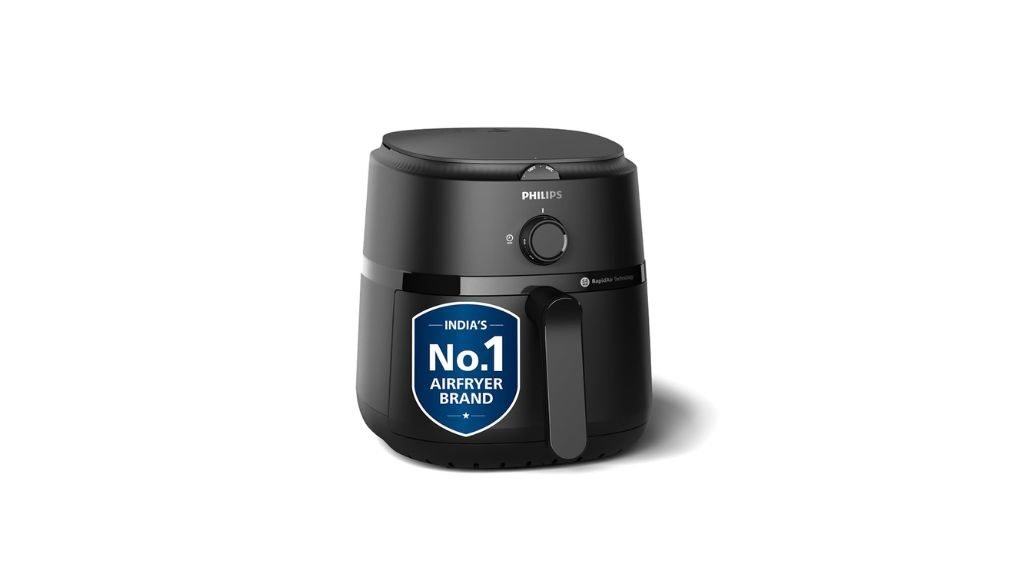
Philips introduced air fryers to the world in 2010, and the NA120/00 is its accessible entry-level model for the Indian market. It also has a 4.2L basket but runs a more powerful 1500W motor with the brand’s patented Rapid Air technology and a simple manual dial. It costs around ₹4,800, carries Amazon’s Choice status, and is built for buyers who want proven performance and a machine that lasts, rather than the lowest price.
Same basket size, same promise of oil-free crispy snacks, very different price tiers and philosophies. That is exactly what makes this comparison worth doing.
Pigeon Healthifry vs Philips NA120/00: Key Specs Compared
Everything that matters, in one frame:
| What you compare | Pigeon Healthifry | Philips NA120/00 |
| Price (approx.) | ₹2,600 to ₹2,930 | ₹4,800 to ₹4,865 |
| Capacity | 4.2 L | 4.2 L |
| Power | 1200 W | 1500 W |
| Technology | 360° air circulation | Rapid Air (starfish base) |
| Controls | Digital touch panel | Manual dial |
| Coating | Non-stick (aluminium) | Non-stick, BPA & PFOA-free |
| Cooking modes | Presets + manual | 12 functions, manual dial |
| Temp range | 80°C to 200°C | Up to 200°C |
| Window | No | No |
| Rating | 3.7★ (11,600+ reviews) | 4.3★ (7,200+ reviews) |
| Warranty | 2 years (varies by seller) | 1 year + brand support |
| Made by | StoveKraft (India) | Philips |
| Best for | Budget, first-timers | Daily use, long-term value |
Three factors decide most purchases: the price gap of roughly ₹2,000, the power difference between 1500W and 1200W, and the rating gap between 4.3 stars and 3.7 stars. Each of those tells a story worth unpacking, which the next sections do one by one.
Which Air Fryer Offers Better Value for Money?
The real question behind this whole comparison is whether Philips is worth almost double the price of the Pigeon?
| Cost factor | Pigeon Healthifry | Philips NA120/00 |
| Typical price | Under ₹3,000 | Around ₹4,800 |
| Best sale price | Near ₹2,600 | Near ₹4,200 |
| Replacement basket | ₹1,000 to ₹1,500 | Rarely needed early |
| Likely lifespan | 1 to 2 years (heavy use) | 4 to 5+ years |
On day one, the Pigeon is the obvious money-saver. The picture changes over time. Its coating tends to wear within the first year or two of heavy use, and a replacement basket costs ₹1,000 to ₹1,500. Factor in one early replacement, and the real-world gap between the two shrinks considerably. Running costs are similar either way: a single cooking session on either machine costs only about ₹3- ₹4 in electricity.
| Verdict on value: For occasional cooking, the Pigeon’s low price genuinely wins. For regular use of four or more times a week, the Philips earns back its premium through a longer life and fewer replacement headaches. |
Which Air Fryer Cooks Better: Pigeon or Philips?
Both fry with barely a spoonful of oil. The difference is in how evenly and reliably they cook your food, batch after batch.
Philips: More even, more consistent
The Rapid Air starfish base plus 1500W of power circulates heat evenly, so aloo tikki, paneer tikka, and chicken drumsticks brown uniformly with less shaking. Owners who upgraded from a budget model consistently call the jump in consistency the biggest win. One long-time Pigeon user who switched put it simply: the budget unit was clunky and inconsistent, while the Philips just gets the job done well, every time.
Pigeon: Capable, but needs babysitting
The 360° circulation genuinely crisps samosas, French fries, and bitter gourd or okra crisps. The trade-offs show up in daily use. The 1200W motor heats less aggressively, so the basket needs a shake halfway through, and results can get patchy after months of heavy cooking. The internal fan is also noticeably louder, closer to a strong exhaust fan than the quieter hum of premium models.
Oil use: A near tie, with an edge to Philips
Both claim up to 85 to 90% less oil than deep frying, and in practice, both need only one to two teaspoons. The Philips edges ahead only because its even heating means you rarely add extra oil to fix undercooked or pale patches.
| Quick tip: With either machine, preheat the empty basket for 3 minutes and never fill it past 70%. That single habit fixes the vast majority of complaints about food not turning out crispy. |
Build, Coating and How Long They Last
For a machine that faces daily Indian cooking, long-term durability matters more than any single feature. This is where the 0.6-star rating gap between the two comes from.
- The Pigeon’s biggest weakness
Across Amazon, Flipkart, and Reddit, the same complaints repeat. The non-stick coating can begin peeling after roughly 3 to 6 months of heavy use, and some owners report the interior rusting or the inner paint flaking off after just a few uses. The plastic body feels light and budget-friendly. None of this means every unit fails, but it explains why the rating sits at 3.7 stars despite huge sales. Most of these failures trace back to two avoidable habits: rinsing a hot basket under cold water (thermal shock) and scrubbing with steel wool.
- The Philips advantage, and an honest caveat
The Philips uses heavier, sturdier plastic and a BPA-free, PFOA-free basket, and it generally holds up for years. It is not flawless: a minority of Amazon buyers report units that stopped working after a couple of months, and some boxes ship without the instruction manual. On balance, though, its build inspires far more long-term confidence.
- Coating safety, explained simply
Both use PTFE non-stick coatings, which are safe at normal cooking temperatures. A light scratch is not a health emergency. Active flaking that exposes bare aluminium is the real signal to replace the basket, since aluminium can leach into acidic Indian gravies. Protect either coating by using only silicone or wooden tongs, never metal.
- Socket safety for Indian homes
The 1500W Philips is best plugged into a 16A socket, the kind used for larger appliances. The 1200W Pigeon is gentler on a standard 6A socket, a small but genuine advantage in older homes with limited heavy-duty points.
Controls, Cleaning and Daily Use of Each
The everyday details that quietly shape how much you enjoy the machine, with one genuinely counter-intuitive twist.
Controls: the surprising trade-off
The cheaper Pigeon has a modern digital touch panel with presets, while the pricier Philips uses a plain manual dial. Looks would suggest the Pigeon wins. The twist: repair technicians point out that touch panels in this price range are the most likely to fail due to kitchen moisture, while a mechanical dial is nearly indestructible. So the Pigeon feels more premium to operate, but the Philips dial is the more reliable choice over the years.
Cleaning
Both have removable non-stick baskets that wipe clean easily, and Philips parts are dishwasher-safe. For stubborn grease in either, soak the fully cooled basket in warm soapy water for 10 to 15 minutes, then wipe with a soft sponge. Never scrub hot or with steel wool, which is the fastest way to ruin the coating.
Living with them day to day
- No viewing window on either; both require pulling the basket out to check the food, a common minor gripe with the Philips, especially.
- Footprint: Both are compact 4.2L units that sit comfortably on an Indian kitchen counter.
- Exterior heat: the Philips casing warms up in use, so keep it 10cm clear of walls and away from small hands.
This category is a tie-breaker rather than a deal-breaker. If a digital look and presets genuinely matter to you, that is a fair point in the Pigeon’s favour.
Suggested Read: 9 Best Microwave Oven Brands In India
Warranty and After-Sales Service in India of Pigeon & Philips
This section rarely makes it into comparison posts, yet it decides how painful the worst case feels.
- Pigeon: Backed by StoveKraft, often advertised with up to a 2-year warranty (terms vary by seller). The catch is the service experience. Claims go through WhatsApp or a toll-free line; the model is pickup-and-drop, and repair wait times can run 12 to 15 days. For early coating or electrical issues, many buyers find it easier to use replacement windows from Amazon or Flipkart.
- Philips: Typically a 1-year warranty, but supported by a far wider and more responsive service network that reaches well beyond metro cities. If something goes wrong in year one, getting it fixed is usually simpler.
| In short, Philips offers a shorter paper warranty but a smoother real-world repair experience. Pigeon offers a longer headline warranty, but it can be slow to use. |
Should I Buy the Pigeon Healthifry or Philips NA120/00?
Match yourself to one of these profiles, and the decision makes itself:
- Buy the Pigeon Healthifry if: This is a first air fryer, the budget genuinely tops out at ₹3,000, or it will mostly handle occasional snacks and reheating. Treat it gently, and it serves well.
- Buy the Philips NA120/00 if: It will be used several times a week, even crisping and reliability matter, and a dependable machine that lasts for years is worth ₹2,000 more.
- For a large joint family of 5 or more, neither the 4.2L size truly fits, since both force batch cooking for a full meal. A 6L or larger model is the better path. See our full air fryer guide for large-family picks.
| Our honest pick: For most Indian families who will actually use it regularly, the Philips NA120/00 is the one worth backing with your own money. The extra spend buys more even food, a sturdier machine, easier servicing, and far fewer durability headaches. If the budget firmly caps at ₹3,000, the Pigeon is a perfectly sensible starting point, as long as you wash it gently and keep your expectations realistic. |
Frequently Asked Questions
1. Is the Pigeon air fryer as good as Philips?
For basic frying and crisping, the Pigeon does a solid job at a much lower price. The Philips cooks more evenly, lasts longer, runs a stronger 1500W motor, and has better service. As an all-round machine, the Philips is the better performer, while the Pigeon is the better budget buy.
2. Why is the Pigeon air fryer so much cheaper than Philips?
The Pigeon uses a lower 1200W motor, lighter plastic, and standard non-stick coating, built for the budget segment. The Philips charges more for its patented Rapid Air technology, sturdier build, BPA-free basket, and a much wider after-sales service network.
3. Is the Pigeon air fryer’s 3.7-star rating a red flag?
Not on its own. It has over 11,600 reviews, the most of any budget air fryer in India, so plenty of owners are happy. The lower rating primarily reflects peeling of the coating and durability issues after heavy use. For light or careful use, it remains a reasonable pick.
4. Does the Pigeon air fryer coating really peel off?
Some owners report peeling after 3 to 6 months, but it is largely preventable. The two main causes are washing the basket while it is still hot and scrubbing with steel wool. Let it cool completely, soak it in warm soapy water, and wipe it gently to make the coating last much longer.
5. Which air fryer is best under ₹5,000 in India?
The Philips NA120/00, at around ₹4,800, is widely considered the best air fryer under ₹5,000. It carries Amazon’s Choice status, a 4.3-star rating, trusted Rapid Air technology, and reliable after-sales service nationwide.
6. Can I make samosa, pakora and paneer tikka in both?
Yes. Both handle classic Indian snacks well, including samosas, pakoras, aloo tikki, paneer tikka, and chicken wings. Lightly oil the food, preheat for 3 minutes, and shake halfway through for the crispiest results in either model. For other makers, see the best air fryer brands, or the best air fryer for a family of four if capacity is your main concern.

Blog Insights
View All CouponTalk Blogs
12 Best LED Lighting Brands In India

10 Best Water Pump Brands In India
10 Best RO Membrane Brands In India
10 Best Electric Wire Brands In India

10 Best Electric Pressure Cooker Brands In India

10 Best Air Fryer Brands In India