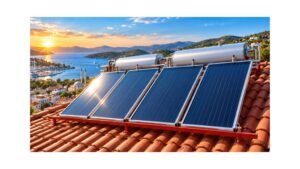
5 Types of Solar Energy: PV, Thermal, CSP, Passive, and Hybrid Explained

The Sun delivers more energy to Earth in one hour than the entire human civilization consumes in a year. That fact tends to get cited in the opening paragraphs of solar energy articles and then quietly dropped as the article moves on to talking about rooftop panels and electricity bills, which is understandable but also slightly misleading. Because harnessing that energy is not one thing. It is five distinct things, five fundamentally different technologies, each capturing solar energy in a different form, for a different purpose, at a different scale.
Most people, when they think about solar energy, are thinking about one of those five. The rooftop panels are generating electricity for a home. But the full picture includes technologies that heat water; generate electricity at industrial scale through concentrated heat; design buildings that stay warm or cool without any mechanical system; and combine multiple solar technologies into hybrid approaches that do more than any single type alone.
Here is a clear explanation of all five types of solar energy, what each one actually is, and what it is used for.
First, One Useful Distinction
Before getting into the five types individually, one distinction makes the whole landscape easier to navigate.
Solar energy can be captured and used in two fundamentally different forms: as electricity, where sunlight is converted directly into electrical current, or as heat, where sunlight warms a material, a fluid, or a building directly without first converting to electricity. Some solar technologies do one, some do the other, and some combine both. Knowing which form a given technology produces helps make sense of where and why it is used.
1. Photovoltaic Solar Energy: Sunlight Directly Into Electricity
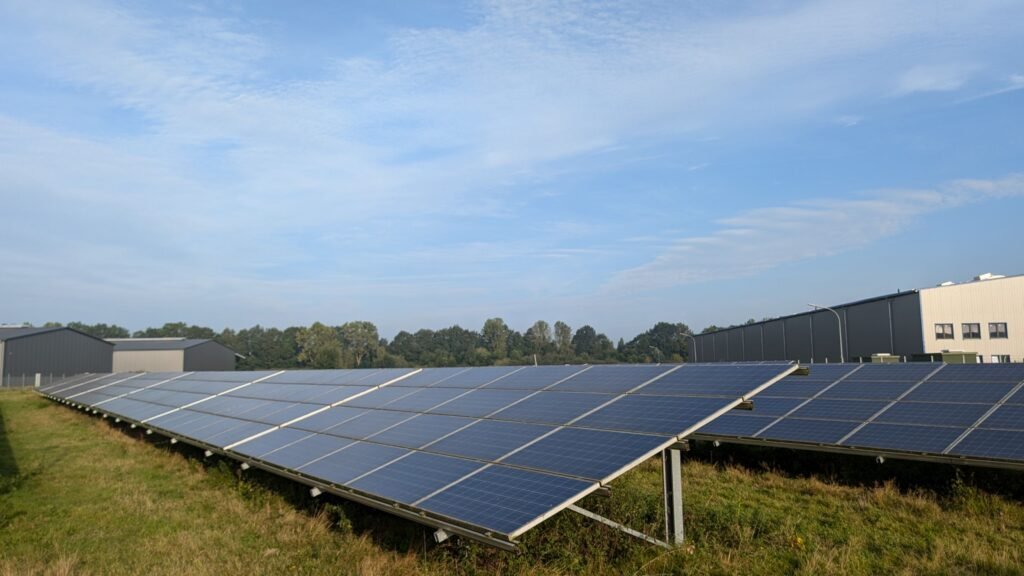
Photovoltaic solar energy, universally abbreviated as PV, is what most people picture when solar energy comes up in conversation. PV technology uses semiconductor materials, most commonly silicon, to convert sunlight directly into electrical current through the photovoltaic effect. When photons from sunlight strike the semiconductor material in a solar cell, they knock electrons loose, creating a flow of electric current that is captured, converted from DC to AC by an inverter, and fed into a home, building, or electricity grid.
PV is the technology behind rooftop solar panels on homes, commercial buildings, and utility-scale solar farms. It is the most widely deployed solar technology in the world and in India and the one that has seen the most dramatic cost reductions over the past two decades. A solar panel that cost several dollars per watt in the early 2000s now costs a fraction of that, which is why rooftop solar has shifted from a niche investment to a mainstream household decision across India.
PV panels generate electricity only when sunlight is available, which means the electricity is either used immediately, stored in batteries, or exported to the grid. PV produces no heat as a useful output, only electricity, which distinguishes it from the thermal technologies that follow.
Used for: Residential and commercial electricity generation, utility-scale solar farms, off-grid power for remote locations, consumer electronics charging, agricultural solar pump systems.
2. Solar Thermal Energy: Sunlight Into Heat
Solar thermal technology captures sunlight and converts it directly into heat rather than electricity. Instead of semiconductor cells, solar thermal systems use absorber surfaces, typically darkened metal panels or tubes, through which a fluid, usually water, air, or a specialized heat transfer fluid, circulates and absorbs the heat generated by sunlight striking the absorber.
The most familiar application of solar thermal energy in India is the solar water heater, where rooftop collectors heat water for bathing, washing, and cooking use without consuming electricity or gas. But solar thermal extends far beyond domestic water heating. Industrial process heat applications use solar thermal collectors to supply heat for manufacturing processes. Solar thermal systems also heat swimming pools, dry agricultural products, and provide space heating in colder climates.
Solar thermal is typically more efficient than PV at converting sunlight into useful energy when heat is the actual end goal, because converting sunlight to electricity and then using that electricity to heat water through a geyser involves conversion losses that direct solar thermal heating avoids entirely. For applications where heat itself is the desired output rather than electricity, solar thermal is often the more resource-efficient path.
Used for: domestic water heating, industrial process heat, agricultural drying, space heating, swimming pool heating, and solar cooking.
3. Concentrated Solar Power: Heat at Industrial Scale Into Electricity
Concentrated solar power, abbreviated as CSP, combines elements of both solar thermal and electricity generation at a scale and through a mechanism entirely different from either rooftop PV or domestic solar thermal. CSP systems use large arrays of mirrors or lenses to concentrate sunlight from a wide collecting area onto a small receiver point or line, generating extremely high temperatures at that focal point, typically hundreds of degrees Celsius.
That concentrated heat is used to generate steam, which drives a conventional turbine and generator to produce electricity—exactly the same thermodynamic cycle used in coal, gas, or nuclear power plants, but fueled by sunlight rather than combustion or fission.
CSP comes in several configurations. Parabolic trough systems use long curved mirrors arranged in rows to focus sunlight onto a receiver tube running along the focal line. Solar tower systems, also called power tower systems, use a large field of flat, individually tracked mirrors called heliostats to concentrate sunlight onto a central receiver at the top of a tall tower. Dish Stirling systems use a parabolic dish concentrator paired with a Stirling engine at the focal point. Each configuration suits different scales and conditions.
One of CSP’s key advantages over PV is the ability to store thermal energy, accumulated heat held in molten salt or other storage media, and use it to continue generating electricity after the sun has gone down, providing dispatchable solar power that can be scheduled and controlled in a way that intermittent PV generation cannot. This makes CSP particularly valuable for utility-scale electricity generation where grid reliability requires power to be available on demand rather than only when sunlight is present.
CSP plants require direct, strong sunlight and large land areas, making them suited to arid, high-sunlight regions. In India, Rajasthan hosts some of the country’s largest CSP installations, taking advantage of the state’s exceptional solar resource.
Used for: Utility-scale electricity generation, dispatchable solar power for grid management, industrial process heat at very high temperatures.
4. Passive Solar Energy: Design Instead of Technology
Passive solar energy is different in character from the other four types because it involves no panels, no collectors, no inverters, and no active mechanical system of any kind. Passive solar is a building design philosophy that uses the physical placement, orientation, materials, and geometry of a building itself to capture, store, and distribute solar heat in winter and reject it in summer, reducing or eliminating the need for mechanical heating and cooling systems.
A passively solar-designed building in a cold climate might orient its largest glazed surfaces toward the south, use thermal mass materials like stone or concrete to absorb heat during the day and release it slowly at night, and design roof overhangs calculated to allow low winter sun to enter while shading the interior from high summer sun. In a hot climate like most of India, passive solar design more commonly emphasizes shading, natural ventilation, and the use of thermal mass to stabilize indoor temperatures against daytime heat, reducing the need for air conditioning.
Passive solar has no running costs, no moving parts, no maintenance requirements, and no embodied technology that can fail or degrade over time. Its entire value is captured in the design and construction of the building itself, which means its benefits must be planned into a structure from the earliest design stage rather than retrofitted after the fact.
In India, traditional architecture in many regions already incorporated passive solar principles intuitively, from the thick mud walls of desert homes in Rajasthan that moderate extreme temperature swings to the deep verandahs of South Indian homes that shade interiors from intense sun. Modern green building certification frameworks, including GRIHA, India’s national green building rating system, incorporate passive solar design principles as core elements of energy-efficient building design.
Used for: Energy-efficient building design, reducing heating and cooling loads in homes and commercial buildings, sustainable architecture, reducing lifetime building energy consumption.
5. Hybrid Solar Energy: Combining Technologies for Greater Output
Hybrid solar energy systems combine two or more solar technologies, or solar with another energy source, into a single integrated system that does more than any individual component alone. The term “hybrid” is used in several distinct ways in the solar industry, and understanding what is being combined in any specific hybrid system is important for evaluating it clearly.
The most common form of hybrid solar in the Indian residential context is the hybrid solar power system, combining PV panels with battery storage and a grid connection, managed by a hybrid inverter that balances all three sources automatically. This system type has been covered extensively in the context of on-grid versus off-grid versus hybrid installations and represents the most widely encountered hybrid solar application for homeowners.
Beyond the residential context, hybrid solar takes other forms. PV-thermal hybrid panels, sometimes called PVT collectors, integrate PV cells and solar thermal collectors into a single panel unit that simultaneously generates electricity and captures heat from the same surface area, increasing the total useful energy output per unit of roof space. Hybrid CSP-PV plants combine large-scale PV generation with CSP’s thermal storage to provide a power plant that generates electricity reliably across a broader daily window than either technology delivers alone. Solar-wind hybrid systems pair PV with small wind turbines, using wind generation to supplement solar when cloud cover reduces PV output, particularly valuable in coastal and hilly regions where wind availability complements rather than duplicates solar availability.
The unifying principle across all hybrid solar approaches is the same: combining complementary technologies to address the limitations of each individual system, primarily the intermittency of solar generation, the inability to store PV output without batteries, or the constraints of available roof or land area.
Used for: Residential backup-plus-generation systems, maximizing energy from limited roof space with PVT panels, large-scale grid-connected hybrid power plants, and off-grid systems in wind-complementary locations.
A Quick Comparison at a Glance
Frequently Asked Questions
Q1: Which type of solar energy is most commonly used in Indian homes?
Photovoltaic solar energy is the most widely used type in Indian homes, through rooftop solar panel systems that generate electricity for household use. Solar thermal energy is the second most common, primarily through solar water heaters used for bathing and domestic hot water needs.
Q2: What is the difference between solar PV and solar thermal?
PV converts sunlight directly into electricity using semiconductor materials. Solar thermal converts sunlight into heat by warming a fluid or absorber surface. They produce different forms of energy and suit different applications: PV for electricity generation, solar thermal for heating water or spaces directly.
Q3: Is CSP used in India?
Yes, though less widely than PV. India has operational CSP plants primarily in Rajasthan, which has the strong direct sunlight that CSP requires. The technology is more common in large utility-scale projects rather than residential or small commercial installations due to its scale requirements and land needs.
Q4: Can passive solar principles be applied to an existing home in India?
Some passive solar improvements can be retrofitted into existing buildings, such as adding external shading devices, improving insulation, using heat-absorbing flooring materials, or installing thermally broken window frames. However, the most impactful passive solar benefits come from design decisions made during construction, particularly building orientation, which cannot be changed after a building is complete.
Q5: What does hybrid mean in the context of solar energy for a home buyer?
For a homebuyer, “hybrid solar” most commonly refers to a hybrid solar power system that combines PV panels with battery storage and a grid connection, allowing the home to generate solar electricity, store excess energy in batteries for evening or outage use, and draw from the grid when needed. This is distinct from other hybrid solar applications such as PVT panels or utility-scale hybrid plants.
Five types, five different answers to the question of what to do with the energy arriving from the sun every single day. PV turns it into electricity. Solar thermal turns it into heat. CSP concentrates it into industrial-scale power with the ability to store and dispatch it on demand. Passive solar builds it into the walls and windows and orientation of a structure itself. And hybrid approaches combine the strengths of multiple types to do more than any single technology manages alone. The Sun, as it turns out, has more than one way to be useful.

My work focuses on finding the human stories behind the headlines, from documenting unique cultural traditions to covering stories from communities across Bengal. Previously, I worked as an SEO Content Writer with Penning Down and Collegedunia, combining digital content expertise with newsroom journalism.
I believe impactful journalism is built on accuracy, empathy, and stories that stay with readers.
- Cocoa Butter Formula, Body Massage Lotion for Stretch Marks - April 9, 2016
- Ultra-calming makeup removing wipes - April 9, 2016
- Eczema therapy hand cream - April 9, 2016
Blog Insights
View All CouponTalk Blogs
12 Best LED Lighting Brands In India

10 Best Water Pump Brands In India

10 Best RO Membrane Brands In India

10 Best Electric Wire Brands In India

10 Best Electric Pressure Cooker Brands In India

10 Best Air Fryer Brands In India