Best Speedometer Cable for Bike in India

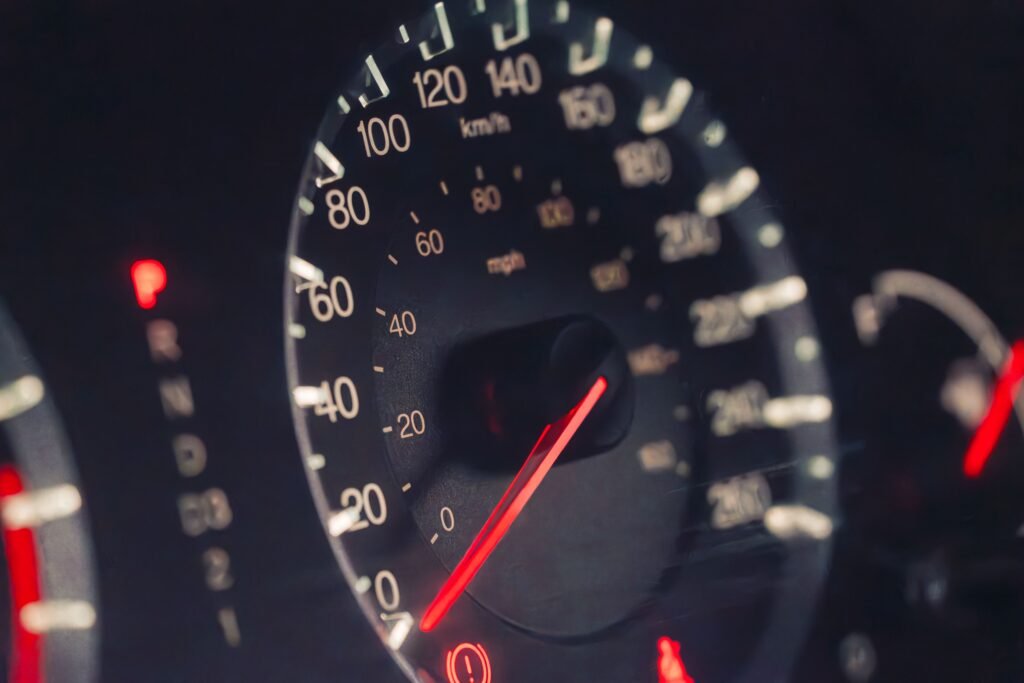
The needle used to sit steady at around 40 in city traffic. Now it jitters, or drops to zero for a few seconds, or has stopped moving altogether while the odometer sits frozen on a number that hasn’t changed in three days. There is no dashboard warning light for this, no fault code, nothing but a slow, easy-to-ignore failure that most riders only notice once the speedometer has already gone completely dead.
This is almost always a worn or damaged speedometer cable, not a failed instrument cluster. It is one of the cheapest and most mechanically simple parts on a motorcycle or scooter, and on cable-driven bikes, it is also one of the most commonly worn, because it is a physically rotating cable inside a housing that flexes every time the handlebar turns and the suspension moves. Riders often replace the entire speedometer unit before realising the actual fault was a ₹150 cable underneath it.
Before getting into what to look for when buying a replacement in India, it helps to understand what the cable actually does and why it wears out in the first place.
How a Speedometer Cable Actually Works
A speedometer cable is a flexible steel cable, usually braided from several thin strands and housed inside a protective outer sheath, that physically transmits rotational movement from a gear at the front wheel hub, or occasionally the gearbox output shaft, up to the speedometer head in the instrument cluster. As the wheel turns, a small drive gear inside the wheel hub spins the inner cable, and that rotation is what moves the needle and, on mechanical odometers, advances the distance counter.
Because it is a mechanical, physically rotating part rather than an electronic sensor, it is subject to wear in a way electronic speed sensors are not. The inner cable sits inside the outer sheath without much lubrication remaining after a few years of use, and every time the handlebar is turned lock to lock, or the front suspension compresses over a pothole, the cable flexes slightly inside its housing. Over time, this flexing, combined with dust and moisture ingress at the cable ends, causes fraying of the inner strands, stiffness in the housing, or a complete snap at a stress point, usually near one of the two connection ends rather than in the middle of the cable run.
Most Indian commuter motorcycles and scooters up to the mid-2010s used cable-driven speedometers almost universally. Many current-generation bikes, particularly higher-displacement and newer scooter models, have moved to electronic speed sensors with no physical cable at all, so the first thing to confirm before buying anything is whether your specific bike actually uses a cable-driven system.
Confirming Your Bike Actually Uses a Cable-Driven Speedometer
This matters more than it might seem because the Indian market currently has a mix of both systems running in parallel across different models and years of the same bike.
Look at the front wheel hub. A cable-driven system will have a visible cable running from a small gearbox unit at the front wheel hub, up along the front fork, and into the back of the speedometer housing. If you can trace a physical cable from the wheel to the cluster, your bike is cable-driven.
Check for a cable connection point at the instrument cluster. Cable-driven speedometers have a knurled metal fitting that screws onto a threaded stub at the back of the speedometer head. Electronic systems instead have a wiring harness connector, with no visible screw-on metal fitting.
When in doubt, check your bike’s parts catalogue or ask at an authorised service centre, since some models were sold in both cable and electronic variants across different years or trim levels, and visually distinguishing them isn’t always obvious without opening the front hub area.
If your bike uses an electronic speed sensor, a speedometer cable is not the relevant part, and a faulty reading is more likely a sensor, wiring, or cluster fault rather than something this guide covers.
Types Available in the Indian Market
As with many cable and wiring accessories, the Indian aftermarket for speedometer cables is largely built around exact-fitment replacement parts rather than universal or performance variants, because the cable length, end-fitting type, and thread size are specific to each bike model.
OEM or OEM-Equivalent Replacement Cable
This is the cable sold by the bike manufacturer’s authorised dealer network, or a close aftermarket equivalent manufactured to the same length and fitting specification. It is a direct, bolt-in replacement with no modification needed, and is the correct choice for the overwhelming majority of riders, simply replacing a worn or snapped cable. Pricing typically runs from ₹100 to ₹350, depending on the bike model, with authorised dealer parts sitting at the upper end of that range and generic aftermarket equivalents priced lower.
Universal Adjustable-Length Cable
These are sold with a longer-than-needed cable length and adjustable or trimmable end fittings, intended to fit a broader range of bikes rather than one specific model. They are useful mainly for older or less common bikes where an exact OEM replacement is hard to source locally, but they require more careful fitting, since excess cable length has to be routed and secured properly to avoid kinks, and the end fittings sometimes need minor adaptation to seat correctly. Pricing is generally similar to OEM-equivalent cables, in the ₹150 to ₹400 range.
Braided Inner Cable Only
For riders whose outer sheath is intact and undamaged but whose inner cable has frayed or snapped, some sellers offer just the inner braided cable as a standalone part, to be threaded through the existing outer housing. This is less commonly stocked and mainly relevant for older bikes where the full cable assembly is harder to find, and it only works cleanly if the outer sheath itself has no internal damage or kinks.
What to Check Before Buying
Exact model and year match. Speedometer cables are not interchangeable across bike models, and often not across different years of the same model if the manufacturer revised the front fork or cluster design. Buying by your bike’s exact model, variant, and manufacturing year is the single most important factor, more so than brand.
Cable length. A cable that is even slightly too short will not reach, and one that is too long has to be routed carefully to avoid tight bends, which is itself a common cause of premature failure in a replacement cable. Confirm the listed length matches your bike’s specification rather than assuming all cables for a given model are one universal length across trims.
End-fitting type. The two ends of the cable, one connecting to the wheel hub gearbox and one to the speedometer head, use specific fitting types, either a knurled screw-on nut, a clip-style fitting, or a square-drive tang. A mismatched fitting will not seat properly, even if the cable length is otherwise correct.
Housing flexibility and build quality. A cable with a stiff, poor-quality outer sheath will bind and wear out faster, and can cause the speedometer needle to read erratically even when new. Reviews or seller descriptions mentioning a smooth, low-friction inner cable movement are a reasonably reliable indicator of a better-made part, though this is difficult to judge before installation on a generic listing.
Installation: What Is Involved
Replacing a speedometer cable is one of the more straightforward mechanical jobs on a motorcycle, and does not require any electrical work, wiring, or specialist tools beyond basic hand tools.
The job involves unscrewing the knurled fitting at the back of the speedometer cluster, unscrewing or unclipping the fitting at the wheel hub end, withdrawing the old cable, and threading and securing the new one along the same routing path, typically running alongside the front fork leg. It is worth noting the exact routing path of the old cable, particularly which side of the fork and handlebar controls it passes, before removing it, since a poorly routed new cable can rub against moving parts or get pinched when the fork compresses.
A light application of general-purpose grease on the inner cable, where accessible, before reinstallation can meaningfully extend the life of the replacement, since a dry cable inside its housing is one of the main contributors to premature wear. This is within the ability of most riders comfortable with basic hand tools, and typically takes fifteen to thirty minutes. If you are not confident doing this yourself, it is a low-cost job at most local mechanics, usually costing no more than ₹50 to ₹100 in labour on top of the part itself.
Honest Expectations: What This Accessory Does and Does Not Do
A speedometer cable replacement restores accurate speed and odometer readings on a cable-driven system where the existing cable has worn, frayed, or snapped. That is its entire job, and for that specific fault, it is a highly effective and inexpensive fix.
What it will not do is fix a speedometer that reads inaccurately due to a non-standard tyre size, since the gear ratio at the wheel hub is calibrated for the stock tyre profile, and a significantly different tyre size will produce a reading error regardless of cable condition. It also will not fix an odometer or needle fault that is actually inside the speedometer head itself, such as a worn internal gear train in the cluster, which is a separate part from the cable. If a new cable is fitted correctly and the needle still behaves erratically, the fault is very likely inside the speedometer head rather than the cable.
Frequently Asked Questions
Q1: My speedometer needle jumps around instead of reading zero. Is this still a cable issue?
Yes, in most cases. A cable with internal fraying or a dry, stiff housing often produces an erratic, jumping reading before it fails completely, rather than jumping straight from normal to zero. A jumpy or inconsistent reading is one of the earliest warning signs of a cable nearing the end of its life.
Q2: Can a speedometer cable break suddenly with no warning signs?
It can, though it is less common than a gradual decline in reading accuracy. A cable that snaps suddenly, with no prior jitter or inconsistency, usually fails at a stress point near one of the end fittings due to a kink or pinch in the routing rather than general wear along its length.
Q3: Will a cheap generic replacement cable work as well as an OEM part?
For most riders, a well-fitted generic aftermarket cable that matches the correct length and end fittings performs equivalently to an OEM part for everyday use. The main risk with generic parts is inconsistent quality control on housing flexibility and fitting tolerance, which is why checking reviews for a specific listing matters more than the OEM-versus-aftermarket distinction itself.
Q4: Does a speedometer cable need periodic replacement even if it hasn’t failed?
There is no fixed replacement interval, and a well-maintained, properly greased cable can last several years without issue. Some riders choose to apply grease to the inner cable during routine servicing as preventive maintenance, which meaningfully extends cable life without requiring full replacement.
Q5: My bike has an electronic speedometer with no cable. Why is my reading still inaccurate?
This points to a different fault entirely, most likely a wheel speed sensor, wiring connection, or the sensor’s tone ring at the wheel hub, rather than anything covered by this guide. A speedometer cable replacement is not relevant to electronic speed-sensing systems.
A speedometer cable is a small, inexpensive part that is often blamed on the instrument cluster or ignored until it fails completely. Confirm your bike actually uses a cable-driven system, match the cable to your exact model and year, grease it properly on installation, and route it cleanly along the fork leg, and it will keep the needle accurate for years without another thought.

My work focuses on finding the human stories behind the headlines, from documenting unique cultural traditions to covering stories from communities across Bengal. Previously, I worked as an SEO Content Writer with Penning Down and Collegedunia, combining digital content expertise with newsroom journalism.
I believe impactful journalism is built on accuracy, empathy, and stories that stay with readers.
- Cocoa Butter Formula, Body Massage Lotion for Stretch Marks - April 9, 2016
- Ultra-calming makeup removing wipes - April 9, 2016
- Eczema therapy hand cream - April 9, 2016
Blog Insights
View All CouponTalk Blogs
12 Best LED Lighting Brands In India
10 Best Water Pump Brands In India
10 Best RO Membrane Brands In India
10 Best Electric Wire Brands In India
10 Best Electric Pressure Cooker Brands In India

10 Best Air Fryer Brands In India



7 Best Bike Engine Oil Brands In India

10 Best Marble Companies In India

10 Best Wall Fan Brands In India
10 Best Electric Tandoor Brands In India