Best Crash Guard for Yamaha FZ in India

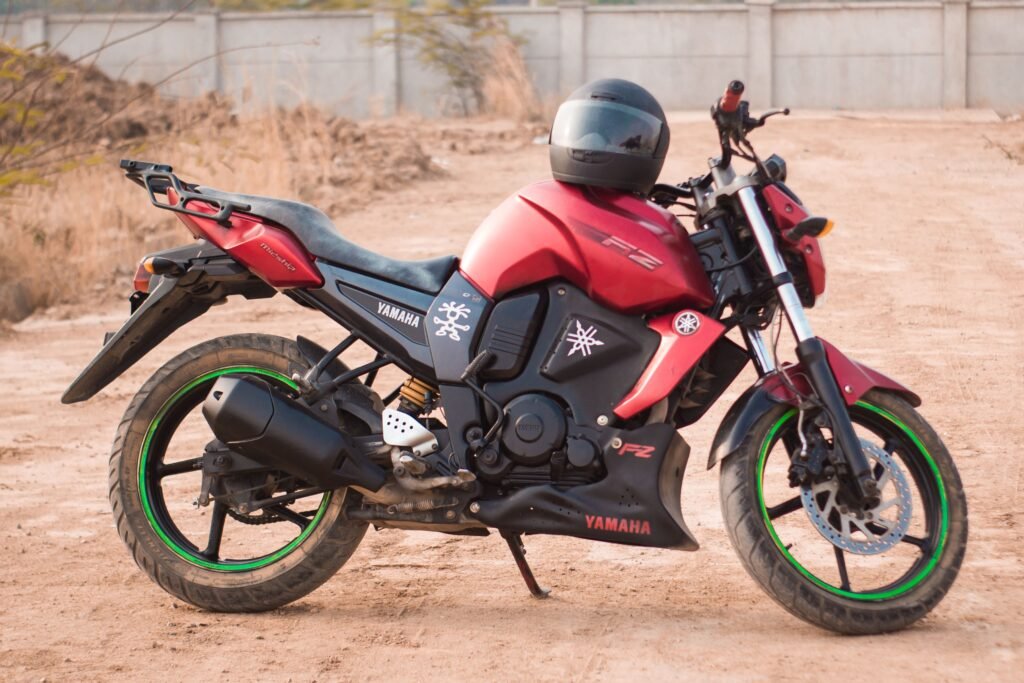
A low-speed tip-over in a parking lot, a slip on a wet road at a traffic signal, a clumsy sidestand moment on uneven ground. None of these is a dramatic accident, and none of them should cost you a new fuel tank shroud or engine casing. But on a naked-styled bike like the Yamaha FZ, where the engine and side panels sit fairly exposed with nothing but the sidestand and your reflexes standing between the bike and the tarmac, even a slow-speed fall at a standstill can turn into a few thousand rupees of cosmetic and mechanical damage.
This is the specific problem a crash guard, also sold as an engine guard or leg guard depending on the seller, is designed to address. It is a tubular metal frame bolted to the bike’s frame mounting points, positioned to intercept the ground before the engine, radiator, or side fairings do in a low-speed fall. It will not meaningfully help in a high-speed accident, and no reputable seller should claim it does. Still, for the everyday low-speed drops that make up the overwhelming majority of real-world falls, it is one of the more cost-effective protective accessories available for the FZ.
Before getting into what to look for, it’s worth being clear about what a crash guard is actually rated to handle, since this is one of the more commonly misunderstood accessories in the Indian aftermarket.
What a Crash Guard Actually Protects Against
A crash guard’s entire job is to absorb and redirect the impact of a low-speed, low-momentum fall, the kind that happens at parking speed, at a standstill, or during a slow, off-balance topple rather than a genuine road accident at riding speed. The tubular frame is mounted at points on the bike’s main chassis, not the plastic bodywork, so that in a fall, the guard’s tube contacts the ground first and the bike rests on the guard rather than skidding on the engine cases, radiator fins, or side panel plastics.
What it is not designed for, and what no honest guide should suggest it does, is meaningfully reducing rider injury risk or protecting the bike in a genuine high-speed crash. At speed, the forces involved are far beyond what a bolt-on tubular guard is built to manage, and the guard’s mounting points on the frame are not engineered as a structural crash safety system. Riders sometimes conflate crash guards with genuine structural safety equipment; they are, more accurately, a low-speed cosmetic and mechanical damage prevention accessory, and marketing that oversells their protective capability at speed is worth being skeptical of.
There is also an ongoing, reasonable debate among riders and mechanics about whether a crash guard can, in some fall geometries, transfer more impact force into the frame mounting points than the bike’s stock design was intended to absorb, particularly with cheaply made guards using thin-wall tubing. This is not a universal problem, but it is part of why guard build quality and mounting point design matter more than price alone.
Types Available for the Yamaha FZ in India
The FZ has been sold across several generations in India, including the original FZ16, the FZ-S, FZ-S FI, FZ25, and the current FZ-X and FZ-S FI V4, and crash guard fitment differs across these generations because the frame mounting points and engine layout are not identical. Confirming your exact FZ variant before buying is the single most important step, more so than choosing between guard types.
Basic Bent-Tube Frame Guard
The most common and widely available type, this is a simple single-piece or two-piece bent tubular frame that bolts to the existing frame mounting points, usually near the footpeg brackets or engine mounting bolts, without requiring any drilling or permanent modification. It is the least expensive option, typically priced from ₹700 to ₹1,500 depending on finish and seller, and is a straightforward bolt-on fitment for most riders.
Engine and Radiator Combo Guard
A more comprehensive design that extends coverage further forward to protect the radiator and lower engine casing in addition to the side panels, relevant mainly for FZ variants with liquid cooling, such as the FZ25 and newer FI models. These guards sit slightly further out from the bike and offer broader protection, but also add more visual bulk and, on some listings, a small amount of additional weight. Pricing typically runs from ₹1,200 to ₹2,500.
Sliders or Frame Sliders
Rather than a full tubular guard, these are smaller puck-style attachments bolted directly to specific frame or engine mounting points, designed to let the bike slide rather than dig in and tip further during a low-speed fall. They offer less overall coverage area than a full crash guard but sit closer to the bike, with a lower visual profile, and are popular among riders who find a full guard too bulky for the FZ’s naked-styling aesthetic. Pricing is generally in the ₹500 to ₹1,200 range for a set.
What to Check Before Buying
Exact model and generation match. A crash guard made for the FZ-S FI V3 will not necessarily bolt onto an FZ25 or the newer FZ-X, since frame mounting point positions and engine widths differ across these models. Always confirm the listing specifies your exact FZ variant rather than a generic “Yamaha FZ” listing that may not distinguish between generations.
Tube wall thickness and material. Cheaper guards use thinner-wall mild steel tubing that can bend or deform even in a low-speed fall, defeating the purpose of the accessory. Listings that specify tube thickness, generally 1.2mm or thicker for mild steel, or that mention a heavier gauge construction, are a more reliable indicator of a guard that will actually hold up.
Powder coating versus chrome or paint finish. A powder-coated finish holds up significantly better against chipping, rust, and general wear in Indian conditions than a painted or bare chrome finish, particularly through monsoon months. This matters more for long-term appearance than for protective function, but it is a reasonable quality indicator from a seller who has invested in the finishing process.
Mounting hardware included. Some budget listings include only the guard itself, with the buyer expected to source appropriately sized bolts separately. A complete kit with the correct grade bolts, washers, and any required spacers included saves a frustrating extra trip to a hardware shop after the guard has already arrived.
Ground clearance and cornering impact. A poorly designed guard that extends too far outward or too low can reduce cornering clearance or contact the ground during aggressive lean angles before the footpeg does, which is more of a concern for riders who corner enthusiastically. Reviews mentioning the guard’s cornering clearance on the specific FZ variant are worth checking if this matters to your riding style.
Installation: What Is Involved
Fitting a bolt-on crash guard to the FZ is within the ability of most reasonably mechanically confident riders, since it generally does not require drilling, cutting, or any modification to the bike’s existing frame or bodywork.
The job typically involves removing a small number of existing bolts at the designated frame mounting points, usually near the footpeg mounting bracket or lower engine mount, positioning the guard against the frame, and reinstalling the bolts through the guard’s mounting tabs, sometimes with additional supplied spacers to correctly align the guard against the frame’s mounting surface. Using a torque wrench to tighten mounting bolts to a reasonable specification, rather than simply tightening by feel, is worth doing, given that these are structural mounting points bearing potential impact load.
Most riders can complete this installation in twenty to forty minutes with basic hand tools. If you are not comfortable doing this yourself, it is a low-cost job at most local accessory-fitting shops or mechanics, generally costing no more than ₹100 to ₹200 in labour on top of the part itself.
Honest Expectations: What This Accessory Does and Does Not Do
A well-made, correctly fitted crash guard on the FZ will reliably prevent or reduce cosmetic and mechanical damage in a low-speed tip-over, parking mishap, or slow off-balance fall, which covers the large majority of real-world incidents that actually happen to commuter and daily-use bikes. That is a genuinely useful, low-cost form of protection for a bike with an exposed engine layout.
What it does not do is provide meaningful protection in a genuine road accident at riding speed, and it should not be marketed or understood as rider safety equipment in the way a helmet or riding jacket is. It also does not eliminate the risk of frame or mounting point stress in an unusually hard low-speed impact, particularly with a cheaply made, thin-gauge guard, which is why build quality is worth prioritising over the lowest available price.
Frequently Asked Questions
Q1: Will a crash guard void my Yamaha FZ’s warranty?
A bolt-on crash guard that does not require drilling or permanent modification to the frame generally does not void the overall vehicle warranty. Still, it is worth checking with your specific dealer, since warranty terms can vary and some dealers may flag non-genuine accessory damage claims differently. Damage caused directly by an incorrectly fitted guard would typically not be covered.
Q2: Does a crash guard affect fuel efficiency or performance?
The added weight of a typical crash guard, usually one to two kilograms, has a negligible effect on the FZ’s performance or fuel efficiency in practical terms. Any effect is well within normal ride-to-ride variation and not something most riders would notice.
Q3: Can I fit a crash guard designed for the FZ-S on a FZ25?
Generally, no, since the FZ25 has a different frame and wider engine layout than the FZ-S variants, and mounting points do not typically align between these models. Always buy a guard specifically listed for your exact FZ variant rather than assuming cross-model compatibility.
Q4: Will a crash guard scratch or crack in a fall, or does it fully protect the bike?
A crash guard is expected to take the brunt of impact damage in a fall, and some scuffing, scratching, or bent tubing after a fall is normal and is, in fact, the guard doing its job by absorbing damage that would otherwise have gone directly to the engine casing or panels. A guard that shows wear after protecting the bike in a fall has performed correctly, even if it now looks less pristine.
Q5: Are frame sliders a better option than a full crash guard for the FZ?
This depends on priority. Frame sliders offer a lower-profile look and are often preferred by riders who want to preserve the FZ’s naked-bike styling. Still, they cover a smaller area than a full crash guard and offer less protection in a fall where the bike goes down at an angle rather than sliding cleanly. A full crash guard offers broader coverage at the cost of added visual bulk.
A crash guard is a small, inexpensive investment relative to the repair cost of a cracked engine casing or scraped fuel tank shroud, and for a naked-styled bike like the FZ with its engine sitting exposed, it is one of the more sensible early accessory purchases a new owner can make. Confirm your exact FZ variant, prioritise tube thickness and finish quality over price alone, and torque the mounting bolts correctly. It will quietly do its job the one time you actually need it.

My work focuses on finding the human stories behind the headlines, from documenting unique cultural traditions to covering stories from communities across Bengal. Previously, I worked as an SEO Content Writer with Penning Down and Collegedunia, combining digital content expertise with newsroom journalism.
I believe impactful journalism is built on accuracy, empathy, and stories that stay with readers.
- Cocoa Butter Formula, Body Massage Lotion for Stretch Marks - April 9, 2016
- Ultra-calming makeup removing wipes - April 9, 2016
- Eczema therapy hand cream - April 9, 2016
Blog Insights
View All CouponTalk Blogs
12 Best LED Lighting Brands In India

10 Best Water Pump Brands In India
10 Best RO Membrane Brands In India

10 Best Electric Wire Brands In India

10 Best Electric Pressure Cooker Brands In India

10 Best Air Fryer Brands In India






9 Best Microwave Oven Brands In India

8 Different Types of Lipsticks With Name

9 Best Hammer Brands In India