Best Tubeless Tyre Valve for Bikes in India

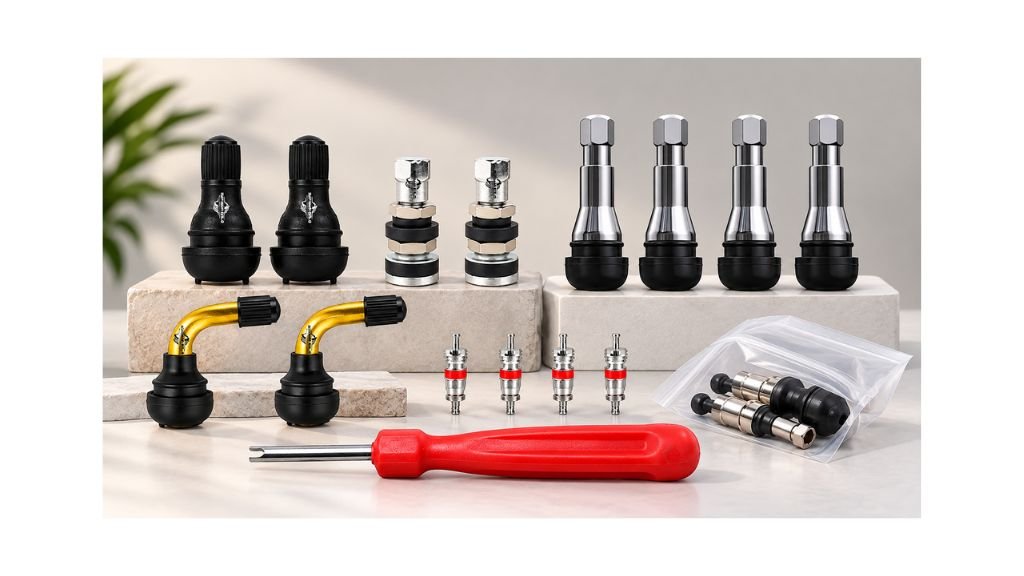
The tyre looked fine when you left home. By the time you reached the office, the bike was sitting noticeably low on one end. No nail. No visible damage. Just a slow, steady pressure loss that started somewhere around the valve stem and spent the entire commute quietly emptying your tyre.
A bad tubeless valve is one of the least dramatic ways a ride goes wrong and one of the most avoidable. The valve is a small part that costs very little, lives in a hostile environment of heat, vibration, and road grime, and gets almost no attention until it starts leaking. Most riders replace their tubeless tyres and forget the valve entirely, reusing an old stem that has been on the wheel through two or three tyre changes and a couple of Indian summers.
The market for tubeless valves in India is flooded with cheap alternatives that look identical to quality ones in a product photo and perform very differently on an actual wheel. The difference between a valve that holds pressure reliably for two years and one that develops a slow leak within six months often comes down to the rubber compound used in the grommet, the quality of the core threading, and whether the stem is made from solid brass or a zinc alloy that corrodes faster than anyone expects.
Here is a clear look at the best tubeless valves available for bikes in India, what separates a good one from a bad one, and what to actually check when you are buying.
First, a Word About How a Tubeless Valve Works and Where It Fails
A tubeless valve does one job: it creates an airtight seal through a hole in the rim and gives you a way to add or release air. The seal is created by a rubber grommet that sits against both faces of the rim hole, compressed by a nut tightened from the outside. The valve core inside the stem is a small spring-loaded pin that opens under pressure from a pump and closes the moment pressure is removed.
Failures happen in three places. The grommet hardens with age and heat and stops sealing cleanly against the rim. The valve core loosens over time from vibration and allows a slow leak past the pin. The stem itself corrodes, especially in aluminium and zinc alloy versions, which makes the core difficult or impossible to remove and replace.
Knowing where failures happen tells you what to look for when buying. A quality grommet in a heat-resistant rubber compound, a valve core made from brass rather than cheap alloy, and a stem that is either solid brass or anodised aluminium tells you most of what you need to know before reading a single review.
1. Schrader TR413 Rubber Snap-In Valve: The Standard That Everything Else Is Measured Against
The TR413 is a rubber snap-in tubeless valve that has been the global baseline for motorcycle and car tubeless valves for decades. Schrader invented the valve core that the entire industry still uses, and the TR413 snap-in design is the most copied tubeless valve specification in the world.
What makes it worth naming specifically rather than lumping it in with generic snap-in valves is that genuine TR413 valves from Schrader or licensed manufacturers use a specific rubber compound that holds up to heat, ozone, and prolonged flexing better than the rubber used in most unbranded alternatives. The rubber grommet on a genuine TR413 stays pliable and sealed for years. The same rubber on a low-quality imitation hardens within a monsoon season or two.
It fits standard 11.5 mm rim holes and works on the vast majority of alloy and steel rims used on Indian motorcycles. Length is 31 mm, which suits most standard rim profiles. It is the right choice for any bike where the valve sits recessed in a standard rim hole, and there is no fitment reason to go with anything else.
It typically sells for between ₹50 and ₹150 per valve, depending on the seller and whether it comes in a single or multi-pack.
Best for: Any bike with a standard rim hole running everyday tubeless tyres. The default correct answer for most riders is replacing a valve during a tyre change.
2. Motul or Michelin Branded Brass Stem Valves: The Longevity Pick
Several reputable tyre and lubricant brands, including Motul and Michelin, sell brass stem tubeless valves under their own branding that are manufactured to tighter tolerances than most generic snap-in options. The stem on these is solid brass rather than rubber-covered zinc alloy, which means two things. The stem does not corrode in the way that a zinc body does when road salt and monsoon water work on it over a few years. And the valve core can be removed and replaced with a standard core tool if it ever starts leaking, without needing to pull the tyre off and replace the entire valve.
That replaceability is a practical advantage that snap-in rubber valves do not share. A snap-in rubber valve has to come out through the rim hole to be replaced, which means breaking the tyre bead. A metal stem valve with a leaking core can be fixed at the roadside with a core tool and a new core in minutes, without tools or tyre removal.
They are slightly more expensive than basic snap-in valves and need to be installed with care since the nut torque on the rim needs to be right to compress the grommet correctly without cracking it. They typically sell for between ₹150 and ₹400 per valve.
Best for: Riders who keep a bike for several years and want a valve that can be serviced rather than replaced entirely. Good for alloy rims where the valve hole may be a non-standard depth or angle that benefits from the adjustability a metal stem provides.
3. Tubeless Valve Stems for Spoke Rims (Rim Lock Type): The Convert-to-Tubeless Pick
A growing number of riders in India are converting spoke-wheel bikes to tubeless setups rather than running tubes, using rim tape and tubeless-specific valves designed to seal against the flat bed of a taped spoke rim. The valve used in this case is different from a standard snap-in valve because the rim hole through the tape and the spoke rim is typically drilled rather than factory-punched, and the sealing surface is the tape rather than a machined rim flange.
These valves typically have a longer threaded metal body, a wider base flange to spread the sealing load across the tape, and a nut that draws the flange tight against the inside of the rim through the tape. Brands like Tubliss and various Indian aftermarket suppliers sell these specifically for spoke rim conversions.
The quality of the conversion depends as much on the tape and the tubeless sealant as on the valve itself, but the valve being the right type for the rim surface is non-negotiable. Using a standard snap-in valve on a taped spoke rim produces an unreliable seal at the best of times.
These valves typically sell for between ₹200 and ₹600, depending on the brand and whether they come as part of a conversion kit.
Best for: Riders converting spoke-wheel bikes like older Royal Enfields, Himalayans, or adventure bikes to tubeless setups where the standard valve type will not create a reliable seal.
4. Extended Length Metal Valve Stems: The Deep Rim and Sports Bike Fix
Standard tubeless valves are designed for rim profiles where the valve hole is accessible with a standard pump head. On bikes with deeper rim profiles, particularly sports bikes with wider alloy rims or any wheel where the rim channel sits significantly lower than the tyre bead area, a standard length stem can end up recessed too far inside the rim to connect a pump head to cleanly.
Extended length metal valve stems, typically available in 40 mm, 60 mm, and 80 mm lengths, solve this by bringing the valve cap and core out far enough from the rim surface that a pump head seats on them without difficulty. The longer stem also makes tyre pressure checks at a petrol station less frustrating on deep rim profiles, where a standard pressure gauge does not reach easily.
Quality here follows the same rules as standard metal valves. Brass or anodised aluminium over zinc alloy. Replaceable core over a non-serviceable design. A proper rubber grommet with a seating nut rather than relying on thread sealant alone.
Extended stems typically sell for between ₹200 and ₹500 per valve.
Best for: Sports bikes, bikes with wide or deep-profile alloy rims, and any rider who has ever struggled to connect a pump head or pressure gauge to their valve at a petrol station.
5. Valve Caps With Built-In Pressure Indicators: The Practical Everyday Addition
This one is not a valve itself but a replacement cap that sits on top of any standard tubeless valve. The indicator caps, sold by several brands including a few domestic ones available on Flipkart and Amazon India, contain a small colour-coded indicator that changes from green to red when the tyre pressure drops below a threshold set in the cap design.
They do not replace a proper pressure gauge, and they are not accurate enough to tell you exactly how much pressure you have lost. What they do is give you a visible flag every time you walk up to the bike that something is noticeably below where it should be, which is the early warning most riders never get until the tyre is already noticeably soft.
On a bike parked on the street or in a busy parking area where someone occasionally lets air out of tyres, or on a long-distance trip where you are not checking pressure daily, the visual indicator earns its place as a simple redundancy.
They typically sell for between ₹150 and ₹400 for a set of two.
Best for: Riders who want a passive early warning system for pressure loss without relying on remembering to check pressure regularly. Particularly useful on touring bikes and for riders who park in unattended areas overnight.
How to Actually Choose
For most riders on most bikes, the TR413 snap-in rubber valve from a reputable supplier is the right answer. It is simple, proven, widely available, and costs almost nothing to replace at every tyre change, which is when it should be replaced, regardless of how the old one looks.
If you keep a bike for a long time and want a valve you can service with a core tool rather than pull the tyre off to replace, a brass metal stem valve from Motul, Michelin, or a quality aftermarket supplier is worth the extra cost and the few extra minutes of installation.
If you are converting a spoke wheel to tubeless, the valve type for that specific application is non-negotiable. A standard snap-in valve will not seal reliably on a taped spoke rim, and the conversion will frustrate you until you use the right part.
If your rim profile makes standard valves hard to reach, go straight to an extended stem and stop fighting the geometry of your wheel every time you check pressure.
What a Quality Valve Cannot Fix
A good valve matters. But it sits downstream of a few other things that affect whether a tubeless setup holds pressure reliably.
A damaged or corroded rim hole creates a sealing surface that the best grommet cannot fully compensate for. On alloy rims with pitting or corrosion around the valve hole, a proper clean-up or rim replacement is the real fix.
Tubeless sealant inside the tyre handles small punctures in the tread, but cannot compensate for a leaking valve. If sealant has migrated into the valve stem and dried there, which is a common cause of slow valve leaks on tubeless setups, the valve core needs to come out, the sealant cleared, and a fresh core fitted.
Overtightening the valve nut on a metal stem valve cracks the rubber grommet and creates the leak it was supposed to prevent. The correct torque is firm by hand plus a quarter turn with a spanner, not fully tightened with a tool.
Finally, a valve cap is not optional on a tubeless setup. Without a cap, road grime and water work their way into the valve core and cause the pin to stick or leak. A cap costs nothing and prevents one of the more common sources of slow valve leaks.
Frequently Asked Questions
Q1: How often should a tubeless valve be replaced?
At every tyre change is the standard recommendation, which on a typical Indian motorcycle means every two to four years, depending on how much the bike is ridden. Rubber snap-in valves, in particular, harden and age whether or not they are leaking visibly, so replacing them when the tyre comes off costs very little and removes a variable that causes problems later.
Q2: Can I use a car tubeless valve on a motorcycle rim?
Most car snap-in tubeless valves use the same TR413 specification and the same 11.5 mm rim hole as motorcycle valves, so they are technically interchangeable in most cases. However, the rubber compound used in valves from dedicated motorcycle suppliers is typically formulated for the higher vibration and temperature variation that motorcycle wheels experience. Where the hole diameter and valve specification match, it will physically fit, but a motorcycle-specific valve is the better choice.
Q3: What causes a tubeless valve to leak?
The three most common causes are a hardened or damaged rubber grommet that no longer seals cleanly against the rim, a loose or corroded valve core that allows air past the pin, and sealant that has dried inside the valve stem and is holding the core pin partially open. Each of these has a different fix, and knowing which one you have before replacing anything saves time.
Q4: How do I know if my valve is leaking or if the puncture is elsewhere?
Spray soapy water around the valve stem, the cap seating area, and the bead area of the tyre while the wheel is inflated. Bubbles indicate exactly where the leak is. A leak at the valve base suggests the grommet. Bubbles from the cap area suggest the core. Bubbles from the tyre bead area mean the sealant or the bead seating needs attention rather than the valve.
Q5: Do tubeless valve caps need to be replaced?
Metal valve caps last essentially indefinitely. Plastic caps become brittle over time and can crack in winter cold or under sustained sun exposure, at which point they stop protecting the valve core reliably. Replacing plastic caps with metal ones costs almost nothing and is worth doing once if the bike will be ridden in varied conditions for years.
Final Thoughts
Back to that flat tyre on the way to the office. The nail that never showed up. The puncture that was not a puncture. A failing rubber grommet, a loose valve core, a stem that had gone through one tyre change too many without being replaced.
A tubeless valve costs between ₹50 and ₹400, depending on the type. A tyre service call or a roadside assist because a preventable slow leak turned into a flat during the morning rush costs considerably more, measured in both money and time. Replace the valve when you replace the tyre. Use the right type for your rim. Check the core is tight before the tyre goes back on. The fix is smaller than the problem it prevents.

My work focuses on finding the human stories behind the headlines, from documenting unique cultural traditions to covering stories from communities across Bengal. Previously, I worked as an SEO Content Writer with Penning Down and Collegedunia, combining digital content expertise with newsroom journalism.
I believe impactful journalism is built on accuracy, empathy, and stories that stay with readers.
- Cocoa Butter Formula, Body Massage Lotion for Stretch Marks - April 9, 2016
- Ultra-calming makeup removing wipes - April 9, 2016
- Eczema therapy hand cream - April 9, 2016
Blog Insights
View All CouponTalk Blogs
12 Best LED Lighting Brands In India

10 Best Water Pump Brands In India
10 Best RO Membrane Brands In India
10 Best Electric Wire Brands In India

10 Best Electric Pressure Cooker Brands In India

10 Best Air Fryer Brands In India






Nine Types of locks:

10 Best Bathroom Air Freshener Brands In India