Top 10 Solar Garden Lights for Indian Homes 2026

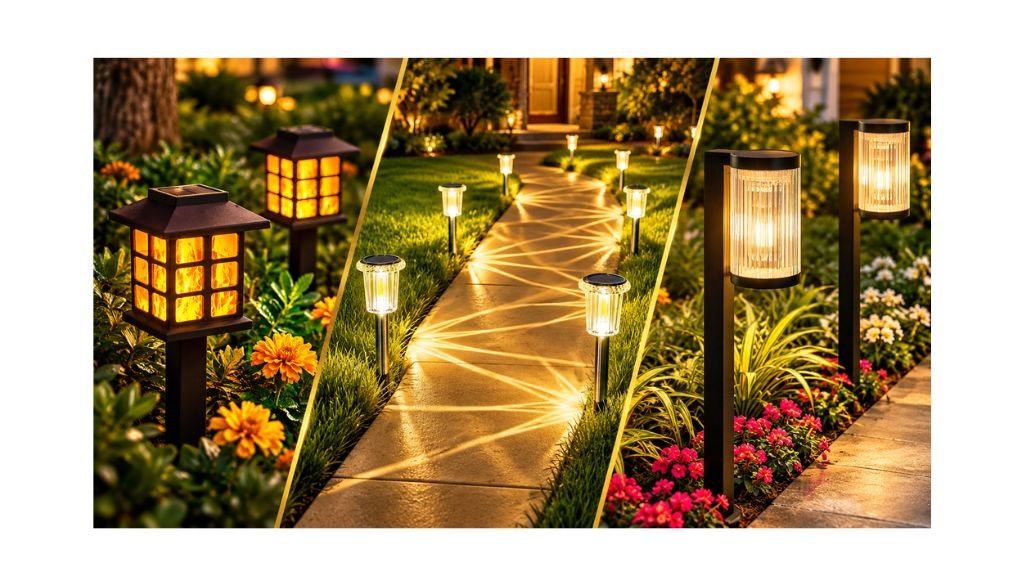
Solar garden lights are one of the most impulse-bought categories in Indian home improvement. They are cheap enough to grab a pack of eight during an Amazon sale without much thought, and disappointing enough afterward that a good number end up dead in a drawer within a year. This is because the wrong type was picked for the wrong spot or because a genuinely poor-quality unit was bought on price alone. The category spans a wide range, from ₹150 unbranded pathway lights to proper motion-sensor security fixtures from established lighting brands. Moreover, the light type to the actual spot in your garden or driveway matters more here than in almost any other solar accessory category.
This guide covers ten distinct types of solar garden lights worth knowing, chosen to cover the situations Indian homeowners actually shop for: pathways, gates, walls, trees, steps, and security corners, rather than a flat list ranked only by price.
- Solar Pathway or Border Lights
- Solar Spike or Decorative Accent Lights
- Solar String or Fairy Lights
- Solar Wall-Mounted Lights
- Solar Flood or Spotlights
- Solar Motion-Sensor Security Lights
- Solar Lantern or Hanging Lights
- Solar Gate or Pillar Lights
- Solar Deck or Step Lights
- Solar Decorative Globe or Ball Lights
1. Solar Pathway or Border Lights
The most common and recognizable type is a small stake-mounted light with a solar panel on top, pushed into the soil along a walkway or garden border, typically providing soft ambient lighting rather than genuine task lighting.
Best for: Lining a garden path, driveway edge, or flower bed border where gentle ambient glow matters more than brightness. What to check: Stake material, since cheap plastic stakes bend or snap in harder Indian soil within a season, and a metal or reinforced stake, even at a slightly higher price, meaningfully extends usable life.
2. Solar Spike or Decorative Accent Lights
A close cousin to pathway lights but built specifically for decorative effect rather than functional lighting, including the small glass “ice cube,” flame-effect, or colored globe lights common on Indian e-commerce listings from brands like GIGAWATTS, generally featuring a small integrated Ni-MH battery and modest lumen output.
Best for: Purely decorative accents scattered through a garden bed, around a patio, or along a boundary wall for visual effect at night. What to check: These are explicitly not meant for actual visibility or safety lighting, so buying them expecting pathway-level brightness is the most common source of disappointment in this specific subcategory.
3. Solar String or Fairy Lights
A long string of small LED bulbs powered by a single attached solar panel and battery pack, draped across a pergola, balcony railing, or terrace or wrapped around a tree, is popular for both everyday ambiance and festive occasions like Diwali.
Best for: Balconies, terraces, pergolas, and outdoor seating areas wanting warm ambient lighting without running an electrical wire outdoors. What to check: Total string length and bulb spacing relative to where you actually plan to use it, since a string bought for a small balcony often ends up either too short for a terrace railing or excessive for a compact space, and IP rating matters more here than for most other types since these are often mounted in more exposed, rain-prone positions.
4. Solar Wall-Mounted Lights
Fixed to an exterior wall, gate pillar, or boundary wall rather than staked into the ground, these typically offer more consistent, directional lighting than ground-level pathway lights and are available from established brands like Philips in more design-conscious finishes alongside the wider unbranded market.
Best for: Building entrances, porch walls, boundary walls, and gate pillars where a fixed, upward- or downward-facing light adds both function and a finished architectural look. What to check: Mounting hardware quality and whether the unit is genuinely designed for direct wall mounting versus a lighter-duty product with a mount that loosens over time from vibration and weather exposure.
5. Solar Flood or Spotlights
A more powerful, adjustable-angle light designed to illuminate a specific feature, a tree, a building facade, a flag, or a larger open area generally has significantly higher lumen output than pathway or decorative lights and often includes an adjustable mounting bracket.
Best for: Highlighting a specific architectural feature, tree, or larger open driveway or courtyard area that needs genuine brightness rather than ambient glow. What to check: Actual lumen output against the listing’s claims, since this category has a wider gap between advertised and real-world brightness than most other solar garden light types, making recent buyer reviews specifically worth checking before purchase.
6. Solar Motion-Sensor Security Lights
Built around a passive infrared motion sensor that triggers a bright light when movement is detected nearby, rather than staying on continuously through the night, these are positioned specifically as a security and safety accessory rather than decorative lighting, with recognizable options available from brands like Syska and Crompton alongside the broader generic market.
Best for: Driveways, side gates, and entry points where sudden illumination on movement adds genuine security value and where continuous all-night lighting isn’t the goal. What to check: Detection range and angle specifications against your actual installation spot, and battery capacity relative to how many trigger events it needs to handle through a full night without running flat.
7. Solar Lantern or Hanging Lights
Styled to resemble a traditional lantern, these hang from a hook, bracket, or tree branch rather than mounting to a wall or staking into the ground, offering a warmer, more decorative aesthetic than the more utilitarian pathway or floodlight categories.
Best for: Porches, gazebos, outdoor dining areas, or hanging from tree branches for a warm, traditional garden aesthetic. What to check: The hanging hook or bracket’s weather resistance specifically, since this is the component most likely to rust or degrade first given its constant outdoor exposure and the lantern’s swinging movement in wind.
8. Solar Gate or Pillar Lights
A specific sub-type built to mount on top of or into a gate pillar or boundary wall pillar, common at the entrance of Indian homes and often sold in matching decorative sets for visual symmetry on both sides of a gate.
Best for: Framing a home’s main entrance or gate with matched, symmetrical lighting that also adds a functional safety element for anyone approaching after dark. What to check: Whether the listing sells a matched pair or a single unit, since a mismatched or single gate light defeats the symmetrical purpose most buyers are actually shopping for.
9. Solar Deck or Step Lights
Small, low-profile lights designed to be recessed or surface-mounted directly onto outdoor steps, deck edges, or low garden walls, providing subtle, close-to-ground illumination specifically for safe footing rather than broader area lighting.
Best for: Outdoor staircases, deck edges, and raised garden bed walls where preventing a missed step at night matters more than decorative effect. What to check: Genuine waterproof and crush resistance, since these are mounted in positions more likely to be stepped on, splashed, or exposed to standing water than most other garden light types.
10. Solar Decorative Globe or Ball Lights
Spherical or geometric-shaped decorative lights, often floating in a pond or fountain, mounted on a stake, or hung as a garden ornament, prioritize visual novelty and even diffused glow over functional brightness.
Best for: Ponds, water features, and garden beds wanting a distinctive decorative centerpiece rather than practical illumination. What to check: Confirm specifically whether a model is rated for water-floating use if that’s the intended placement, since not every decorative globe light in this category is actually designed to sit in water despite general outdoor waterproof claims.
What to Check Before Buying, Regardless of Type
IP rating appropriate to Indian monsoon conditions. A garden light exposed to direct monsoon rain and standing water needs a genuine IP65 rating or better, not just a vague “waterproof” claim in the listing title, since this category has a well-documented gap between marketed and actual water resistance on lower-cost, unbranded listings.
Battery type and realistic runtime. Most budget solar garden lights use small Ni-MH batteries with a limited number of charge cycles before capacity noticeably degrades, generally within one to two years of daily use, while a modest number of premium options use longer-lasting lithium-ion cells. Checking which battery type a listing actually specifies, rather than assuming, is worth the extra minute before buying, particularly for a larger multi-light purchase.
Sensor sensitivity and placement for motion-activated types specifically. A motion sensor light mounted too close to a busy street or a spot with regular pedestrian or animal movement will trigger constantly, draining the battery faster than it can recharge, so placement relative to genuine foot traffic patterns matters as much as the product’s stated detection range.
Realistic lumen expectations against the listing’s marketing. This category, more than most, sees inflated lumen claims on budget and unbranded listings, so cross-checking against recent buyer reviews mentioning actual brightness, rather than the number printed on the box, is a genuinely worthwhile step before a bulk purchase.
Frequently Asked Questions
Q1: How long do solar garden lights typically last before needing replacement in Indian conditions?
Budget lights with basic Ni-MH batteries commonly show noticeably reduced runtime within one to two years of regular outdoor use, particularly in regions with intense summer heat, which accelerates battery degradation. Better-built units, particularly those with lithium-ion batteries and genuine IP65-plus sealing, can reasonably last three to five years with normal use.
Q2: Do solar garden lights work well during India’s monsoon season?
Charging performance drops meaningfully during extended cloudy, rainy periods, since these lights depend on direct daily sun exposure to recharge fully. A genuinely well-sealed, IP65-or-better light will survive the physical exposure to monsoon rain without damage, but expect reduced runtime and dimmer output during the cloudiest weeks of the season regardless of build quality.
Q3: Is it worth paying more for a branded option like Philips or Syska over a cheaper unbranded listing?
For wall-mounted, motion-sensor, and flood/spotlight types specifically, where consistent brightness and mounting durability matter most, a known brand’s more consistent quality control is often worth the premium. For purely decorative types like spike lights, string lights, and globe lights, the gap between branded and well-reviewed unbranded options is generally smaller, making unbranded a more reasonable choice for pure decoration.
Q4: Can solar garden lights be moved around, or do they need permanent installation?
Pathway, spike, and decorative stake-mounted types are generally designed for easy repositioning without tools, making seasonal rearrangement simple. Wall-mounted, gate, and hardwired-style flood lights are more of a fixed installation, so their initial placement deserves more careful consideration since relocating them later is a more involved job.
Q5: Why do some solar lights turn on and off intermittently at night instead of staying on steadily?
This is most commonly a sign of a degrading or undersized battery struggling to sustain the light’s draw through a full night, or occasionally a loose internal connection affected by moisture ingress. If the light is under a year old and already showing this behavior, it’s often a battery or seal quality issue worth raising with the seller rather than a normal part of the product’s lifecycle.
The right solar garden light has far more to do with matching the type to its actual spot, a step for safety, a gate for symmetry, or a pond for decoration than with chasing the highest lumen number or the lowest price per unit in a bulk pack. Buy IP65-rated units for anything genuinely monsoon-exposed, and treat lumen claims on unbranded listings with a healthy amount of skepticism until a recent review confirms them.

My work focuses on finding the human stories behind the headlines, from documenting unique cultural traditions to covering stories from communities across Bengal. Previously, I worked as an SEO Content Writer with Penning Down and Collegedunia, combining digital content expertise with newsroom journalism.
I believe impactful journalism is built on accuracy, empathy, and stories that stay with readers.
Blog Insights
View All CouponTalk Blogs
12 Best LED Lighting Brands In India
10 Best Water Pump Brands In India
10 Best RO Membrane Brands In India
10 Best Electric Wire Brands In India
10 Best Electric Pressure Cooker Brands In India

10 Best Air Fryer Brands In India