Best Modular Flip-Up Helmets in India Under ₹3000


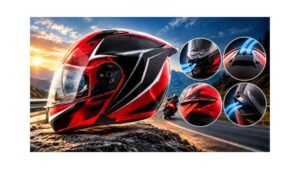
It is a Tuesday morning. You are riding to work, sitting at a red light, and you need to check your phone for directions. With a full-face helmet, that means pulling the whole thing off or just squinting at the screen through your visor. With a modular flip-up, you flick the chin bar up, glance at the screen, flip it back down, and ride on.
That small convenience is exactly why flip-up helmets have become so popular in India over the last few years. But the reputation they carry, that they are expensive or reserved for long-distance touring riders, has kept a lot of everyday commuters away from them. The truth is that the market in 2025 has pushed some genuinely capable modular helmets well below the ₹3000 mark, and a few of them are worth taking seriously.
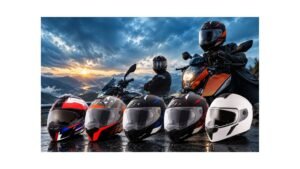
Here is a look at the best modular flip-up helmets available in India under ₹3000, what each one does well, and which type of rider it actually suits.
First, a Word About Modular Helmets and Safety
Before getting into the products, something needs to be said about safety expectations at this price point. Modular helmets are inherently slightly more complex than full-face helmets because of the hinge mechanism on the chin bar. At premium price points, those hinges are engineered and tested to remain locked under impact. At budget price points, the engineering quality varies more than it does with simpler full-face designs.
This does not mean a sub-₹3000 modular is unsafe. It means you should check for ISI certification, which is a legal requirement for helmets sold in India, and treat that certification as a non-negotiable baseline. Every helmet on this list carries ISI marking. Ride with the chin bar locked down whenever you are moving. The flip mechanism is for convenience at stops, not while riding.
With that said, here are the picks.
1. Vega Crux Demi Jet Flip-Up: The Everyday Commuter’s Friend
Vega is one of the most trusted budget helmet brands in India, and the Crux Demi Jet is the product that best represents what a no-fuss modular helmet should be. The chin bar flips up cleanly, the internal sun visor drops down with a simple slider, and the ventilation channels actually move air, which is more than can be said for some competitors at this price.
The shell is made from a thermoplastic material that keeps the weight manageable, sitting at around 1.4 kg, which is reasonable for a full-day commute. The padding is removable and washable, something every Indian commuter will appreciate, given how much we sweat between March and June.
At a street price that usually lands between ₹1,800 and ₹2,400, depending on the outlet and colour, it is one of the better value propositions in this category.
Best for: Daily office commuters who want the convenience of a flip-up without spending more than necessary. Particularly good for city riders who stop frequently at signals.
2. Steelbird SBH-17 Hunk: The Feature-Packed Surprise
Steelbird is another name that has been in the Indian helmet market long enough to know what local riders actually want. The SBH-17 Hunk packs in more features than its price suggests: a dual visor system with both an outer clear visor and a retractable inner sun visor, a full-face option when the chin bar is locked, and a design that is noticeably more aerodynamic than most helmets in this segment.
The chin mechanism on the Hunk has a satisfying click when it locks, which gives you confidence that it is properly seated. The outer visor offers UV protection, a detail that matters more than people realise on summer rides where glare fatigue sets in faster than heat fatigue.
Noise isolation is decent but not exceptional. At highway speeds above 80 kmph, wind noise becomes noticeable. For city and semi-urban riding, it is fine.
Best for: Riders who want maximum features per rupee spent. Good for those who commute in mixed conditions, part city, part state highway, and want a helmet that handles both reasonably well.
3. STUDDS Shifter Flip-Up: The Widespread Service Winner
STUDDS is the largest-selling helmet brand in India by volume, and that scale brings one genuine advantage that does not show up in spec sheets: service availability. If something goes wrong with a STUDDS helmet, finding a service point or replacement parts in most Indian cities, and even many smaller towns, is far easier than with niche brands.
The Shifter is STUDDS’s entry in the modular segment, and it does what you expect without drama. The flip mechanism is smooth, the inner padding is softer than average for this price range, and the outer shell comes in a decent range of solid and graphic finishes. The ventilation system is basic but functional.
What makes the Shifter particularly compelling is its pricing, often found between ₹1,600 and ₹2,200 on e-commerce platforms, which makes it one of the most accessible flip-up options in the country.
Best for: Riders in tier-2 and tier-3 cities where after-sales support matters, and buyers who want a dependable, no-surprises helmet from a brand they already know and trust.
4. Aaron by Wrangler Flipper Series: The Long-Distance Commuter Option
Aaron is a brand that sits slightly under the radar but has been building a quiet reputation among touring-oriented budget riders. The Flipper series is aimed specifically at longer commutes and weekend rides, and the ergonomics reflect that: the neck roll is thicker than on commuter-oriented flip-ups, the visor seals more tightly against wind, and the internal sun visor system is one of the better-executed ones in this price bracket.
Weight is slightly higher at around 1.6 kg, which you will notice on a thirty-minute commute but will appreciate on a four-hour run because the better sealing reduces the fatigue that comes from wind noise accumulating over time.
Pricing typically sits between ₹2,200 and ₹2,900, making it one of the pricier options on this list, but the feature set justifies the premium for riders who put on significant kilometres.
Best for: Weekend riders and long-distance commuters on bikes like the Pulsar NS200, Apache RTR200, or similar mid-displacement machines who want touring-friendly ergonomics on a budget.
5. Royal Enfield Escapade Drifter Flip-Up (Budget Variant): The Brand-Match Pick
Royal Enfield’s own branded helmet line has expanded into the flip-up segment with an offering that sits just at the ₹3,000 boundary. For Royal Enfield owners, this matters for one specific reason: the design language, colourways, and branding match the motorcycle’s aesthetic in a way that third-party helmets never quite manage.
Beyond the aesthetics, the Drifter Flip-Up offers solid build quality backed by Royal Enfield’s retail network for after-sales. The chin bar mechanism is sturdy, the interior padding is plush for the price, and the outer shell has a quality finish that feels a step above most of the competition in this segment.
It is not the feature-heaviest option on this list, and it does not need to be. For Royal Enfield riders who want everything to match and a helmet they can walk into any RE dealership to service, it earns its place.
Best for: Royal Enfield owners, particularly Meteor, Thunderbird, and Classic riders, who want a helmet that fits the bike’s character without compromising on quality.
How to Actually Choose Between These
The honest answer is that the right helmet depends less on specs and more on how you ride.
If you ride a smaller bike in the city, covering 20 to 30 kilometres a day in stop-and-go traffic, the Vega Crux or STUDDS Shifter will handle everything you need and leave money in your pocket. The flip-up convenience pays off exactly in the kind of frequent-stop city riding these bikes are built for.
If you cover more ground, including national highways and state roads, and your riding sessions run longer than an hour, the Aaron Flipper or the Steelbird Hunk will serve you better. The better wind sealing and more thoughtful ergonomics matter when you are out there for two or three hours at a stretch.
If you own a Royal Enfield and the aesthetic coherence between helmet and motorcycle matters to you, that is a completely legitimate consideration, and the RE Drifter addresses it directly.
One practical note: Try before you buy when possible. Head shapes vary, and what fits one person well may pressure-point another after thirty minutes. All five brands have dealerships or multi-brand stores in most major Indian cities, where you can try sizing before purchasing online.
What Does a Flip-Up Helmet Under ₹3000 Not Give You?
It is worth being honest about the limitations of this price range.
Bluetooth-ready cutouts and internal speaker pockets are rare below ₹3000. Premium wind sealing that compares to helmets in the ₹5,000 to ₹8,000 range is not realistic. The locking mechanisms on the chin bars, while ISI-certified, will not have the engineering precision of helmets twice the price. Long-term durability of the hinge over several years of daily use is something that is harder to evaluate at purchase.
None of these limitations makes the helmets on this list bad choices. They make honest choices, appropriate for the use cases and riding conditions described above. Compare these with the most trusted Indian helmet brands and measure first using the helmet size guide.
Frequently Asked Questions
Q1: Are flip-up helmets legal in India?
Yes, flip-up helmets are completely legal in India as long as they carry a valid ISI certification mark. Riding with the chin bar flipped up while the bike is moving is not advisable from a safety standpoint, but there is no specific law restricting it. Always ride with the chin bar locked down.
Q2: How long do modular helmets last at this price range?
With regular cleaning and proper storage away from direct sunlight, a well-maintained ISI-certified helmet in this price range typically serves reliably for three to four years. The outer shell and lining both degrade with UV exposure, so storing your helmet indoors matters more than most riders realise.
Q3: Can I use a sub-₹3000 flip-up helmet for highway riding?
Yes, but manage your expectations on wind noise and sealing. At sustained speeds above 80 to 90 kmph, most helmets in this price range will allow more wind noise than premium touring helmets. Earplugs on longer highway runs are a sensible addition.
Q4: Which of these is best for people who wear glasses?
The Steelbird SBH-17 Hunk and the Aaron Flipper have slightly wider chin bar openings and more generous internal depth, making glasses insertion and removal easier. The flip-up design itself is a natural advantage over full-face helmets for glasses wearers.
Q5: Do any of these come with Bluetooth connectivity?
None of the helmets on this list includes built-in Bluetooth. However, the Steelbird SBH-17 Hunk has a speaker pocket in the EPS lining that is compatible with aftermarket Bluetooth headsets, which can be purchased separately for around ₹1,000 to ₹2,000.
Final Thoughts
A flip-up helmet under ₹3000 is not a compromise. It is a practical, well-considered piece of riding gear for riders who know what they want and what they are paying for. Pick the one that matches how and where you actually ride, make sure it sits correctly on your head, and you will find yourself at every red light doing that small, satisfying chin bar flick that full-face riders will quietly envy.

Blog Insights
View All CouponTalk Blogs
12 Best LED Lighting Brands In India

10 Best Water Pump Brands In India
10 Best RO Membrane Brands In India
10 Best Electric Wire Brands In India

10 Best Electric Pressure Cooker Brands In India

10 Best Air Fryer Brands In India




9 Best Welding Machine Brands In India

Best Waterproof Phone Mount for Bike India