3 Solar Inverter Types Compared: String vs Microinverter vs Hybrid

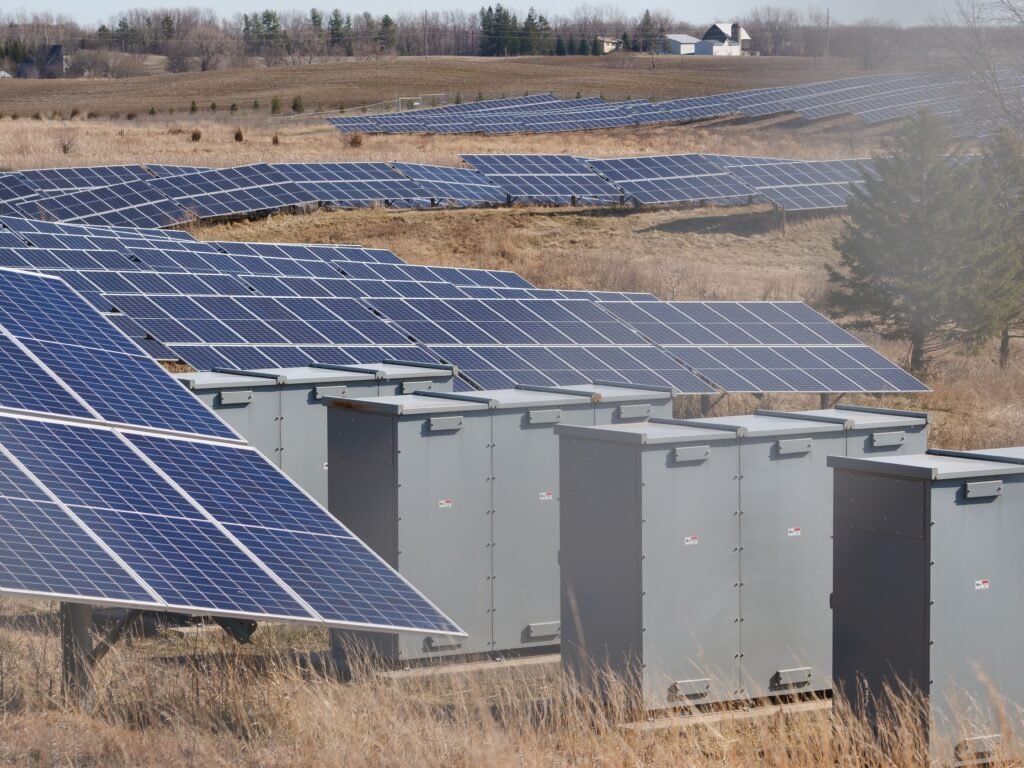
The solar panels on a rooftop get most of the attention. They are the part everyone sees, the part that looks impressive from the street, the part installers photograph for their brochures. But the inverter, the quiet box usually tucked away in a utility room or mounted against a wall, is arguably doing the more important job.
Solar panels generate direct current, or DC, electricity. Homes and the electricity grid run on alternating current, or AC. The inverter’s job is to convert one into the other, and how it does that job, and where it does it, defines an entire category of choice that most first-time solar buyers do not know exists until they are deep into installer conversations.
There are three main types of solar inverters used in residential installations: string inverters, microinverters, and hybrid inverters. Each works differently, suits different situations, and comes with a distinct set of tradeoffs. Here is a clear comparison of all three.
First, What Does Each Inverter Type Actually Do?
Before comparing the three, a quick grounding in what each one is and how it fits into a solar system.
A string inverter is a single, centralized inverter unit that connects to a “string” of solar panels wired together in series. All the panels in that string feed their combined DC output into this one inverter, which converts the total output to AC for use in the home or export to the grid. This is the traditional, most common inverter setup in residential solar installations worldwide.
A microinverter is a small inverter installed on each individual solar panel, converting that single panel’s DC output to AC right at the panel itself, rather than combining multiple panels into a shared, centralized unit. Each panel essentially operates as its own independent power-generating unit.
A hybrid inverter functions like a string inverter but adds the capability to manage battery storage alongside grid and solar power, allowing the system to charge batteries from solar generation, draw from batteries when needed, and switch between solar, battery, and grid power sources intelligently.
With the basics established, here is how the three compare on the factors that matter most.
1. Performance Under Shading and Partial Shade Conditions
This is one of the most significant practical differences between string and microinverters, and it directly affects how much usable electricity your system actually generates if your roof has any shading at all from trees, chimneys, or neighboring structures.
String inverters are vulnerable to a problem where, because all panels in a string are wired together, the lowest-performing panel in that string drags down the output of the entire string. If even one panel is shaded for part of the day, the whole string’s output drops, not just that single panel’s contribution.
Microinverters solve this problem directly, since each panel operates independently. A shaded panel only reduces its own individual output, while every other panel in the system continues generating at full capacity unaffected. For rooftops with any partial shading, even minor shading from a chimney or a nearby tree at certain times of day, this difference can translate into a meaningful gain in total energy harvested over a year.
Hybrid inverters typically share the same string-based architecture as standard string inverters, meaning they carry the same shading vulnerability unless paired with optimizers or designed around a microinverter-style topology, which is less common in hybrid setups.
2. Cost: Upfront Price and Installation Complexity
Cost differences between the three types of solar inverters are substantial and often the deciding factor for budget-conscious buyers.
String inverters are the most affordable option, both in terms of the inverter unit itself and the simpler wiring required during installation, since fewer individual components need to be installed and connected compared to a microinverter setup. This makes string inverters the default choice for most standard residential solar installations in India.
Microinverters cost considerably more upfront, since you need one inverter unit per panel rather than a single centralized unit. Installation labor also tends to be higher due to the additional wiring and individual unit mounting required at each panel location. For a typical Indian residential system, microinverters can add a meaningful premium to the total project cost.
Hybrid inverters cost more than standard string inverters due to their added battery management circuitry and more sophisticated internal electronics, though they remain generally cheaper than a full microinverter setup of comparable panel capacity. The total system cost also depends heavily on whether batteries are included, since the inverter cost alone is only part of the full hybrid system investment.
3. Monitoring and Troubleshooting
How easily you or your installer can identify and diagnose a problem within the system varies considerably between these types of solar inverters, and this becomes especially relevant years after installation when something inevitably needs attention.
String inverters typically only provide monitoring at the string or system level, meaning if output drops, it can be difficult to pinpoint exactly which panel is underperforming without manual testing, since the inverter reports combined output rather than individual panel data.
Microinverters provide panel-level monitoring as a built-in feature, since each panel has its own inverter reporting independently. This makes identifying a faulty or underperforming panel significantly easier and faster, often visible immediately through a monitoring app without requiring a technician visit for initial diagnosis.
Hybrid inverters generally offer system-level monitoring similar to string inverters for the solar generation portion but add detailed monitoring of battery charge levels, charge and discharge rates, and switching behavior between power sources, which is valuable for understanding how well the battery backup portion of the system is performing.
Battery Compatibility and Power Outage Performance
This is the defining difference that separates hybrid inverters from the other two categories entirely, and it is often the single reason a buyer chooses hybrid over string or microinverter setups.
String inverters generally cannot manage battery storage on their own. Adding battery backup to a string inverter system typically requires a separate battery inverter or charge controller alongside the existing string inverter, adding complexity and cost if backup power becomes a priority after the initial installation.
Microinverters similarly do not include native battery management in most standard configurations, though some manufacturers offer compatible battery systems that integrate with microinverter setups through additional dedicated hardware, adding a similar layer of complexity.
Hybrid inverters are purpose-built for battery integration from the outset, managing the flow of power between solar panels, batteries, and the grid automatically and seamlessly. During a power outage, a hybrid inverter system with battery backup continues supplying power to essential loads, while a standard string or microinverter system without separate battery hardware shuts down completely during a grid outage, since most residential systems lack battery backup by default.
For anyone prioritizing power continuity during outages, hybrid is the inverter type built specifically to deliver that capability without needing to bolt on additional equipment later.
Which Inverter Type Should You Choose?
Choose a string inverter if your roof has no significant shading issues, you want the most cost-effective standard solar installation, and battery backup is not an immediate priority. This describes the majority of straightforward residential rooftop installations in India.
Choose a microinverter if your roof has partial shading from trees, chimneys, or neighboring buildings at any point during the day, you want panel-level monitoring for easier troubleshooting, and you are willing to pay a premium for maximizing energy harvest from a less-than-ideal roof.
Choose a hybrid inverter if backup power during outages matters to you, you are planning to add battery storage now or in the near future, and you want a system designed from the start to manage solar, battery, and grid power together rather than retrofitting battery capability onto an existing string inverter setup later.
Frequently Asked Questions
Q1: Can I add battery storage later if I start with a string inverter?
Yes, though it typically requires installing a separate battery inverter or charge controller alongside your existing string inverter, which adds cost and complexity compared to starting with a hybrid inverter designed for battery integration from the outset.
Q2: Are microinverters worth the extra cost for a roof with minimal shading?
For a roof with little to no shading, the cost premium of microinverters often does not translate into a proportional energy gain, since string inverters perform comparably well under fully unshaded conditions. Microinverters deliver their clearest advantage specifically on roofs with partial shading.
Q3: Do hybrid inverters work without batteries installed?
Yes, most hybrid inverters can function as a standard grid-tied string inverter without batteries connected, generating and exporting solar power normally. The battery management features simply remain inactive until batteries are added, giving buyers flexibility to add storage at a later date.
Q4: Which inverter type is most commonly installed in Indian residential solar systems?
String inverters remain the most commonly installed type in India due to their lower cost and simpler installation, particularly for standard rooftop installations without significant shading concerns. Hybrid inverters are growing in popularity as battery prices fall and power outage concerns drive more buyers toward backup-capable systems.
Q5: How long do solar inverters typically last before needing replacement?
String and hybrid inverters typically last 10 to 15 years before requiring replacement, roughly half the expected lifespan of solar panels themselves. Microinverters, due to their distributed design and typically longer manufacturer warranties in many cases, are sometimes rated for similar or slightly longer lifespans, though this varies by manufacturer and model.
The inverter rarely gets the credit the solar panels receive, but it is the component quietly deciding how much of that captured sunlight actually becomes usable electricity in your home. String, microinverter, and hybrid each solve a different problem well. The right choice depends less on which technology sounds most advanced and more on what your roof looks like, what your budget allows, and how much you value staying powered when the grid goes dark.

My work focuses on finding the human stories behind the headlines, from documenting unique cultural traditions to covering stories from communities across Bengal. Previously, I worked as an SEO Content Writer with Penning Down and Collegedunia, combining digital content expertise with newsroom journalism.
I believe impactful journalism is built on accuracy, empathy, and stories that stay with readers.
- Amazon Coupon Code: Up to 70% Off Your Order - October 10, 2024
- Amazon Brand – Solimo 1000ml Stainless Steel Insulated (Thermosteel) Water Bottle | 24 Hours Hot and Cold | Leakproof, Rust and Corrosion Resistant| For Travel, Office, Trekking, Home (Silver) - October 9, 2024
- Panasonic Portable Oral Irrigator/Dental Water Flosser - April 10, 2016
Blog Insights
View All CouponTalk Blogs
12 Best LED Lighting Brands In India

10 Best Water Pump Brands In India
10 Best RO Membrane Brands In India
10 Best Electric Wire Brands In India

10 Best Electric Pressure Cooker Brands In India

10 Best Bathroom Air Freshener Brands In India

Different Types of TubeLights in India