Top 10 Solar Cookers in India 2026 (Box, Parabolic, Panel Compared)

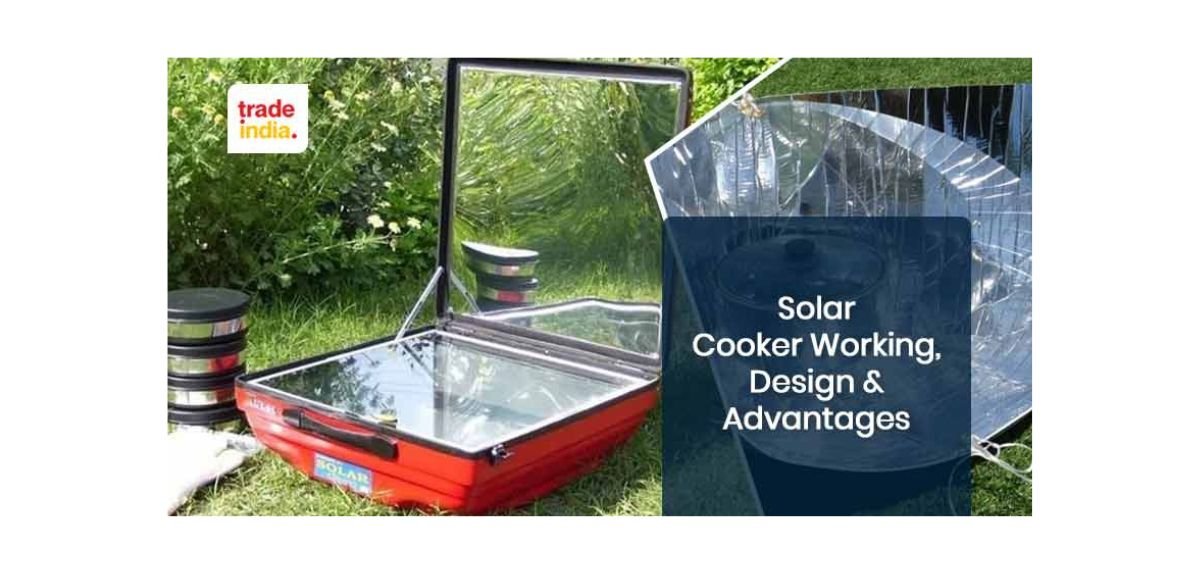
Imagine cooking your dal without turning on the gas.
No cylinder to refill. No flame to worry about. Just sunlight doing the work while you get on with your day.
This is not a futuristic idea. Solar cookers have been around for decades. But in 2026, they are better, more affordable, and more practical than they have ever been. And with LPG prices continuing to rise and India’s solar energy push in full swing, more Indian households are giving them a serious look.
If you are trying to figure out which solar cooker is right for your home, this guide breaks down the top 10 options available in India right now, explains the difference between box, parabolic, and panel types, and helps you choose the one that fits your cooking style and budget.
Best Solar Cookers in India
Box vs Parabolic vs Panel: Which Type of Solar Cooker Is Right for You?
Before choosing a specific model, it helps to understand the three main types of solar cookers and what each is suited for.
Box Solar Cooker
A box solar cooker is exactly what it sounds like. An insulated box with a reflective lid that concentrates sunlight onto pots placed inside.
Here is what you need to know:
- Cooking time: Slower than parabolic. A meal that takes 30 minutes on gas might take 1.5 to 2 hours in a box cooker.
- Temperature reached: Typically 100 to 150 degrees Celsius. Enough for boiling, steaming, baking, and slow cooking.
- Best for: Rice, dal, vegetables, rotis, cakes, and slow-cooked dishes.
- Ease of use: Very simple. Place pots inside, angle toward the sun, and wait.
- Who should buy it: Families who cook simple daily meals and want something low-maintenance.
Parabolic Solar Cooker
A parabolic cooker uses a curved reflective dish to focus sunlight onto a single point, like a lens concentrating light. The cooking pot sits at the focal point.
Here is what you need to know:
- Cooking time: Much faster. It can match or come close to gas cooking times.
- Temperature reached: 200 to 300 degrees Celsius. Enough to fry, boil rapidly, and cook most dishes quickly.
- Best for: Frying, fast boiling, and large quantities of food.
- Ease of use: Requires more attention. The dish needs to be repositioned every 20 to 30 minutes to track the sun.
- Who should buy it: Larger families, canteens, or anyone who wants cooking speed close to gas.
Panel Solar Cooker
A panel cooker uses flat reflective panels arranged around a pot to concentrate sunlight. It is simpler and lighter than the other types.
Here is what you need to know:
- Cooking time: Moderate. Slower than parabolic but faster than box in some conditions.
- Temperature reached: Around 100 to 120 degrees Celsius.
- Best for: Boiling water, simple meals, camping, and outdoor use.
- Ease of use: Very portable and easy to set up.
- Who should buy it: Travellers, campers, or anyone who needs a lightweight option.
Here is a quick comparison before we go into each one in detail.
| Top 10 Solar Cookers in India 2026 | |||
|---|---|---|---|
| Solar Cooker | Type | Best For | Approx Price |
| Nyle Solar Box Cooker | Box | Daily home cooking | Rs. 3,500 onwards |
| Sunny Solar Parabolic Cooker | Parabolic | Fast cooking, large families | Rs. 6,000 onwards |
| Vigyan Ashram Solar Cooker | Box | Village and rural use | Rs. 2,800 onwards |
| SOLNA Panel Solar Cooker | Panel | Lightweight and portable | Rs. 2,200 onwards |
| Tata BP Solar Cooker | Box | Reliable brand option | Rs. 4,000 onwards |
| Gadhia Solar Parabolic Cooker | Parabolic | Canteen and commercial use | Rs. 8,500 onwards |
| Ajit Solar Box Cooker | Box | Beginners and small families | Rs. 3,000 onwards |
| Hind Solar Panel Cooker | Panel | Outdoor and camping | Rs. 1,800 onwards |
| Deepam Solar Cooker | Box | Budget households | Rs. 2,500 onwards |
| Auroville Solar Parabolic Cooker | Parabolic | Research and premium use | Rs. 9,000 onwards |
Prices are approximate and may vary by seller and region.
1. Nyle Solar Box Cooker
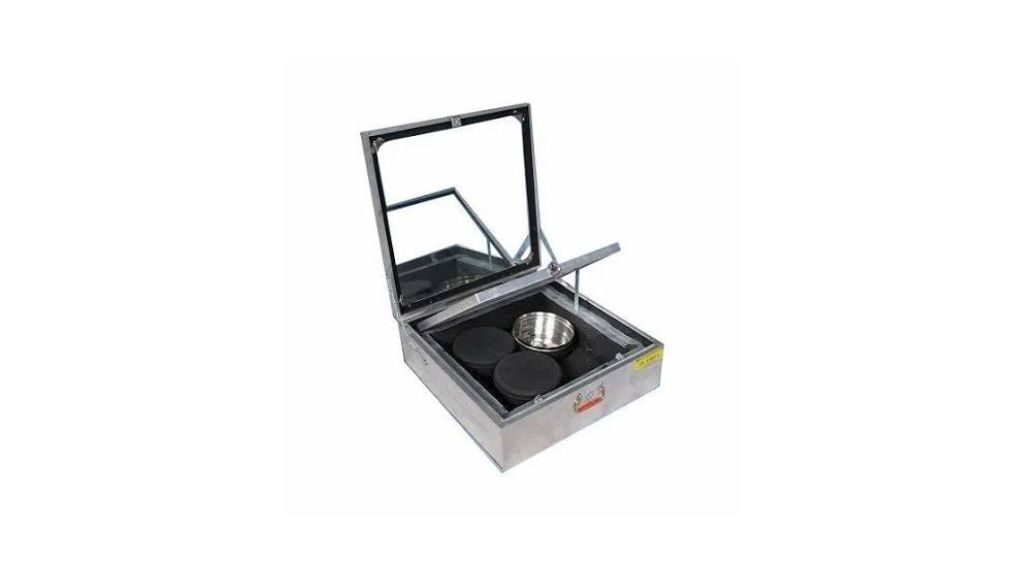
The Nyle is one of the most widely used solar box cookers in Indian homes. It has earned that reputation through consistent performance and straightforward usability.
The double-walled insulation keeps heat in effectively, and the reflector lid is easy to angle. You can cook rice, dal, vegetables, and even bake in it without much effort.
Key Features
- Double-walled insulated box
- Adjustable reflector lid
- Accommodates two to three cooking pots
- Temperatures up to 140 degrees Celsius
- Durable frame and glass cover
Pros: Easy to use, good insulation, reliable brand, suitable for most daily cooking
Cons: Slow cooking times compared to gas
Best For: Families who want a no-fuss daily cooking option and are happy to adjust their cooking schedule around sunlight hours.
2. Sunny Solar Parabolic Cooker
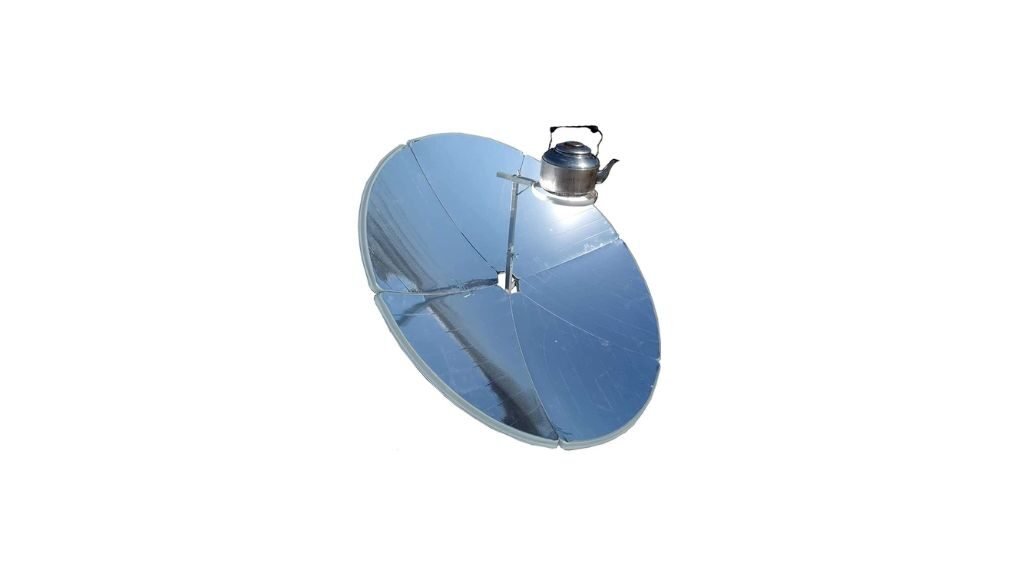
If cooking speed matters to you, the Sunny Parabolic is the closest a solar cooker gets to matching gas on time.
The large reflective dish concentrates a significant amount of solar energy onto a small cooking area. Water boils quickly. Food cooks at temperatures that allow frying and rapid boiling that box cookers cannot reach.
Key Features
- Large parabolic reflective dish
- High focal temperature up to 300 degrees Celsius
- Adjustable stand for sun tracking
- Suitable for large pots
- Durable reflective surface
Pros: Fast cooking, high temperatures, suitable for larger families and larger quantities
Cons: Requires manual repositioning to track the sun, needs more space than a box cooker
Best For: Families with higher cooking volumes who want performance closer to gas cooking.
3. Vigyan Ashram Solar Cooker
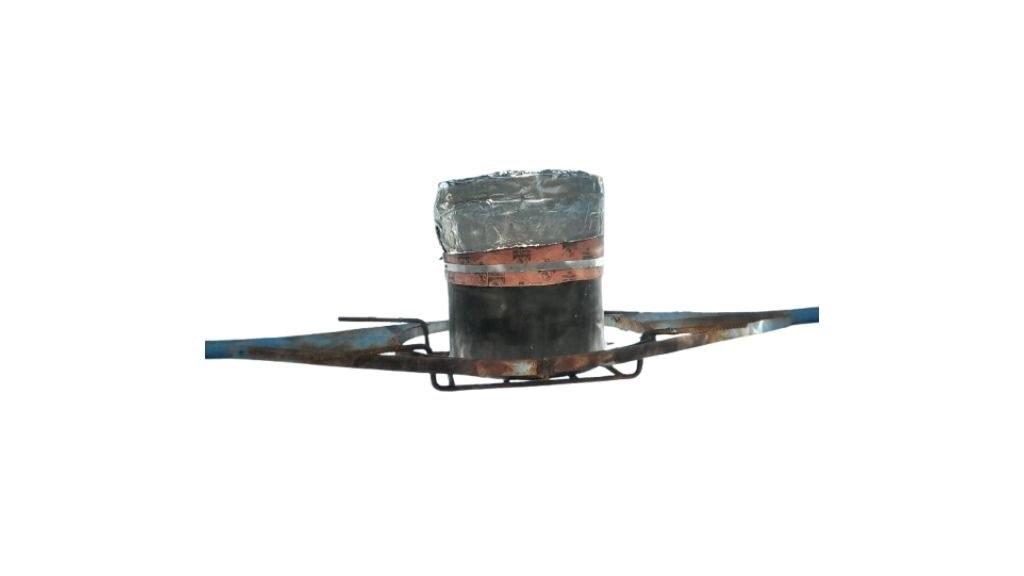
The Vigyan Ashram solar cooker has been designed with rural and semi-urban households specifically in mind.
It is built to be simple, affordable, and repairable. In areas where service centres are far away, a product that a local person can maintain matters. The cooking performance is solid for everyday meals.
Key Features
- Simple and robust construction
- Affordable pricing designed for accessibility
- Good heat retention for everyday cooking
- Easy to operate and maintain
Pros: Very affordable, simple design, suited to rural conditions, easy maintenance
Cons: Basic features compared to premium options
Best For: Rural households, development programmes, and anyone looking for the most affordable, reliable box cooker.
4. SOLNA Panel Solar Cooker
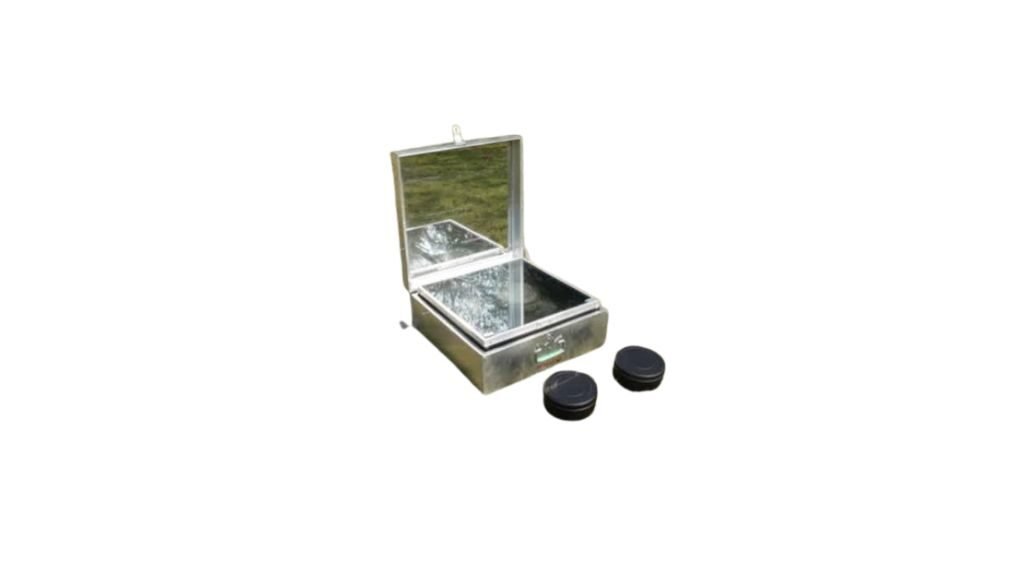
The SOLNA is a good example of how useful a simple panel cooker can be when portability and ease of setup matter.
It folds flat for transport, sets up in minutes, and works well for boiling water, cooking simple meals, and outdoor use. It is not the most powerful option on this list, but it is the most portable.
Key Features
- Foldable panel design
- Lightweight and portable
- Quick setup
- Suitable for pots up to 3 litres
- Reflective aluminium panels
Pros: Highly portable, easy to store, good for camping and travel, affordable
Cons: Lower temperatures than box or parabolic cookers, not suitable for large meals
Best For: Campers, hikers, travellers, and anyone who needs solar cooking on the go.
5. Tata BP Solar Cooker
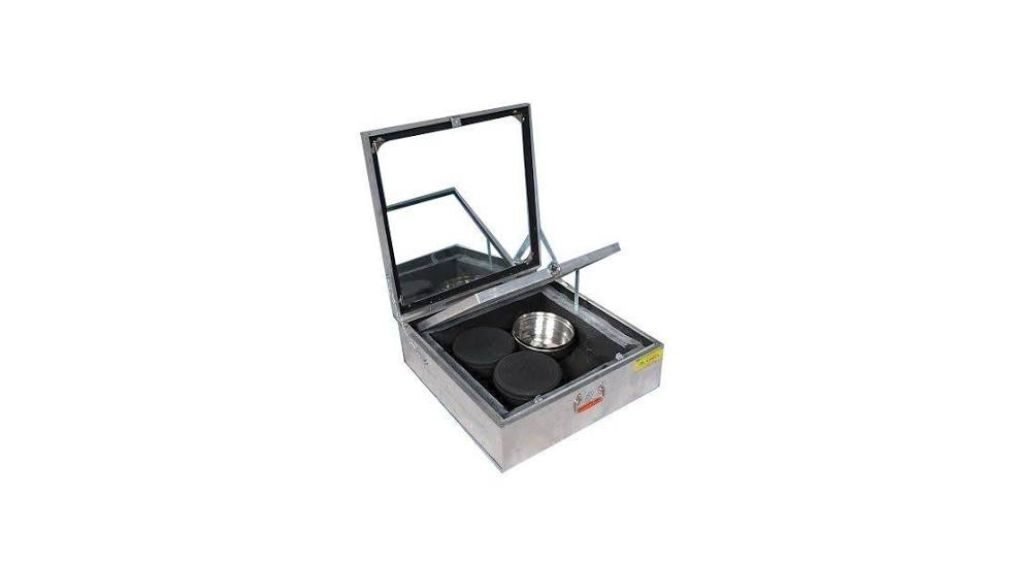
Tata is a name that carries trust across energy products in India, and their solar cooker maintains that standard.
The build quality is reliable. The insulation performs well in Indian summer conditions. And the peace of mind that comes with buying from a known and established brand is a genuine benefit for first-time solar cooker buyers.
Key Features
- High-quality insulated box construction
- Reliable heat retention
- Good reflector design
- Trusted brand with after-sales support
- Accommodates standard Indian cooking pots
Pros: Reliable brand, good build quality, consistent performance
Cons: Priced slightly higher than comparable box cookers from less established brands
Best For: First-time buyers who want the assurance of a recognised brand.
6. Gadhia Solar Parabolic Cooker
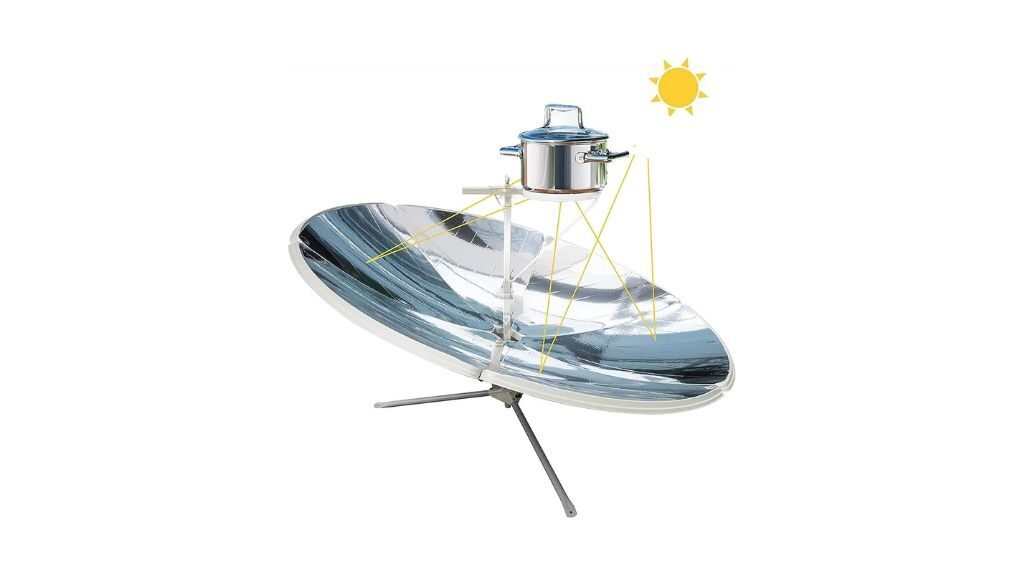
Gadhia Solar is one of India’s most established names in solar thermal cooking. Their parabolic cooker is built for serious use, including canteen operations, hostels, and households with high cooking volumes.
The dish is large. The focal temperatures are high. And the construction is built to last under daily heavy use.
Key Features
- Large diameter parabolic dish
- Very high focal temperatures
- Heavy-duty construction for frequent use
- Suitable for large pots and commercial quantities
- Established manufacturer with service support
Pros: Very high performance, durable, suitable for commercial and institutional use
Cons: Larger footprint, higher price, requires space and attention to sun tracking.
Best For: Canteens, hostels, large joint families, and anyone cooking significant quantities daily.
7. Ajit Solar Box Cooker
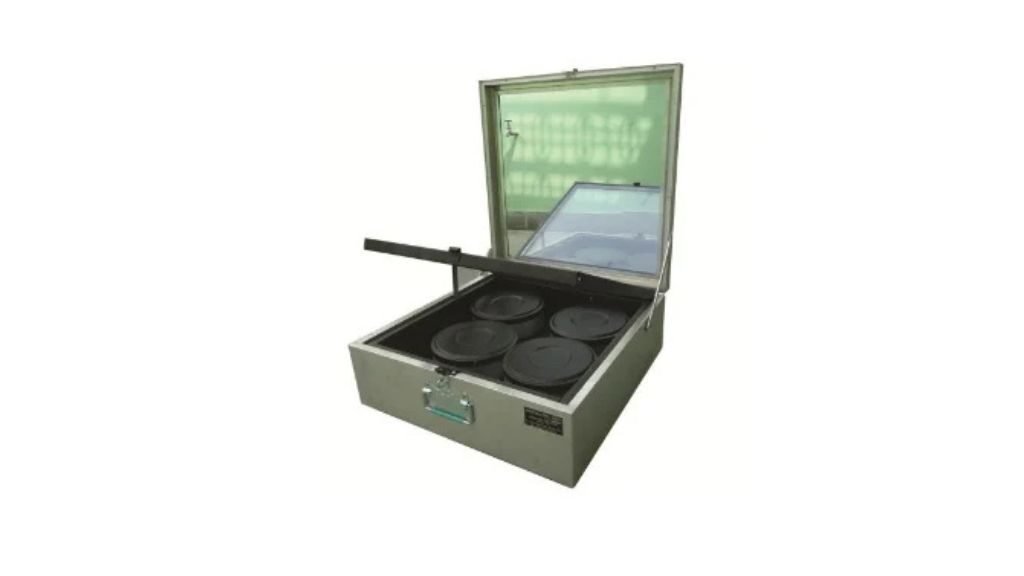
The Ajit is a practical, no-frills box cooker that works well for small families and households trying solar cooking for the first time.
It does not have premium features. But it cooks rice, dal, and vegetables reliably when the sun is out, and the price makes it one of the most accessible entry points into solar cooking.
Key Features
- Standard insulated box design
- Single reflector lid
- Accommodates one to two cooking pots
- Lightweight and easy to handle
- Simple temperature range for everyday cooking
Pros: Affordable, simple to use, good entry-level option
Cons: Limited capacity, basic features
Best For: Small families, students, and first-time solar cooker buyers on a tight budget.
8. Hind Solar Panel Cooker
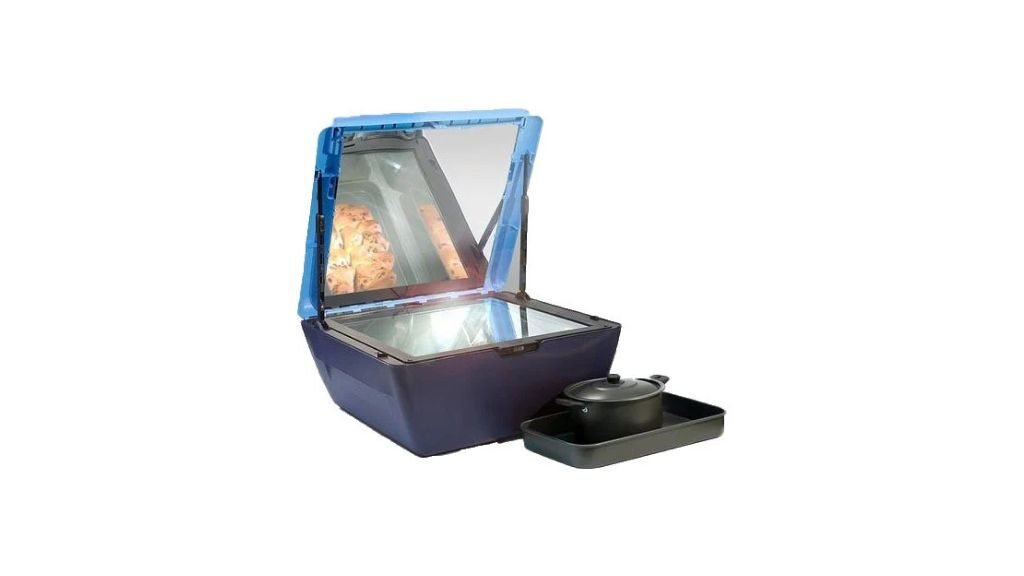
The Hind panel cooker is one of the most affordable solar cooking options available in India. It is basic, lightweight, and does what it needs to do for simple outdoor cooking.
At this price point, you are not getting high temperatures or large capacity. But for boiling water, making tea, or cooking simple meals while camping or outdoors, it is a practical option.
Key Features
- Simple flat panel reflector design
- Very lightweight
- Suitable for small pots
- Easy to set up and pack away
- Extremely affordable
Pros: Very low price, portable, good for basic outdoor use
Cons: Limited cooking capability, not suitable for main household cooking
Best For: Camping, outdoor activities, and as a supplementary cooker for simple tasks.
9. Deepam Solar Cooker
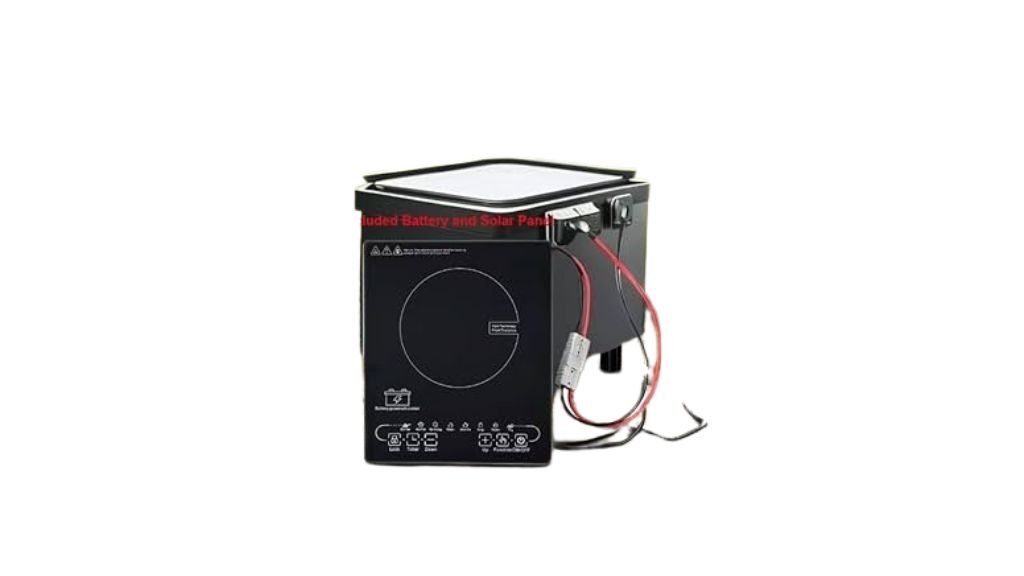
The Deepam is positioned as a budget household option that delivers reliable everyday cooking performance without the premium price of better-known brands.
It is a solid choice for households that want to reduce gas consumption for daily cooking but cannot stretch to a higher-end model.
Key Features
- Standard box cooker design
- Good insulation for the price
- Accommodates standard cooking vessels
- Lightweight and easy to move
Pros: Good value at this price point, decent cooking performance, accessible
Cons: Build quality is not as robust as premium options
Best For: Budget-conscious households wanting to cut gas consumption.
10. Auroville Solar Parabolic Cooker
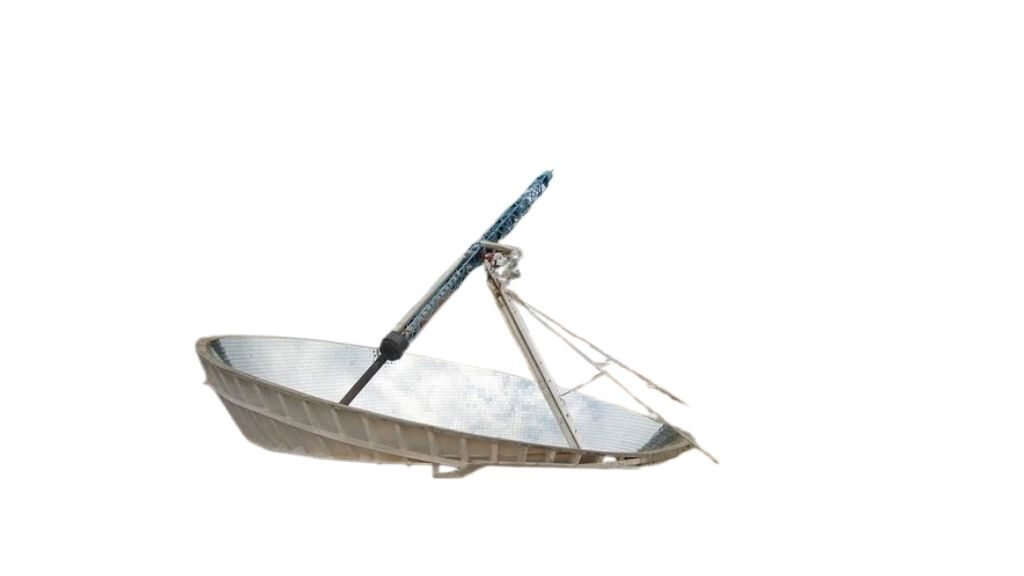
Developed out of the Auroville research community in Tamil Nadu, this parabolic cooker represents one of the more thoughtfully designed options in the Indian market.
The construction quality is high. The focal performance is excellent. And the design reflects genuine research into how parabolic cookers perform across different Indian conditions.
Key Features
- Research-informed parabolic design
- High build quality and durable materials
- Excellent focal temperature performance
- Suitable for full meal cooking
- Produced by a community with deep solar expertise
Pros: High quality, excellent performance, produced by an experienced solar community
Cons: Higher price, less widely available than mainstream brands
Best For: Premium buyers who want the best-designed parabolic cooker available in India.
Top Picks at a Glance
Best Box Solar Cooker: Nyle Solar Box Cooker. Reliable, well-insulated, and suited to everyday Indian cooking.
Best Parabolic Solar Cooker: Gadhia Solar or Sunny Solar Gadhia for commercial and high-volume use. Sunny for home use with speed as the priority.
Best Panel Solar Cooker: SOLNA Panel Solar Cooker Portable, affordable, and practical for outdoor use.
Best Budget Solar Cooker: Deepam or Ajit. Both deliver functional performance at accessible price points.
Best Premium Solar Cooker: Auroville Solar Parabolic Cooker. Research-quality design and excellent performance for serious solar cooking users.
Why Solar Cookers Make Sense in India in 2026
The case for solar cookers has strengthened considerably in recent years.
Here is why more Indian households are making the switch:
- LPG prices keep rising. A solar cooker pays for itself within one to three years, depending on usage, after which cooking is essentially free.
- India gets abundant sunlight. Most parts of India receive 250 to 300 sunny days per year, which is ideal solar cooking weather.
- The environmental benefit is real. Each household using a solar cooker reduces carbon emissions and LPG consumption meaningfully over a year.
- Government support is growing. Various state and central schemes have subsidised solar cookers for rural households, making them more accessible.
- Technology has improved. Modern solar cookers are better built and more effective than older models, making the switch more practical.
FAQs
Which type of solar cooker is best for Indian cooking?
Box cookers are best for everyday cooking like rice, dal, and vegetables. Parabolic cookers are better if you want faster cooking or need to fry food. Panel cookers are best for portability.
How long does it take to cook in a solar cooker?
Box cookers typically take 1.5 to 2.5 hours for a full meal. Parabolic cookers can cook significantly faster, sometimes within 30 to 45 minutes, depending on the dish.
Do solar cookers work in winter?
Yes, but effectiveness is reduced in winter and on cloudy days. Box cookers in particular retain enough heat to cook on most clear winter days in most parts of India.
Can you fry food in a solar cooker?
Not in a box or panel cooker. Parabolic cookers reach high enough temperatures to allow frying.
Is a solar cooker useful in a city apartment?
Box and panel cookers can be used on a balcony or terrace with good sun exposure. Parabolic cookers need more open space and are better suited to ground-floor or rooftop use.
What is the lifespan of a solar cooker?
A well-maintained solar cooker typically lasts 10 to 15 years. Reflective surfaces may need replacing after several years.
Final Thoughts
Solar cookers are one of the most practical ways to reduce fuel costs and energy dependence for Indian households.
The right choice depends on how you cook, how much you cook, and how much space you have.
If you want something simple and reliable for daily cooking, the Nyle box cooker is a strong starting point. If you want cooking speed closer to gas, the Sunny or Gadhia parabolic cookers deliver. If you need something portable, the SOLNA panel cooker is the most practical option. And if budget is the primary concern, the Deepam and Ajit options give you genuine solar cooking capability at the lowest entry cost.
Whichever you choose, a solar cooker is an investment that saves money, reduces gas dependency, and keeps cooking even when cylinders run out.
The sun is not going anywhere. You might as well put it to work.

My work focuses on finding the human stories behind the headlines, from documenting unique cultural traditions to covering stories from communities across Bengal. Previously, I worked as an SEO Content Writer with Penning Down and Collegedunia, combining digital content expertise with newsroom journalism.
I believe impactful journalism is built on accuracy, empathy, and stories that stay with readers.
- Cocoa Butter Formula, Body Massage Lotion for Stretch Marks - April 9, 2016
- Ultra-calming makeup removing wipes - April 9, 2016
- Eczema therapy hand cream - April 9, 2016
Blog Insights
View All CouponTalk Blogs
12 Best LED Lighting Brands In India

10 Best Water Pump Brands In India

10 Best RO Membrane Brands In India
10 Best Electric Wire Brands In India

10 Best Electric Pressure Cooker Brands In India

10 Best Air Fryer Brands In India



10 Best Bathroom Air Freshener Brands In India

8 Best Roti Makers Brands In India


10 Best Coolant Brands In India