Best Non-Stick Tawa for Roti in India (2026): Tested Picks and Honest Buying Guide

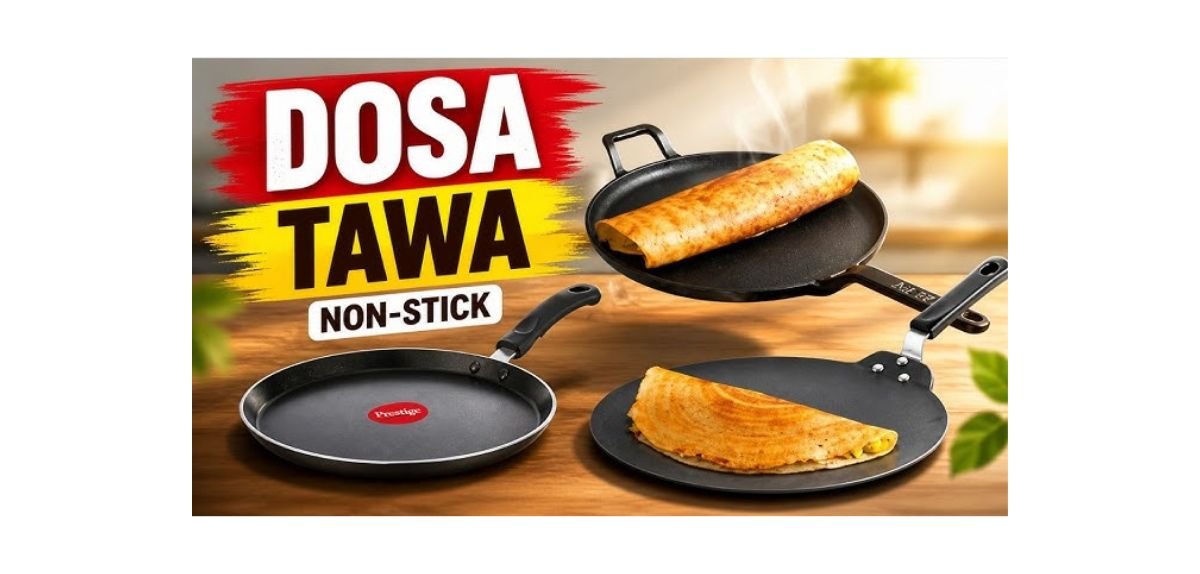
Soft rotis start with the right tawa, but choosing one isn’t as simple as picking the first non-stick option you see online. Many buyers end up with tawas that heat unevenly, warp after a few months, lose their coating too quickly, or simply fail to make the soft, puffed rotis they were expecting.
That is where finding the best non-stick tawa for roti becomes important. A good tawa should distribute heat evenly, require minimal oil, work with your cooktop, and last long enough to justify the price you pay.
In this guide, we have compared the most popular non-stick roti tawas available in India, evaluated their coating quality, base thickness, induction compatibility, durability, and overall cooking performance. Whether you want a budget-friendly option, an induction-compatible model, or a premium tawa built for daily use, you’ll find the right choice here.
By the end, you’ll know exactly which non-stick tawa is worth buying for soft, evenly cooked rotis in 2026.
Best Non-Stick Tawa for Roti in India
Is a Non-Stick Tawa Good for Making Roti? Pros, Cons and Safety
A non-stick tawa is a good choice for roti if you cook every day and want to use less oil. The roti slides off the surface without tearing, and you can make a soft chapati with almost no ghee, which is why it is the easiest tawa for anyone who is still learning to cook.
A non-stick tawa also has a few limitations worth knowing before you spend your money.
Where a Non-Stick Roti Tawa Wins
- It uses very little oil, which is better for your daily diet.
- Rotis and chapatis release cleanly, so the dough does not tear or stick.
- It is light to lift, which helps older family members and anyone with weak wrists.
- It cleans up in a few seconds with a soft sponge.
- A decent one starts under ₹700, so the entry cost is low.
Where a Non-Stick Tawa Falls Short
- The coating wears out in about two to four years and then needs to be replaced.
- It cannot handle a very high flame for long without getting damaged.
- Most models need wooden or silicone tools rather than steel ones.
- It does not give the smoky, charred phulka that a cast-iron tawa or an open flame gives.
- It has to be thrown away once the surface scratches or peels.
Are Non-Stick Tawas Safe for Daily Roti?
Modern non-stick tawas from Hawkins, Prestige, Bergner and Wonderchef use PFOA-free coatings because PFOA was once a chemical people worried about, and these brands removed it from their cookware years ago.
The coating on the tawa is PTFE, which is considered safe at the normal heat used for roti, meaning a low-to-medium flame. Three simple habits keep it safe and make it last.
1. Never heat an empty non-stick tawa on a high flame.
2. Keep the flame on low to medium while you cook rotis.
3. Replace the tawa as soon as the coating starts to peel or scratch.
Readers who want to avoid coatings altogether can choose a ceramic tawa or a cast-iron tawa, both of which are covered later in this guide.
Non-Stick vs Cast Iron vs Hard-Anodised Tawa for Roti: Which Should You Buy?
Many buyers compare these options before deciding, so the table below shows how each performs for daily roti cooking in an Indian home.
| Feature | Non-Stick | Cast Iron | Hard-Anodised | Ceramic |
| Oil needed | Very low | Low after seasoning | Low to medium | Very low |
| Heat for puffing | Medium | Excellent | Very good | Medium |
| Durability | 2 to 4 years | Decades | 8 to 10 years | 2 to 4 years |
| Weight | Light | Heavy | Medium | Light |
| Maintenance | Easy | Needs seasoning | Easy | Easy |
| Best for | Daily soft rotis, less oil | Crisp phulka, long life | Tough daily use | No-coating, health-first |
Non-stick is the best fit if you want soft rotis with minimal oil and easy cleaning. Cast iron lasts a lifetime and produces a properly charred phulka, though it is heavy and requires regular seasoning. Hard-anodised sits in the middle as a tough, low-maintenance option, while ceramic offers an easy non-stick feel without a PTFE coating.
How We Tested and Chose the Best Non-Stick Roti Tawas
We focused on the tawas that Indian families actually buy and keep using, rather than the ones with the flashiest advertising. For each tawa, we checked the points that decide whether your roti turns out well and whether the tawa lasts.
- The coating type and whether it is PFOA-free.
- The base thickness, because a thin base warps and burns the roti in the centre.
- The size of a normal Indian gas burner.
- Whether it works on induction or only on gas.
- The comfort of the handle and the length of the warranty.
We cross-checked every specification and price against the brand pages and major Indian stores in 2026. Prices change often, so please treat ours as a guide and check the live price on the day you buy.
The Best Non-Stick Tawa for Roti in India (2026): Detailed Reviews
| Tawa | Size | Stove | Approx. price | Best for |
| Hawkins Futura Non-Stick Flat | 30 cm | Gas (INFT30 for induction) | ₹1,500 | Best overall, all-rounder |
| Prestige Omega Granite | 30 cm | Gas & induction | ₹1,000 to ₹1,300 | Induction, tough coating |
| Prestige Omega Select Plus (concave) | 25 cm | Gas | ₹450 to ₹650 | Budget, first tawa |
| Bergner Bellini Plus Aura (concave) | 26 to 28 cm | Gas & induction | ₹1,100 | Puffed rotis |
| Bergner Hi-Tech Giro X (ceramic) | 26 cm | Gas & induction | ₹1,200 to ₹1,500 | No PTFE, health-first |
| Wonderchef Ebony (hard-anodised) | 28 cm | Gas | ₹1,800 to ₹2,200 | Premium, long life |
The prices above are approximate and were checked in 2026, so please confirm the live price before buying.
1. Hawkins Futura Non-Stick Flat Tawa, 30 cm: Best Overall
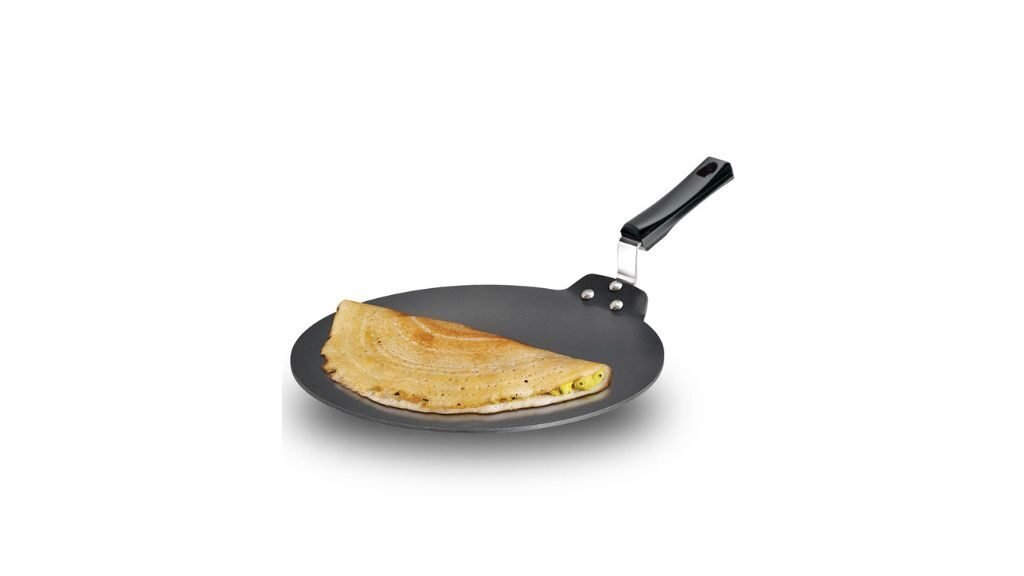
This is the tawa we recommend to most homes, because it has a non-stick coating over a hard-anodised aluminium body that heats evenly and does not develop hot spots in the centre. Rotis, parathas, dosas and omelettes all come off the surface cleanly with very little oil.
- Size and base: 30 cm, with a thick base that resists warping.
- Stove: The standard NFT30 model is for gas only, while the INFT30 version has an induction base for induction cooktops.
- Coating: PFOA-free non-stick, best used with wooden or silicone tools.
- In the box: The tawa, a wooden spatula, a nylon scrubber and a guarantee card.
- Roti note: The flat surface makes it a true all-rounder, and although rotis stay soft, a flat tawa puffs them a little less than a concave one.
Best for: Families who want one reliable tawa for everything and plan to keep it for years. Approximate price ₹1,500.
2. Prestige Omega Granite Non-Stick Tawa, 30 cm: Best for Induction
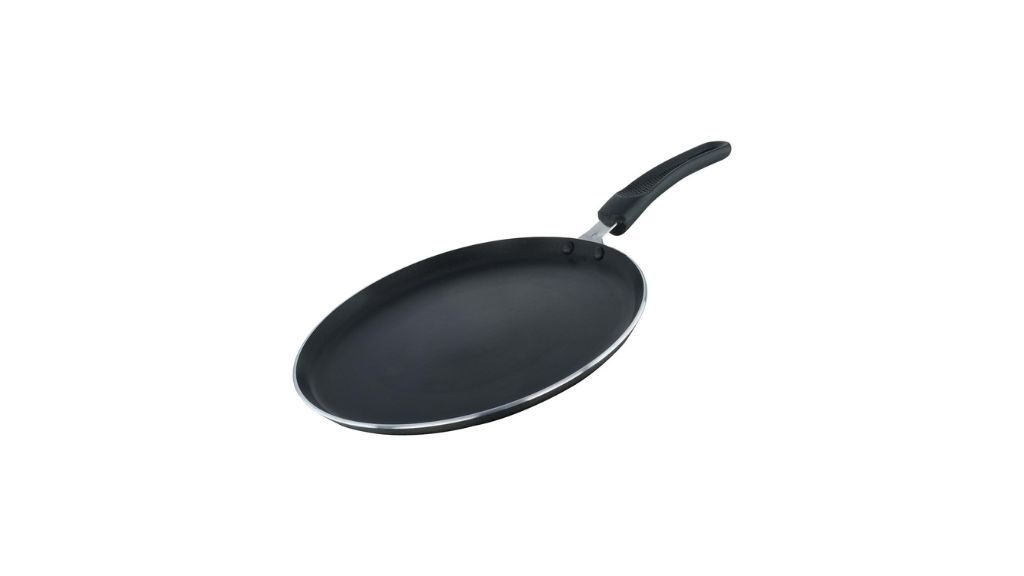
If your kitchen runs on induction, this is the tawa to pick, because it has a five-layer granite-finish coating and an extra-thick 4.88 mm base that heats evenly and does not bend over time. It works on both gas and induction, which keeps it useful even if you switch to a different stove later.
- Size and base: 30 cm, with a 4.88-mm-thick base.
- Stove: Gas and induction.
- Coating: PFOA-free, metal-spoon friendly, dishwasher safe and ISI certified.
- Warranty: Two years.
- Roti note: The flat, large surface suits large rotis and parathas, and the granite coating handles daily use better than basic non-stick coatings.
Best for: Induction users and anyone who wants a tougher coating. Approximate price ₹1,000 to ₹1,300.
3. Prestige Omega Select Plus Concave Tawa, 25 cm: Best Budget
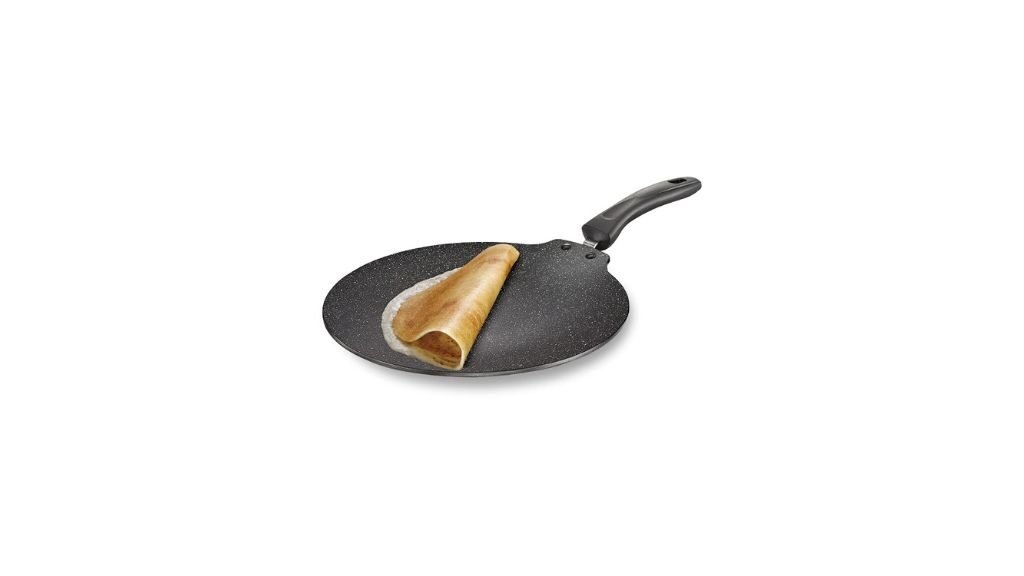
This is the most affordable pick that still does the job well, and it uses the traditional concave shape that helps chapati puff up. The coating is a three-layer PFOA-free non-stick, and the tawa is light and easy to handle for everyday use.
- Size and base: 25 cm, with a 3 mm base.
- Stove: Gas only, while the Omega Deluxe concave version adds induction support.
- Coating: PFOA-free non-stick and metal-spoon friendly.
- Warranty: One year.
- Roti note: The concave shape pools the heat in the centre and helps the roti puff, and the 25 cm size suits a small to medium family.
Best for: A first tawa, a hostel or PG kitchen, or a low-cost spare. Approximate price ₹450 to ₹650.
4. Bergner Bellini Plus Aura Concave Roti Tawa: Best for Puffed Rotis
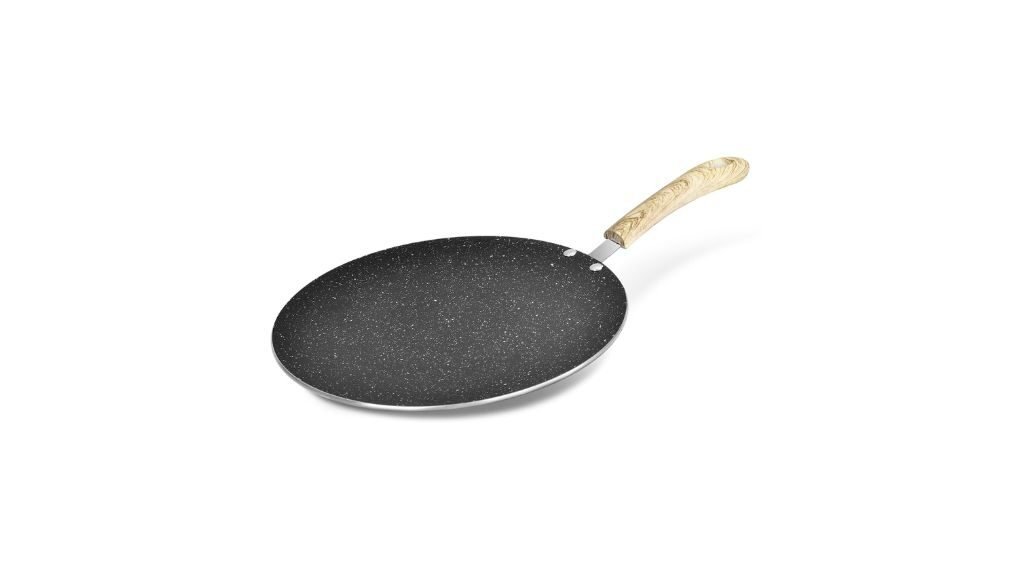
A concave tawa with a good coating is the right tool when puffing your roti matters most, and this Bergner delivers that with a five-layer Greblon C3 coating from Germany. It also has a soft-touch handle that stays cool and works on both gas and induction.
- Shape: Concave, built for rotis and chapatis.
- Stove: Gas and induction.
- Coating: A five-layer PFOA-free coating that lasts longer than basic single-layer non-stick.
- Handle: Soft-touch and heat-resistant.
- Roti note: The concave base helps the roti balloon up, and the multi-layer coating holds up well to daily use.
Best for: Anyone whose main goal is soft, puffed rotis every day. Approximate price ₹1,100.
5. Bergner Hi-Tech Giro X Ceramic Roti Tawa: Best Ceramic Without PTFE
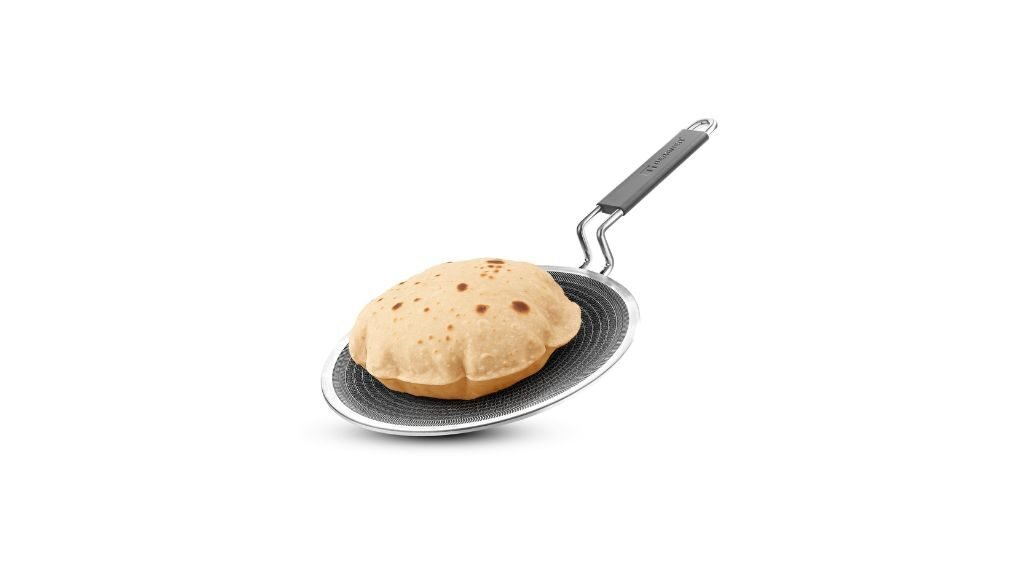
This tawa suits buyers who want the ease of non-stick release without a PTFE coating at all. Ceramic coatings are made from sand-based materials and are free of both PFOE and PTFE, making them a sensible choice for a health-first kitchen.
- Coating: Ceramic, free from PTFE and PFOA.
- Stove: Gas and induction, depending on the model.
- Care: Use low to medium heat and soft tools, since ceramic chips if you use steel spatulas.
- Roti note: It releases rotis cleanly with little oil, though the surface still wears over a few years like any coating.
Best for: Families who want a coating-light, non-toxic option. Approximate price ₹1,200 to ₹1,500.
6. Wonderchef Ebony Hard Anodised Roti Tawa: Best Premium Pick
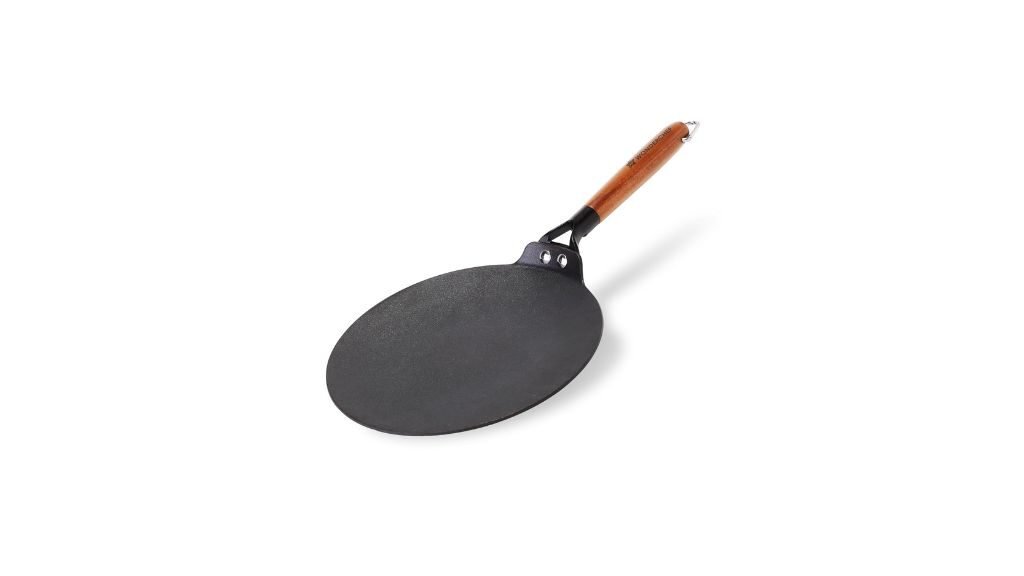
This is not a coated non-stick tawa, but it is worth knowing about if you want something that lasts much longer. Hard-anodised aluminium is treated to be about 2.4 times harder than steel, so it resists scratches and warping. The concave design with a thick 4.06 mm base spreads heat well and helps rotis puff.
- Body: 60-micron hard-anodised aluminium, with a 4.06 mm base.
- Shape: Concave, with a wooden handle.
- Care: There is no synthetic coating to peel, though it needs a little oil and is not dishwasher-friendly.
- Roti note: It cooks fluffy rotis and lasts far longer than a coated tawa.
Best for: Buyers who will pay more for a tawa that lasts eight to ten years. Approximate price ₹1,800 to ₹2,200.
| If you want no coating at all, look at the Hawkins Futura Cast Iron Tava (22 cm, CIT22) or the CUMIN CO. Cast Iron Roti Tawa (26 cm, with a 10-year warranty). Both become naturally non-stick once seasoned, work on gas and induction, and use no chemical coating. They are heavier and need basic care, but they last for decades. |
How to Choose the Right Non-Stick Tawa for Roti: Buyer’s Checklist
What Size Tawa Is Best for Roti?
The right size depends on your family size and your burner, and these ranges work for most homes.
- 1 to 2 people: 22 to 25 cm.
- 3 to 4 people: 26 to 28 cm, which is the sweet spot for most homes.
- 5 or more people: 30 cm, used on a medium-to-large burner so the edges cook properly.
Flat vs Concave Tawa: Which Is Better for Roti and Phulka?
A concave tawa dips slightly in the centre, and that shape pools the heat so the roti puffs up into a phulka more easily. A flat tawa is more of an all-rounder that works well for rotis, dosas, parathas and eggs.
A concave tawa suits you if your main job is soft, puffed rotis, while a flat tawa is the better choice if you want a single tawa for many dishes.
Which Non-Stick Coatings Are Safe?
Look for the words PFOA-free on the box, and remember that a granite-finish or five-layer coating lasts longer than a basic single layer. A ceramic tawa is a good option if you want no PTFE at all, and in any case, cooking at low to medium heat keeps the coating safe and helps it last longer.
Is the Tawa Induction-Compatible? A Simple Test
Many tawas are designed for gas only, so if you cook on induction, check the listing for an induction base before you buy. A quick way to confirm this is to hold a fridge magnet against the bottom of the tawa, because the tawa will work on induction if the magnet sticks firmly, and it will not work if the magnet slides off.
Induction users should also note that the base must be flat to sit level on the plate. A deep concave tawa heats unevenly on induction, so a flat tawa or a concave one with a flat induction base is the safer choice.
How to Use a Non-Stick Tawa for Soft, Puffed Rotis
Get the Tawa Temperature Right
Most roti problems come from the wrong heat, so it helps to run a simple test before you cook. Sprinkle a few drops of water on the tawa and watch how they behave.
- If the water just sits there, the tawa is too cold; wait longer.
- If the water sizzles and dries in 2 to 3 seconds, the heat is right and you can put the roti on.
- If the water skids around in tiny balls, the tawa is too hot; lower the flame for half a minute.
How to Make Roti Puff on a Non-Stick Tawa
4. Heat the tawa on a medium flame until the water test shows the right temperature.
5. Place the rolled roti on the tawa and wait until you see small bubbles, which takes about 15 to 20 seconds.
6. Flip the roti and let the second side cook for around 20 seconds.
7. Flip it once more and press the edges gently with a cloth or spatula, so the steam builds inside and the roti puffs.
On a gas stove, you can finish the roti over a low, open flame for a fuller puff, while on induction, let the tawa do all the work and avoid pressing too hard.
How to Make Your Non-Stick Coating Last Longer
- Use wooden or silicone tools rather than steel ones, unless the box says the tawa is metal-spoon-friendly.
- Cook over low to medium heat, and never heat the tawa when it is empty.
- Let the tawa cool down before you wash it, so it does not warp.
- Wash it with a soft sponge rather than a steel scrubber.
Common Non-Stick Roti Tawa Problems (and How to Fix Them)
Problem: Roti Sticks to the Tawa
Why does it happen:
A non-stick tawa that hasn’t been heated properly can cause the dough to cling to the surface before it starts cooking. Sticking can also occur when the non-stick coating has worn out over time.
How to fix it:
- Preheat the tawa before placing the roti on it. Use the water-drop test to check if it is ready.
- Cook over medium heat rather than very low heat.
- Replace the tawa if the coating looks dull, scratched, or damaged. Most non-stick tawas last around 2–4 years with regular use.
Problem: Uneven Cooking or Warping
Why does it happen:
Thin tawas often distribute heat poorly, causing the centre of the roti to cook faster than the edges. Sudden temperature changes can also warp the base.
How to fix it:
- Choose a tawa with a base thickness of at least 3 mm (4 mm is ideal for induction cooktops).
- Avoid pouring cold water on a hot tawa.
- Allow the tawa to cool naturally before washing.
Problem: Peeling or Damaged Non-Stick Coating
Why does it happen:
Frequent use of metal utensils, abrasive scrubbers, or overheating can damage the non-stick surface over time.
How to fix it:
- Use wooden, silicone, or nylon utensils.
- Clean with a soft sponge instead of harsh scrubbers.
- Replace the tawa immediately if the coating starts peeling, flaking, or develops deep scratches.
Final Verdict
If you want one tawa that does everything and lasts, the Hawkins Futura Non-Stick Flat Tawa is the safe choice for most Indian homes. Beyond that, your kitchen decides the rest.
- For an induction cooktop: the Prestige Omega Granite 30 cm.
- For a tight budget: the Prestige Omega Select Plus concave tawa.
- For puffed rotis: the Bergner Bellini Plus Aura concave tawa.
- For no PTFE coating: a ceramic tawa, or a cast iron tawa for the long run.
Whichever tawa you choose, cook on a low to medium flame, preheat it with the water test, and use soft tools, and it will give you soft rotis for many years. For coupons and discounts, you can reach out to CouponTalk and explore new coupons to get exciting offers today!
Frequently Asked Questions
Which is the best non-stick tawa for roti in India?
The Hawkins Futura Non-Stick Flat Tawa (30 cm) is the best all-round choice for most homes, because it heats evenly and lasts for years, while the Prestige Omega Granite 30 cm is the better pick for induction kitchens.
Is a non-stick tawa safe for daily roti?
A PFOA-free non-stick tawa is safe for daily rotis as long as you cook on a low to medium flame, never overheat it when empty, and replace it once the coating peels or gets scratched.
Which tawa is best for soft, puffed rotis?
A concave tawa puffs rotis better than a flat one, because its dipped shape holds the heat in the centre, and the Bergner Bellini Plus Aura concave tawa is a good non-stick option for puffed rotis.
Cast iron or non-stick tawa for roti?
A non-stick tawa is better if you want a lightweight, low-oil option with easy cleaning, while a cast-iron tawa is better if you want a tawa that lasts for decades and gives a charred phulka, provided you do not mind the weight and the seasoning.
What size non-stick tawa should I buy for roti?
A 22 to 25 cm tawa suits one to two people, a 26 to 28 cm tawa suits a family of three to four, and a 30 cm tawa suits five or more people when used on a larger burner.
Which non-stick tawa is best for an induction cooktop?
The Prestige Omega Granite 30 cm is a strong choice for induction, and you should make sure any tawa you buy has an induction base, which the fridge-magnet test will confirm.

Blog Insights
View All CouponTalk Blogs
12 Best LED Lighting Brands In India

10 Best Water Pump Brands In India
10 Best RO Membrane Brands In India
10 Best Electric Wire Brands In India
10 Best Electric Pressure Cooker Brands In India

10 Best Air Fryer Brands In India