Aquaguard vs Kent Water Purifier: Which Is Better for Indian Homes? (2026)

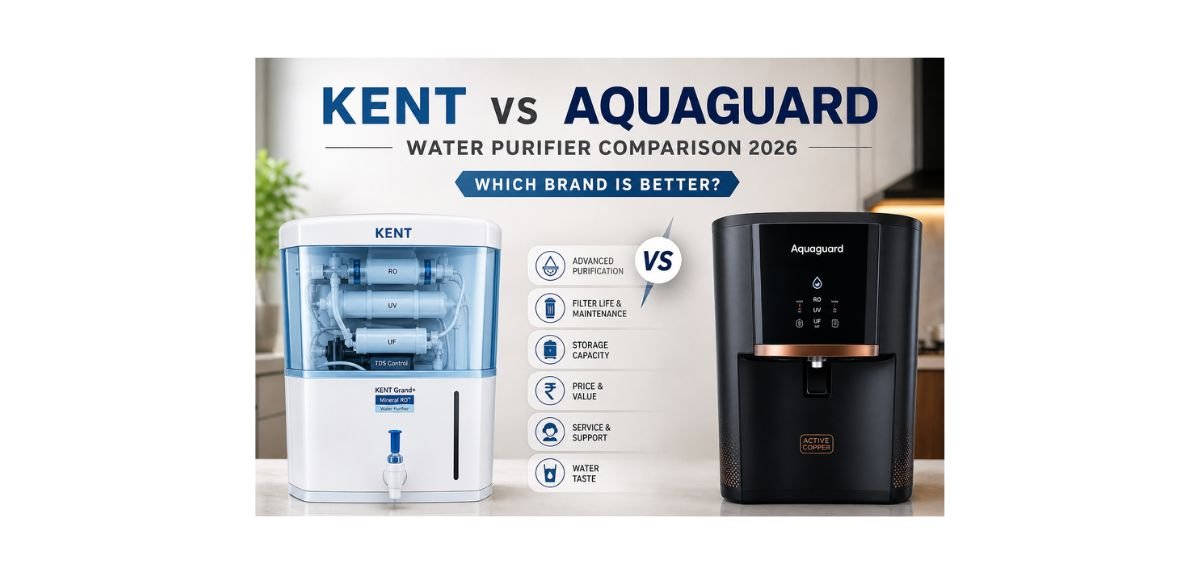
You have probably asked a neighbour which water purifier to buy and got two different answers. One swears by Kent. The other says Aquaguard is the only brand worth trusting. Both cost ₹15,000 or more, so the confusion is fair.
This guide settles it for an Indian home. We compare the two based on what actually determines your daily experience: how they handle your local water, how the water tastes, what you pay each year to keep them running, and how easy they are to repair in your city.
By the end, you will know which one fits your water and your budget, and which exact model to pick.
Best Aquaguard vs Kent Water Purifier
Aquaguard vs Kent Comparison at a Glance (2026)
Here is the full picture side by side before we go into detail.
| Feature | Kent | Aquaguard |
| Parent company | Kent RO Systems (started in 1999 by Mahesh Gupta) | Eureka Forbes |
| Known for | Mineral RO with TDS controller | Active Copper, Zinc and taste |
| Core technology | RO + UV + UF on most models | RO, UV and UF across a wide range |
| Taste approach | Adjustable, retains some natural minerals | Adds copper, zinc and minerals for a sweet taste |
| Design | Transparent, industrial, bulkier | Sleek, premium, modern finishes |
| Spare parts | Standard, widely available | Often proprietary, some models lock non-genuine filters |
| Repair after warranty | Easy and cheaper, local technicians can fix | Mostly official service, pricier parts |
| Service network | Strong in metros and big cities | Very wide, reaches Tier 2 and Tier 3 towns |
| Water saving | Zero water wastage on premium models | Recovers part of the reject water |
| Price range (approx) | around ₹8,000 to ₹25,000 | around ₹7,000 to ₹30,000 |
Note: Prices are approximate for 2026 and are subject to change. Confirm the current price on the product page.
Aquaguard vs Kent: How the Purification Technology Differs
Both brands use the same building blocks, RO, UV and UF. The difference is in what they do with the minerals and the taste.
How Kent’s Mineral RO and TDS Controller Works
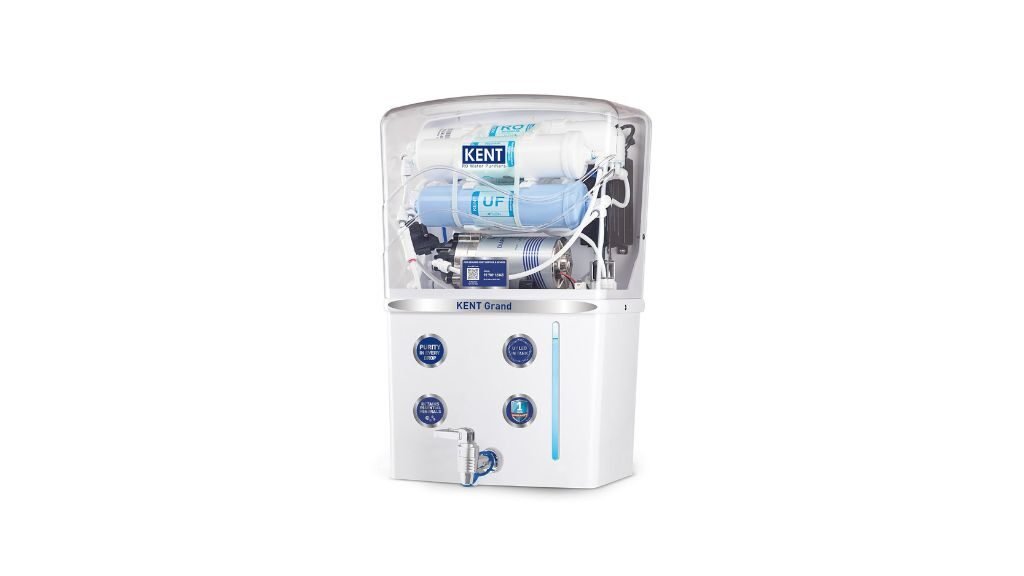
Kent pushes water through the RO membrane first, which strips out almost everything, including dissolved salts and heavy metals. A TDS controller then mixes a small amount of the original water back in, so the purified water still holds some natural minerals.
The useful part is control. A technician can adjust the TDS knob inside the machine. If the water tastes too flat, you turn it one way. If it tastes salty, you turn it over. This helps a lot when your supply keeps switching between tanker and borewell.
How Aquaguard’s Active Copper and Mineral Guard Works
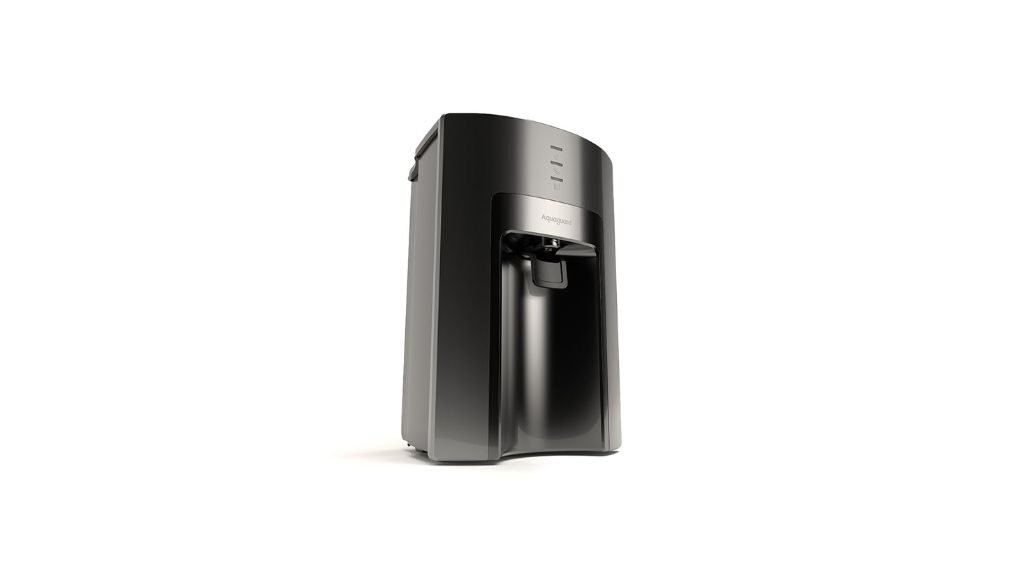
Aquaguard takes a different route. After purification, it adds minerals back through the cartridges. Active Copper and Zinc infuse the water with ions, and Mineral Guard keeps calcium and magnesium in the water.
The result stays consistent. Every glass tastes about the same, whatever your input water does. This suits a stable supply like corporation water, where there is nothing to keep adjusting.
Which One Tastes Better?
Taste is personal, so here is the honest split. Aquaguard water tends to taste sweeter, closer to the matka water many Indian homes grew up with, because of the copper and mineral addition. Kent water tastes more neutral, like bottled water, and you can tune it with the TDS controller.
Want a sweet glass with no effort? Lean Aquaguard. Want to set the taste yourself? Lean Kent.
Aquaguard vs Kent for Hard Water: Which Handles High TDS Better?
This is the most important question because the wrong choice can mean bad taste or wasted money.
First, know your water. TDS means total dissolved solids, measured in ppm or mg/L. A TDS meter costs under ₹200 on any shopping app. Dip it in a glass of your tap water and note the number.
Quick reference for India:
| Your tap TDS | What it means | What to buy |
| Below 150 | Soft water, low minerals | UV or UV+UF is enough; RO is not needed |
| 150 to 300 | Good drinking range | UV+UF, or RO, only if other contaminants are present |
| 300 to 500 | Borderline, within the BIS acceptable limit | RO with a TDS controller, or a strong UV+UF |
| Above 500 | Hard water, common in borewells | RO is a must |
The Bureau of Indian Standards lists 500 mg/L as the acceptable TDS limit for drinking water, and up to 2000 mg/L only when no other source exists. The WHO rates water below 300 as excellent for taste. So if your TDS is already low, an RO machine strips out useful minerals, and your money goes into a feature you do not need.
Best for High TDS or Borewell Water
Winner: Kent. Kent machines are built for heavy, high TDS water and handle levels well above 1000 ppm without choking. If your buckets show white scaling or your area relies on borewell or tanker water, a Kent RO like the Grand+ is a reliable choice.
Best for Low TDS or Municipal Water
Winner: Aquaguard. If you get soft corporation water below 300 ppm, you do not need a heavy RO. Aquaguard’s UV+UF models clean the water, kill bacteria, and retain natural minerals, which is exactly right for this water. You also save on running costs, because UV machines waste no water.
Aquaguard vs Kent by City: Which Suits Your Local Water?
Water changes from city to city, and even between two colonies in the same city. Treat the table below as a starting point, then test your own TDS before you buy.
| City | Usual water and TDS | Better pick | Why |
| Delhi NCR | Borewell and tanker, 500 to 1500 | Kent RO | High, changing TDS needs a strong RO with control |
| Mumbai | BMC municipal, 80 to 200 | Aquaguard UV+UF | Soft water, RO is overkill and wastes minerals |
| Bengaluru | Cauvery and borewell mix, 200 to 600 | Kent with the TDS controller | TDS swings by season; you need the adjustment |
| Chennai | Metro water and borewell, 400 to 1200 | Kent RO | Hard water, only a strong RO copes |
| Hyderabad | Municipal and borewell, 300 to 800 | Either RO, test first | Depends on your exact area |
| Kolkata | Municipal, 100 to 300 | Aquaguard UV+UF | Soft water, a budget UV+UF is enough |
| Pune | PMC municipal, 150 to 400 | Aquaguard RO or UV+UF | Moderate TDS, taste enhancement helps |
| Jaipur | Borewell heavy, 800 to 2000 | Kent Grand+ | Very hard water, Kent is the dependable option |
| Tier 2 and Tier 3 towns | Varies, test first | Aquaguard | Wider service reach in smaller towns |
Aquaguard vs Kent: The Real 5-Year Cost in Rupees
The price on the box is only the entry ticket. A water purifier asks for money every year in filter changes and servicing. Many first-time buyers feel cheated when a ₹15,000 machine asks for ₹4,000 to ₹5,500 the very next year.
Here is what the running cost looks like over five years. Figures are approximate for 2026 and vary by city and model, so confirm current rates before you buy.
Filter and Membrane Costs Compared
Kent uses standard-sized parts. Once your warranty is over, a local technician can fit compatible filters and membranes from a hardware shop, often at 40 to 50 per cent less than official rates.
Aquaguard uses proprietary parts on many models. Some newer machines detect non-genuine filters using a sensor and can lock out or display an error, so you stay tied to official parts and service.
| Part | Kent (approx) | Aquagurad (approx) |
| RO membrane | ₹1,500 to ₹2,500 official, cheaper compatible parts available | ₹2,800 to ₹3,500, genuine only on many models |
| Filter kit (sediment, carbon) | ₹800 to ₹1,200 | ₹1,500 to ₹2,200 |
| Local or DIY repair | Easy, transparent body, standard parts | Hard, needs official service on locked models |
AMC Charges in 2026
An Annual Maintenance Contract covers service visits and filter changes for a year. Both brands push it, and both land in a similar band.
- Kent AMC: Around ₹4,000-₹5,500 per year.
- Aquaguard AMC: Around ₹4,500 to ₹6,000 a year.
If you are willing to call a technician only when something breaks, you can skip the AMC and pay as you go. This is where Kent saves you more, because of its cheaper standard parts.
Kent Grand+ vs Aquaguard Ritz Over 5 Years
Take two popular models as an example. The numbers below are illustrative, based on common 2026 prices, to show the gap. They are not an exact quote.
| Cost over 5 years | Kent Grand+ (approx) | Aquaguard Ritz (approx) |
| Machine price | ₹17,000 to ₹19,000 | ₹18,000 to ₹22,000 |
| Installation | Free to ₹500 | Free to ₹500 |
| Filter and membrane (years 2 to 5) | ₹6,000 to ₹9,000 | ₹10,000 to ₹14,000 |
| AMC or on-demand service | ₹8,000 to ₹16,000 | ₹12,000 to ₹20,000 |
| Rough 5-year total | ₹31,000 to ₹44,000 | ₹40,000 to ₹56,000 |
Over five years, a Kent setup usually costs less to keep running, mainly because parts are cheaper and you are not locked into official service. Aquaguard costs more, and you pay for the taste, the design and the service network.
Aquaguard vs Kent Service and Repairs: Which Is Easier to Maintain?
Service Network Reach
Aquaguard has been around longer and reaches further. In a small town or a remote area, it is usually a technician closer to you. Kent’s service is quick and reliable in metros and big cities, but in smaller towns, it often runs through third-party franchises, so quality can vary.
The Aquaguard Sensor Lock-In, Explained
Many newer Aquaguard machines carry a sensor that checks whether the filter is a genuine part. Fit a local or non-genuine filter, and the machine may show an error or stop dispensing. This protects you from fake parts, but it also ties you to official filters and an official AMC, which costs more year after year.
Kent does not lock you in the same way. After the warranty, you are free to use compatible parts and any competent technician.
The TDS Meter Service Scam to Watch For
Some local technicians use a TDS meter to scare you into changing parts. They measure your purified water, show a reading like 80, and claim the membrane has failed.
Here is the truth. Purified water with TDS between 50 and 150 is healthy and normal. You do not need 20 TDS water, which tastes flat and strips minerals. Change the membrane only when the water turns salty or the flow drops sharply, not because a number moved a little.
Aquaguard vs Kent Water Wastage: Which Saves More Water?
Every RO machine throws out some water while purifying. In a country that runs short of water, this matters, and it shows on your bill if you buy tankers.
Kent leads here. Premium Kent models push the rejected water up to your overhead tank through a small pump, so close to nothing goes to waste. It needs a little extra plumbing at installation.
Aquaguard recovers part of the reject water through its membranes, better than older machines, though not as complete as Kent’s recirculation. For a low TDS home, an Aquaguard UV+UF model wastes no water at all, because it uses no RO.
Aquaguard vs Kent: What Indian Owners Commonly Report
Across owner forums and reviews, a few patterns repeat.
- Kent owners like that any local technician can open the transparent body and fix it cheaply once the warranty ends.
- Aquaguard owners praise the taste and the wide service reach, but some complain about being pushed into pricey AMCs and the filter lock on newer models.
- Both brands get the occasional complaint about slow response times, so check reviews in your city before deciding.
Best Aquaguard and Kent Models to Buy in India (2026)
These picks cover the common needs. Confirm the current price and exact specs on the product page before buying, since models update often.
Kent Grand+: Best Overall for Borewell and High TDS Water
Best for large families and hard water. It runs RO with UV, UF and TDS control, handles high TDS comfortably, and current models include zero water wastage. The body looks plain and bulky, but it is a workhorse and easy to repair.
Kent Supreme Alkaline: Best for Health Focused Buyers
Best if you want alkaline water alongside strong purification. It keeps Kent’s heavy-duty RO and raises the pH, with zero water wastage on current models.
Aquaguard Ritz: Best Design and Taste
Best for modern kitchens and municipal or mixed water. It pairs RO and UV with Active Copper and a stainless steel tank, which keeps the water tasting fresh and resists slime better than plastic. Storage is on the smaller side.
Aquaguard Blaze: Best for Instant Hot Water
Best for tea and coffee drinkers and cold cities. It gives purified hot water on demand, with copper enrichment. It costs more to buy and run, and wastes more water than Kent’s zero-waste models.
Aquaguard Delight NXT: Best Budget Pick
Best for small families, rentals and tight budgets. It covers the core RO, UV and UF protection, skips the premium extras and stays compact. The build feels plasticky next to the Ritz.
Aquaguard Sure Delight UV+UF: Best for Low TDS Municipal Water
Best for soft corporation water below 200 ppm. It cleans without RO, so it wastes no water and keeps natural minerals. Do not use it for borewell or salty water.
How to Choose Between Aquaguard and Kent: A Simple Buyer’s Guide
Step 1: Test Your Water’s TDS First
Buy a TDS meter for under ₹200 and check your tap water. This one number decides whether you need RO at all.
Step 2: Match the Technology to Your Water
- RO removes dissolved salts and heavy metals. Needed for borewell and high TDS water.
- UV kills bacteria and viruses. Useful for all water.
- UF blocks cysts and works without electricity. A handy backup.
- The TDS controller or mineral cartridge keeps the water from tasting flat. Get one with any RO.
Step 3: Pick Storage for Your Family Size
- 1 to 3 members: a 6- to 7-litre tank is enough.
- 4 or more members: look for 8 to 10 litres.
- Frequent power cuts: choose a larger tank, so you keep a reserve of water.
Step 4: Budget for the Yearly Cost
Plan for ₹4,000-₹5,500 per year for filters and service. If that is tight, a simple UV or gravity model costs less to run, though it cannot handle high TDS.
Step 5: Decide If You Need Hot Water
Hot water models are handy in winter for tea and baby food. They cost more to buy and use more electricity. Pay for it only if you will use it daily.
Aquaguard vs Kent: Final Verdict
Buy Kent if your water is hard or from a borewell, you want to control purity and taste, and you want lower running costs with easy local repairs. The Kent Grand+ is the safe all-rounder.
Buy Aquaguard if your water is from a municipal supply, you want sweet copper-rich water, a good-looking machine or hot water on tap, and you live where its service network reaches well. The Aquaguard Ritz suits most city homes.
Test your TDS, match the technology to it, then pick the model that fits your family size and budget. That one step saves most people from buying the wrong machine.
Frequently Asked Questions
Is Kent or Aquaguard better for borewell water?
Kent. It is built for high TDS and hard water and handles borewell supply better, especially models with a strong RO and a TDS controller.
Which has cheaper filters, Kent or Aquaguard?
Kent, in most cases. It uses standard parts you can buy locally after the warranty. Aquaguard often needs genuine parts, which cost more.
Does RO water from Kent or Aquaguard weaken bones?
No, as long as the machine has a TDS controller or a mineral cartridge, both of which are offered by the brands. These keep calcium and magnesium in the water.
Can I use non-branded filters in Aquaguard or Kent?
In Kent, yes, once the warranty ends, since it uses standard-sized filters. Many Aquaguard models use a sensor that detects non-genuine filters and may lock the machine, so you stay tied to official parts.
Can a Kent RO be used for municipal water?
Yes. Ask the technician to adjust the TDS controller so the water does not taste too flat, since municipal water already has low TDS.
Which is healthier, Kent or Aquaguard?
Both are safe when maintained. Kent lets you control mineral retention with the TDS knob. Aquaguard adds copper and zinc. For alkaline water, choose Kent Supreme Alkaline; for copper-rich water, choose an Aquaguard Active Copper model.

Blog Insights
View All CouponTalk Blogs
12 Best LED Lighting Brands In India

10 Best Water Pump Brands In India
10 Best RO Membrane Brands In India
10 Best Electric Wire Brands In India
10 Best Electric Pressure Cooker Brands In India

10 Best Air Fryer Brands In India