AGARO vs Amazon Basics Egg Boiler: Which Should You Buy in 2026?

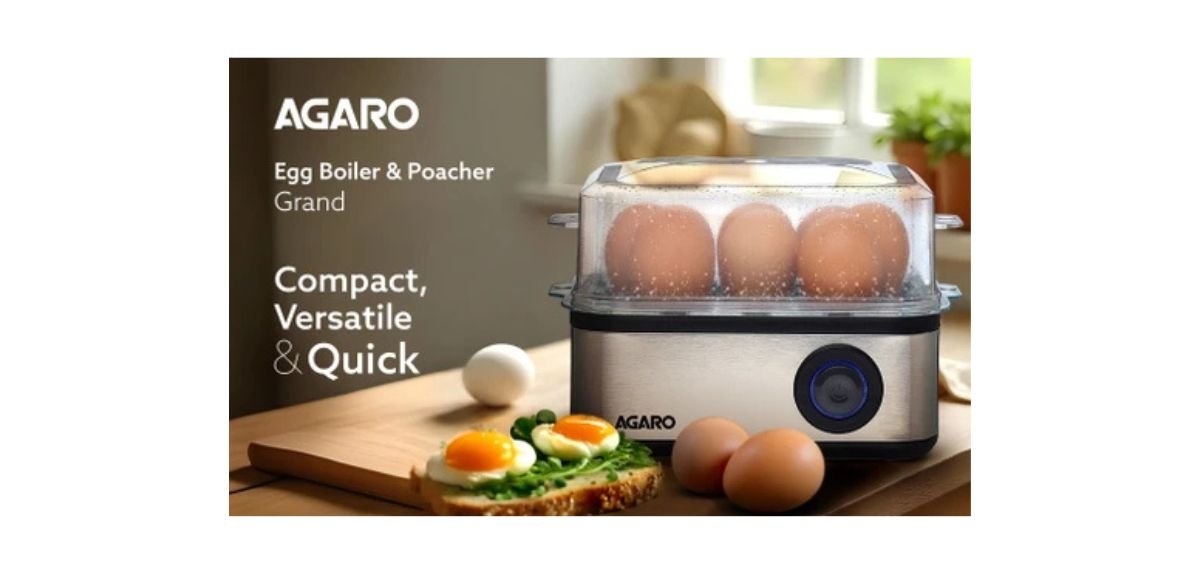
Most people don’t buy an egg boiler because they want another kitchen gadget. They buy one after ruining too many breakfasts. Cracked eggs, overcooked yolks, waiting around for water to boil, or simply dealing with the daily hassle of getting eggs right before work, college, or the gym.
That’s where the AGARO vs Amazon Basics Egg Boiler comparison becomes important. These are two of the most popular egg boilers in India, but they sit at very different price points. One costs around ₹1,000 and comes with extra features, while the other costs less than ₹450 and focuses on doing one job well. The obvious question is whether paying more actually gets you enough value to justify the difference.
The answer depends on how often you eat eggs, how many people you’re cooking for, and whether you’ll genuinely use features beyond basic boiling. In this guide, we’ll compare the AGARO Grand and Amazon Basics Egg Boiler side by side, looking at performance, capacity, build quality, features, pricing, warranty, and real-world usability. By the end, you’ll know exactly which egg boiler deserves a place in your kitchen in 2026.
Best AGARO vs Amazon Basics Egg Boiler
AGARO vs Amazon Basics egg boiler: the quick verdict
Before we get into the details, here’s how the two break down. The AGARO Grand is the one to get if eggs are a daily fixture in your kitchen, if you cook for a family, or if you’d actually use a machine that also poaches and steams, since its steel body is built to take years of everyday use without complaint. The Amazon Basics boiler is the better pick if it’s just you or you and a partner, and you only want boiled eggs without paying much, which makes it a natural fit for hostels and PG rooms.
Both cover the safety basics, with auto shut-off and a piercing pin included, so the real decision comes down to how often you cook and how many people you cook for.
AGARO Grand vs Amazon Basics: full specs compared
Everything in the table comes straight from the official listings as of June 2026, and the sections that follow explain what each line actually means for you.
| Spec | AGARO Grand | Amazon Basics |
| Street price | About Rs. 999 | About Rs. 400 to 450 |
| MRP | Rs. 2,199 | Rs. 650 |
| Eggs at once | 8 | 7 |
| Power | 500W | 350W |
| Boiling modes | Soft. medium, hard | Soft, medium, hard |
| Poaches eggs | Yes (up to 4) | No |
| Steams vegatables | Yes | No |
| Body | Stainless steel | Plastic |
| Heating Plate | Stainless steel | Stainless steel |
| Done light (LED) | No | Yes |
| Warranty | 2 Years | 1 year |
What the specs actually mean for your morning
A spec sheet tells you very little until you picture it at seven in the morning, so here’s what each number does in real life, taken one question at a time.
Does a 500W egg boiler cook faster than a 350W one?
It does, though the gap is only a couple of minutes. The AGARO runs at 500W and the Amazon Basics at 350W, which works out to roughly 12 minutes for a hard boil on the AGARO against about 15 on the Amazon Basics. Whether that matters really depends on your mornings. If you’re forever running late, those few minutes count for something, but if you switch the boiler on and wander off to brush your teeth, you’ll never notice the difference. As for electricity, the two are only a few rupees apart each month, so that’s not worth factoring in at all.
How many eggs can each boiler cook at once?
The AGARO takes 8 eggs in a single run, and the Amazon Basics takes 7. A single egg of difference sounds trivial, and for most people, it is. It only starts to matter at a four-person breakfast where everyone wants two eggs, since the AGARO clears all eight in one go, while the Amazon Basics does seven and leaves one person waiting for the next round. If you’re cooking for one or two, though, seven is already far more than you’ll ever load in at once.
Steel vs plastic egg boiler body: which lasts longer?
Steel wins on longevity, and this is the biggest practical difference between the two. The AGARO is stainless steel all the way through, while the Amazon Basics is plastic with only its heating plate in steel. Steel shrugs off the daily knocks, doesn’t warp in the heat, resists stains, and never picks up that faint smell plastic tends to develop after a few months of steam. So if the boiler is going to run every single day for years, the steel body will almost certainly outlast the plastic one. Run it twice a week, on the other hand, and the plastic will hold up perfectly well for a long time.
Can either boiler poach eggs or steam vegetables?
Only the AGARO can do both. The Amazon Basics boils and nothing more, whereas the AGARO ships with a poaching tray for up to four eggs without any oil, plus a tray for steaming a small batch of vegetables such as beans or carrots. It’s worth being realistic about the poaching, though, because it’s decent rather than excellent. Most owners admit they bought the machine for boiling and seldom reach for the poacher, so it’s best treated as a welcome extra rather than the main reason to buy.
What does the LED indicator do, and which boiler has it?
The LED is a small light that confirms the boiler is switched on and working, and only the Amazon Basics has one. The AGARO leaves it out. It’s a minor feature, yet on a dark winter morning, there’s something genuinely reassuring about glancing across and seeing that the machine is doing its job. On this small count, the cheaper boiler comes out ahead.
How much do these egg boilers cost in India?
It’s best to ignore the MRP on the box, because hardly anyone pays it. The figures below reflect what the two actually sell for as of June 2026.
| Price Comparison | AGARO Grand | Amazon Basics |
| MRP on the box | Rs. 2,199 | Rs. 650 |
| Usual selling price | Rs. 999 | Rs. 400 to 450 |
| On a good offer | Around Rs. 900 | Around Rs. 280 to 300 |
That works out to roughly Rs. 550 more for the AGARO, and in return, you get a steel body, one extra egg of capacity, poaching, steaming, and a second year of warranty. Whether that premium is justified comes down to a single question: how often will the machine really get used? With daily use, the extra features earn their keep, and the steel pays for itself over time. Twice a week, most of those extras just sit there.
AGARO Grand egg boiler: pros and cons
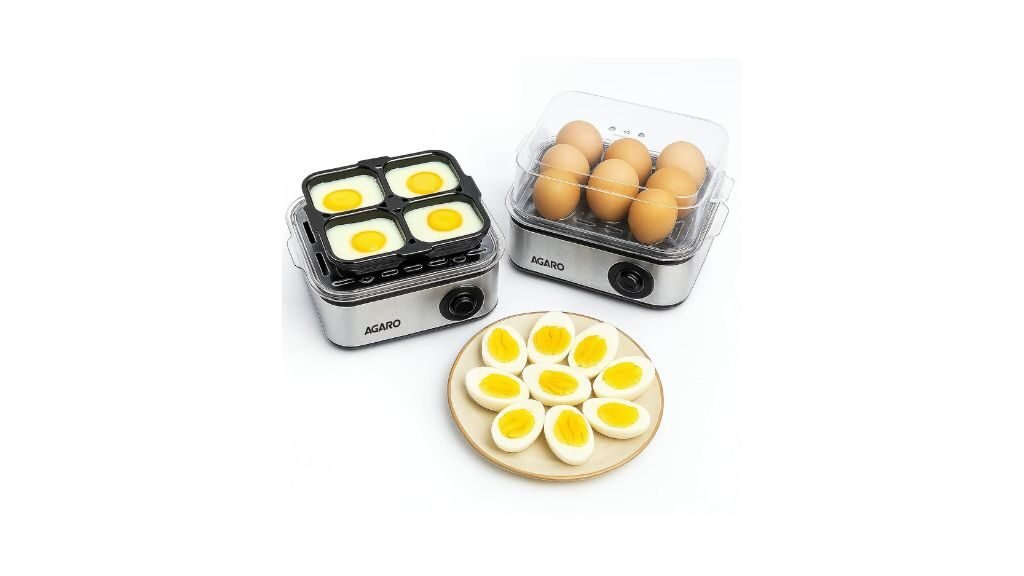
The AGARO Grand is the steel, do-everything option, boiling 8 eggs, poaching 4, steaming vegetables, running at 500W, and backed by a two-year warranty.
What owners like:
- The steel body feels solid and is built to last, which is the single biggest reason people choose it.
- It cooks faster than the Amazon Basics and handles more than one job.
- AGARO’s after-sales service earns good word in reviews, helped along by the full two-year warranty.
What owners complain about:
- The poacher is merely okay, so it’s best to buy the machine for boiling first.
- A handful of owners report that the button or the auto-cutoff becomes temperamental after eight to ten months of heavy daily use.
- It costs more than twice as much as the Amazon Basics.
Best for: Families, daily egg eaters, and anyone doing gym meal prep, where the steel and capacity are actually used each morning.
Amazon Basics egg boiler: pros and cons
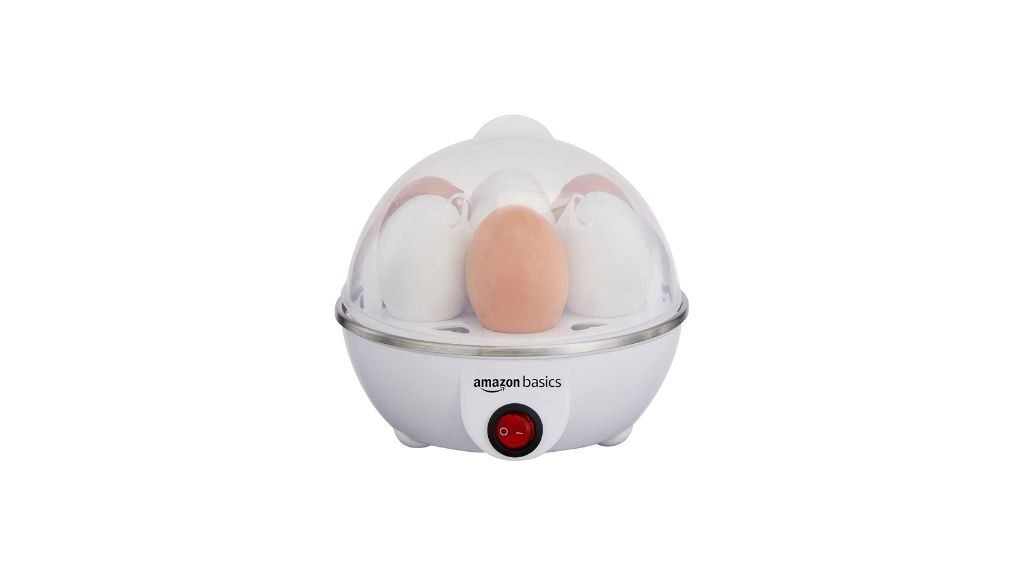
The Amazon Basics boiler sets out to do one thing cheaply, boiling up to 7 eggs at 350W in a plastic body with a steel plate, finished off with an LED light and a one-year warranty.
What owners like:
- The price, which sits under Rs. 450 from a brand most people already trust.
- The returns, which are refreshingly painless, since Amazon swaps a faulty unit without much fuss.
- The size as it’s small and light enough to tuck into any corner of a cramped kitchen or hostel room.
- The done-light, a small but genuine daily convenience.
What owners complain about:
- The plastic body can carry a slight smell when new, and won’t last as long as steel does.
- It runs a touch slower at 350W.
- It only boils, with no poaching or steaming.
- The cord is short, and the lid doesn’t always seat well over larger eggs, and a few units cook unevenly, which is exactly where the easy returns prove their worth.
Best for: Individuals and couples, students, and PG residents who want the lowest price from a trusted name and need nothing more than boiled eggs.
AGARO vs Amazon Basics: what each one does better
Rather than declaring a winner, it’s more useful to see where each boiler leads, based purely on the facts.
| Category | Leads here | Why |
| Cooking speed | AGARO | 500W vs 350W, about 2 to 3 minutes faster |
| Capacity | AGARO | 8 eggs vs 7 |
| Body durability | AGARO | Full stainless steel vs plastic |
| Versatality | AGARO | Also poaches and steams |
| Warranty | Amazon Basics | 2 years vs 1 year |
| Price | Amazon Basics | Under Rs. 450 vs about Rs. 999 |
| Size for small rooms | Amazon Basics | Smaller and lighter |
| Done-light | Amazon Basics | Has an LED indicator; the AGARO does not |
| Returns | Amazon Basics | Smooth Amazon-brand replacement |
The pattern in that table is worth reading carefully. The AGARO leads on the things that matter to people cooking every day or for a family, while the Amazon Basics leads on price, size, and hassle-free returns, which happen to be exactly what a single person or a student values most. That’s why neither one is simply the better boiler. One is built to do more, and the other is built to cost less.
Which egg boiler should you buy?
The easiest way to decide is to find your own situation below.
If you live alone, in a hostel, or in a PG, the Amazon Basics is the sensible choice, since you’ll rarely load seven eggs, the plastic holds up fine under light use, and the money you save is better off in your pocket.
If you’re cooking breakfast for a family, the AGARO makes far more sense, with eight eggs in a single run, faster cooking, and a steel body that withstands years of busy-morning kitchen use.
If you hit the gym and meal-prep your eggs every day, go with the AGARO again, because daily use is precisely what steel is built for, and the oil-free poaching suits a high-protein routine.
If you only boil eggs a couple of times a week, the Amazon Basics is the wiser buy, as paying double for features that will gather dust makes little sense.
And if your main worry is hassle when something breaks, the Amazon Basics still comes out ahead, thanks to the smooth Amazon-brand return process and a replacement cost that’s almost negligible at this price.
Other egg boilers worth considering in India
If you’re still browsing, here are the other boilers Indian buyers tend to consider, with specs as of June 2026.
| Boiler | Eggs | Power | Body | Price |
| KENT Super | 6 | 360W | Steel | Rs. 1,200 |
| Milton Smart | 7 | 360W | Steel | Rs. 949 |
| Lifelong 2-in-1 | 8 | 500W | Steel | Rs. 1,299 |
In short, KENT carries a trusted name but costs more for fewer eggs, while Milton offers a solid steel backup if the AGARO happens to be out of stock. Lifelong matches the AGARO on paper, yet usually costs more and draws more mixed reviews. Taken together, the AGARO offers the most capacity and features around the thousand-rupee mark, and the Amazon Basics holds firm at the bottom of the price ladder.
What to check before buying any egg boiler
Whichever way you lean, it helps to run through a few basics first.
- Wattage decides speed, so lean towards 500W if your mornings are tight and settle for 350W if they’re relaxed.
- Capacity should match your household: 6 to 7 eggs cover one or two people, and 7 to 8 eggs suit a family; when in doubt, size up.
- Body material matters most with frequency, so choose steel for daily use and plastic for the occasional boil.
- Auto shut-off is non-negotiable, and both of these include it, so never settle for one that doesn’t.
- The piercing pin on the cup is what stops eggs from cracking, and again, both come with it.
Final Thoughts!
Both boilers are well-made for what they cost; they’re simply meant for different people. The AGARO Grand suits families and daily egg eaters who want steel, speed, and the bonus of poaching and steaming, and its higher price is justified only when the machine runs often. The Amazon Basics suits one or two people who want boiled eggs done cheaply and simply, with painless returns to fall back on, and for light use, it does everything that’s asked of it.
In the end, the right boiler is the one that matches how you actually eat your eggs. Settle on that first, then check the live price before ordering, since both often drop in price, and a little timing can save you a few hundred rupees. If you want more discounts, then you can watch out for active coupons on Coupontalk.
Frequently asked questions
1. Is AGARO better than Amazon Basics?
Neither comes out better across the board. The AGARO does more, with 8 eggs, poaching, steaming, a steel body, and 500W of power for around Rs. 999, while the Amazon Basics boils up to 7 eggs for under Rs. 450 and carries a one-year warranty. The AGARO suits daily and family cooking, whereas the Amazon Basics suits one or two people who only want their eggs boiled.
2. Does 500W really beat 350W?
It cooks about two to three minutes faster, and the extra power adds only a few rupees to the monthly bill. That’s worth having if your mornings are tight, and easy to skip if they’re not.
3. How long does an egg boiler take to boil eggs?
Soft eggs take roughly 5 to 7 minutes, medium ones 8 to 10, and hard ones 12 to 15. More water and a longer run give you a firmer egg.
4. How much does an egg boiler add to the electricity bill?
Very little, somewhere around Rs. 20 to 25 a month, even with daily use, which still works out cheaper than running the gas.
5. Can the Amazon Basics boiler poach eggs?
No, it only boils. Poaching eggs and steaming vegetables are things only the AGARO can manage.
6. Why do my eggs keep cracking in the boiler?
Almost always because they haven’t been pricked. Use the pin on the measuring cup to make a small hole in the fat end of each egg, and let cold eggs come up to room temperature a little before they go in.
7. How do I clean an egg boiler?
Unplug it, let it cool, then wash the trays and lid with soap. Wipe the heating plate with a damp cloth and never dunk the base in water. For white mineral deposits, run a single cycle of half water and half vinegar, then wipe it clean.

Blog Insights
View All CouponTalk Blogs
12 Best LED Lighting Brands In India

10 Best Water Pump Brands In India
10 Best RO Membrane Brands In India
10 Best Electric Wire Brands In India

10 Best Electric Pressure Cooker Brands In India

10 Best Air Fryer Brands In India
How to Install a Phone Mount on Activa Handlebar
Best Waterproof Phone Mount for Bike India
6 Best Deep Freezer Brands In India


8 Best Shower Panel Brands In India

11 Different Types of Salwar Suit