Best 5 V-Guard Solar Water Heater Models Reviewed


It is early morning. The bathroom tap turns on. And instead of waiting for a geyser to warm up or watching an electricity meter tick upward, warm water flows out immediately, heated overnight by nothing more than yesterday’s sunshine sitting on your rooftop.
That is the everyday promise of a solar water heater. And among the brands that have made this promise to Indian households, V-Guard is one of the most familiar names, trusted for decades across the country for electrical appliances and now increasingly for solar solutions too.
But which V-Guard solar water heater is right for your home? There are several models, each suited to a different kind of household. Here is a review of the five best options, along with what makes each one stand out.
First, a Quick Word About How V-Guard Approaches Solar
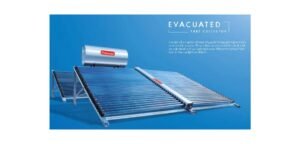
Before meeting the models, it helps to understand what V-Guard brings to the solar water heater space. The brand leans heavily on ETC technology, which stands for Evacuated Tube Collector. These heaters use rows of glass vacuum tubes that trap heat efficiently, much like a thermos does, allowing water to heat up even on partially cloudy days.
V-Guard solar water heaters are also known for their compact, low-height design. This matters enormously in Indian urban homes where rooftops are often already occupied by overhead tanks, DTH dishes, and sometimes even solar panels. A shorter, lighter unit fits without requiring major structural reinforcement.
The brand also includes an electric backup heating element in most models, which ensures hot water availability even on days when sunlight is limited, making the transition from a conventional geyser feel seamless rather than risky.
1. V-Guard Winhot Neo 100 Litre ETC: The Ideal Starter
If there is one V-Guard solar water heater that comes up most often in conversations about first-time buyers, it is the Winhot Neo in its 100-litre configuration. This is the entry point into V-Guard’s solar range, and it sets a strong standard for what to expect from the brand.
The 100-litre capacity comfortably serves a small family of three to four people, covering daily bathing needs with ease. Its ETC design heats water reliably even on moderately sunny days, and the unit’s low-height frame makes installation straightforward on most urban rooftops.
It comes with a food-grade inner tank to prevent any risk of contamination, along with a standard warranty on both the tank and the collector that gives buyers reasonable confidence in their investment.
Best for: Small families buying their first V-Guard solar water heater and wanting a proven, no-fuss model.
2. V-Guard Winhot Neo 150 Litre ETC: The Family Upgrade
The step up from the 100-litre version, this 150-litre model is designed for medium-sized families of four to six people. The jump in capacity makes a meaningful difference in households where multiple people shower in the morning or where the kitchen also draws from the same hot water supply.
The V-Guard solar water heater at this capacity retains all the strengths of its smaller sibling: the compact design, the ETC tube technology, the electric backup, and the food-grade tank lining. What changes is simply the volume of hot water available, which can be the difference between a comfortable morning and a rushed one in a larger household.
Installation requirements are slightly more demanding, given the additional weight of the larger tank. However, the unit still maintains V-Guard’s signature low-height profile that makes rooftop placement easier than many competing models of the same capacity.
Best for: Families of four to six who need more hot water capacity without stepping into a premium or oversized system.
3. V-Guard Winhot Plus 100 Litre: The Durability Step-Up
The Winhot Plus series sits a step above the Neo range in terms of build quality and insulation performance. At the 100-litre capacity, this model is aimed at buyers who want more than just a functional heater and are willing to invest slightly more for better long-term performance.
The key improvement in the Plus series is its enhanced insulation, which means water heated during the day stays warm longer into the evening and even into the next morning. For households that draw hot water at night or very early in the morning before the sun has had a chance to reheat the tank, this makes a noticeable practical difference.
The V-Guard solar water heater in the Plus series also tends to come with a more robust warranty structure, reflecting the brand’s confidence in the upgraded components used in this line.
Best for: Buyers who want the 100-litre capacity but need water to stay hot through the night, prioritizing insulation over cost savings.
4. V-Guard Winhot Plus 200 Litre: The Large Household Solution
For larger families of six or more, or for homes with higher-than-average hot water usage, such as joint families or households with elderly members who bathe multiple times a day, the 200-litre Winhot Plus is the model that makes the most sense.
At this capacity, the V-Guard solar water heater shifts from being a supplementary convenience to being the primary hot water source for the entire home. The ETC system at this scale heats a larger volume of water effectively, and the enhanced insulation of the Plus series ensures that a full tank heated during the afternoon still delivers warm water well into the evening.
The 200-litre unit requires more rooftop space and a structurally sound installation point, so it is worth having a qualified technician assess your rooftop before purchase. V-Guard’s authorized dealers typically offer this assessment as part of the purchase process.
Best for: Large families or joint households that need a high-capacity, reliable solar water heater as their primary hot water source.
5. V-Guard Eminence Flat Plate Collector 100 Litre: The All-Weather Choice
Every lineup needs a model that breaks from the dominant technology, and for V-Guard, the Eminence series fills that role with its flat plate collector design. Unlike the ETC-based Winhot models, this unit uses a flat absorber panel with copper tubes running through it. This design handles dusty conditions, hailstorms, and hard water better than evacuated tube systems tend to.
The V-Guard solar water heater in the Eminence series is built for regions where the weather can be unpredictable, where dust storms are common, or where the water supply has high mineral content that could eventually affect ETC tube performance. Flat plate systems are generally sturdier in these conditions, with fewer individual components that can crack or degrade under physical stress.
The tradeoff is cost. Flat plate systems tend to be priced slightly higher than equivalent ETC models, and heating speed on heavily overcast days may be marginally slower. But for buyers in the right conditions, the durability advantage more than justifies the difference.
Best for: Homes in dusty, hail-prone, or hard-water regions where a flat plate collector’s toughness outweighs the ETC’s faster heating advantage.
How to Choose Between These Five Models
With five solid options in the V-Guard solar water heater range, the decision mostly comes down to three things.
Family size is the most straightforward factor. Three to four people suit the 100-litre models well. Four to six people should consider the 150-litre. Six or more should look at the 200-litre.
Weather and water quality in your area matter more than most buyers initially realize. If you live somewhere with frequent hailstorms, dusty winds, or notably hard water, the flat plate Eminence model deserves serious consideration over the ETC Winhot range, even if it costs a little more upfront.
Overnight hot water needs tip the scale toward the Plus series over the Neo series. If your household draws hot water in the evening or before sunrise, the better insulation of the Plus models is worth the premium.
Frequently Asked Questions
Q1: Is V-Guard a good brand for solar water heaters?
Yes. V-Guard has a strong service network across India and a proven track record in electrical appliances. Its solar water heaters carry forward the same build standards, and the brand’s compact, low-height design is a genuine advantage in urban rooftop installations.
Q2: Does a V-Guard solar water heater work on cloudy days?
The ETC-based Winhot models do heat water on partially cloudy days, though more slowly than on clear days. All V-Guard solar water heater models with electric backup ensure hot water is available regardless of weather, using the backup element when solar heating is insufficient.
Q3: How long do V-Guard solar water heaters last?
With proper installation and periodic maintenance, most V-Guard solar water heater systems are designed to last between 15 and 20 years. The warranty period on tanks and collectors varies by model, so confirming warranty terms at the time of purchase is advisable.
Q4: What maintenance does a V-Guard solar water heater need?
Maintenance is minimal compared to conventional geysers. The main tasks are periodic cleaning of the glass tubes or flat plate surface to remove dust and scale, and checking the plumbing connections once or twice a year. V-Guard’s service centers can assist with scheduled maintenance visits.
Q5: Can I install a V-Guard solar water heater on any rooftop?
Most rooftops can accommodate a V-Guard solar water heater, particularly the Winhot series, which is designed with a compact, low-height profile. However, larger models like the 200-litre version require a structurally strong mounting surface. A site assessment by a qualified installer is recommended before purchase.
Warm water every morning, without a rising electricity bill and without the wait. That is what a good solar water heater delivers, and V-Guard’s range makes that outcome accessible for households of almost every size and in almost every corner of India. To choose between flat-plate and evacuated-tube technology, read FPC vs ETC solar water heaters.

Blog Insights
View All CouponTalk Blogs
12 Best LED Lighting Brands In India

10 Best Water Pump Brands In India
10 Best RO Membrane Brands In India
10 Best Electric Wire Brands In India

10 Best Electric Pressure Cooker Brands In India

10 Best Air Fryer Brands In India



Different Types of TubeLights in India

Best Electric Pressure Cooker in India 2026: Top 11 Picks for Every Budget


10 Best Car Floor Mat Brands In India