Best Rain Cover for Motorcycle Luggage in India

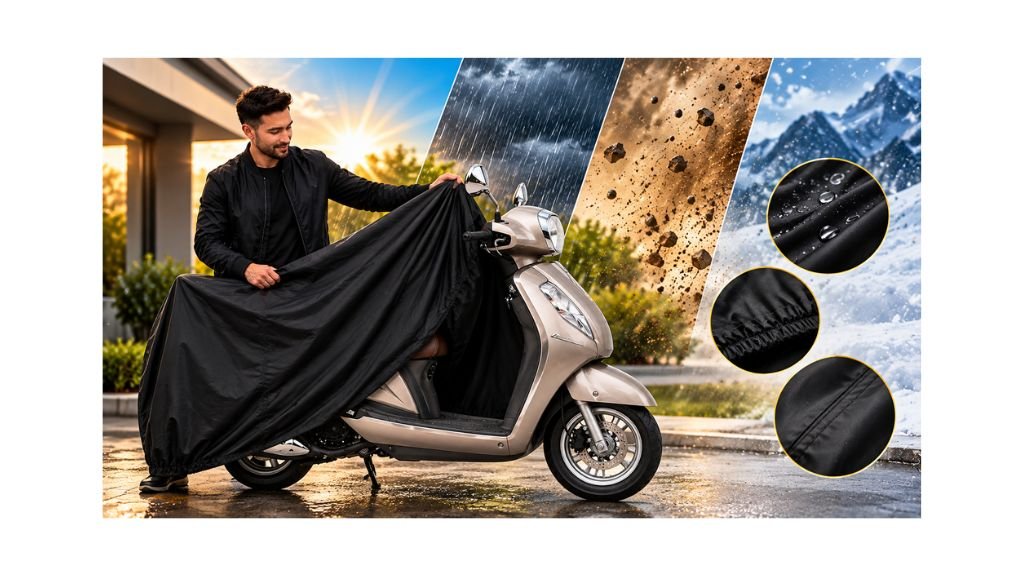
You are somewhere on NH44 between Nagpur and Hyderabad when the sky decides it has been patient long enough. The clouds that had been building since lunch arrive all at once, and within two minutes, the road is running with water. You pull over under a petrol station canopy, put on your rain jacket, and look at the tail bag strapped to the back of the bike.
The tail bag has a rain cover. You know this because the product listing mentioned it. What the listing did not mention is that the cover that came bundled with the bag is thin enough to read a newspaper through, fits loosely enough to catch wind and billow off the bag at speed, and has an elastic hem that has already stretched out from being stuffed into its own small pouch and pulled back out four times this trip.
By the time you reach the next town, the bag is dark with water on the sides. The clothes on top are damp. The sleeping bag rolled up in the middle, the one you needed to trust, has a wet patch on one end.
This is why a dedicated rain cover for motorcycle luggage is a different purchase from the cover bundled with a bag. The covers that come in the box with most mid-range and budget motorcycle luggage are included to complete the spec sheet, not to keep your gear genuinely dry across three hours of highway rain. A purpose-built rain cover made from the right material, sized correctly, and designed to stay on at speed is a different object doing a fundamentally different job.
First, a Word About What Makes a Rain Cover Actually Work
Most rain covers fail at one or more of three things, and understanding which three makes it easier to evaluate any product before buying.
The first is material. A rain cover needs to be made from a fabric that stops water rather than merely slowing it. True waterproof fabrics have a hydrostatic head rating, typically expressed in millimetres, that tells you how much water pressure the fabric can withstand before it starts to let water through. For motorcycle use, where rain is often horizontal at speed, and the cover is under direct spray pressure from the front tyre’s wake, a rating of at least 3000 mm hydrostatic head is worth looking for. Most bundled covers sit well below this. Purpose-built covers from reputable brands sit above it.
The second is fit. A cover that is too large catches the wind and generates enough drag to loosen or shift the luggage underneath it. A cover that is too small does not pull down over the bottom of the bag where water pools and pushes under any gap. A good rain cover has a snug fit on its intended bag size and a hem system that cinches or clips below the bag rather than sitting loosely around the middle.
The third is secure attachment. At 80 to 100 kmph in heavy rain, a cover that relies solely on elastic tension to stay on will eventually find the one gust or turbulence pocket that pulls it loose. Covers with straps that run under the bag, buckle points that connect to luggage rack straps, or cinch cords that tie around the bag body, stay on across conditions that would strip a basic elastic cover in minutes.
Every product on this list earns its place by handling all three of these adequately. The differences between them come down to size compatibility, storage convenience, and price.
1. Viaterra Waterproof Luggage Rain Cover: The Purpose-Built Tourer’s Pick
Viaterra designs for Indian touring conditions specifically, and the rain cover range they sell reflects that. Rather than producing one universal size and calling it done, Viaterra offers the cover in multiple sizes that correspond to actual luggage volumes, from small tail bags around 20 litres up to large duffel and roll bags above 60 litres. Getting the right size for a specific bag rather than pulling a universal large over a 25-litre tail bag and tucking in the excess is the foundation of how this cover works better than most.
The material is a TPU-coated nylon with a hydrostatic head rating high enough to handle sustained highway rain rather than just a brief shower. The hem has a shock cord that cinches below the bag’s base with a toggle, and two additional straps cross under the luggage to prevent the cover from lifting from the bottom in strong airflow. The whole thing packs into its own integrated stuff pocket that stows inside the cover itself, which means it is always with the bag rather than packed separately somewhere it will not be found when the sky changes.
Pricing typically falls between ₹800 and ₹1,400, depending on size.
Best for: Riders with Viaterra or other quality Indian touring luggage in specific volume sizes who want a cover that fits correctly rather than approximately. The best match for someone with a known bag size who wants purpose-built waterproofing for that size.
2. Rynox Rain Cover for Tail Bags: The Highway Speed Stability Pick
Rynox makes motorcycle gear with a specific focus on what survives Indian highway conditions rather than what looks good in a showroom, and the rain cover they produce for tail bag use reflects that priority directly.
The distinguishing feature is the attachment system. Where most covers use elastic alone or elastic plus a single cinch cord, the Rynox cover uses a full under-bag strap system with quick-release buckles that anchor the cover to the luggage rack or the bag’s own carry handles below the bag’s base. At 100 kmph in a headwind and rain, the cover does not move. The elastic hem is a secondary retention, not the primary one.
The material is a ripstop nylon with a TPU laminate that handles spray and direct rain without letting water through at seams, which are taped rather than left as potential leak points. Taped seams at this price range are unusual, and it is the detail that separates this cover from most competitors when a rider is sitting in heavy rain for an extended period rather than a quick shower.
Pricing typically falls between ₹1,000 and ₹1,600.
Best for: Riders who cover long highway distances in monsoon conditions and need a cover that stays anchored at sustained high speeds rather than one that works adequately in brief city rain.
3. Nelson-Rigg Deluxe Waterproof Luggage Cover: The Universal Size Pick
Nelson-Rigg is an American brand with a long presence in the motorcycle luggage accessory market, and their universal luggage covers are stocked by several Indian motorcycle gear importers as well as available through online platforms. The appeal of the Nelson-Rigg cover is that it is genuinely sized to cover a wide volume range without excess material that catches wind, using a built-in compression system that draws the cover tightly against the bag regardless of whether the bag is packed full or only half full.
Most universal rain covers either fit too loosely on a smaller bag or barely stretch over a fuller one. The Nelson-Rigg design handles this variability better than any other universal cover at this price because the compression straps are adjustable rather than fixed, which means a single cover genuinely adapts to different packing states rather than fitting one and poorly approximating the other.
It is available in small, medium, and large sizes, and the medium covers the range of tail bags from roughly 25 to 45 litres, which represents the most common motorcycle luggage configuration in India.
Pricing typically falls between ₹1,500 and ₹2,200.
Best for: Riders who use different bags on different trips, or who share gear across bikes, and need one cover that adapts rather than buying a size-matched cover for each bag.
4. Generic TPU Motorcycle Luggage Rain Cover (Amazon and Flipkart): The Budget Starting Point
Across major Indian e-commerce platforms, a category of generic TPU or PVC rain covers sold in the ₹300 to ₹700 range represents the most purchased type of rain cover in India by volume. They come in broadly labelled size categories, small to extra large, with elastic hems, basic stitched seams, and packaging that promises waterproofing without specifying a hydrostatic head rating.
The honest assessment is that these covers work for light to moderate rain on short rides and as backup covers for luggage that already has its own bundled cover. In a two-hour monsoon highway run, the unsealed seams allow water ingress at the stitching lines, and the elastic hem on most of these stretches enough under sustained wind at speed to allow the bottom of the cover to lift away from the bag on the windward side.
They are not the right answer for a three-day touring kit that includes a sleeping bag or electronics. They are an adequate answer for covering dry clothes in a city commuter’s travel bag through a 20-minute rain shower on the way home.
Pricing is between ₹300 and ₹700.
Best for: Riders who need a cover for short commutes and light rain rather than sustained touring conditions. A reasonable backup cover to carry alongside better luggage waterproofing, not the primary defence against serious rain.
5. Dryzip Waterproof Dry Bag as Rain Cover Alternative: The Electronics and Valuables Pick
This is not a rain cover in the traditional sense. A dry bag is a roll-top sealed bag made from fully waterproof material that replaces the outer bag entirely for items that genuinely cannot get wet, electronics, documents, spare phone, camera, and the like.
On a motorcycle touring setup, the most common and sensible approach is to use a rain cover over the main luggage and a dedicated dry bag inside the main luggage for the items where any moisture at all is a problem. A rain cover over the outside handles the bulk of the rain. The dry bag inside handles the items, but the cover, being 95 percent effective, is not good enough.
Brands like Sea to Summit, Naturehike, and several Indian alternatives on Flipkart and Amazon sell roll-top dry bags in sizes from 5 litres to 20 litres that fit comfortably inside a standard tail bag and provide genuine waterproofing for the specific compartment they occupy rather than relying on the outer cover alone.
Pricing ranges from ₹400 for basic Indian-branded options to ₹2,000 and above for Sea to Summit and similar international brands.
Best for: Riders carrying electronics, documents, or anything irreplaceable inside their luggage, as a second layer of waterproofing inside the main bag rather than as a replacement for an outer rain cover.
How to Actually Choose Based on How You Ride
If you tour on highways across multiple days and your luggage includes sleeping gear or electronics, the Rynox or Viaterra covers are the right investment. The price difference over a generic cover is recovered the first time you arrive at a hotel with dry gear instead of spending the night waiting for wet clothes to dry.
If you need one cover that works across different bags in different sizes, the Nelson-Rigg adjustable system is worth the higher price for the adaptability it provides.
If your riding is mainly city commuting with occasional short trips and your luggage contains nothing that a dampening would damage beyond inconvenience, a generic TPU cover from Flipkart or Amazon does the job at a fraction of the cost.
If you carry electronics or documents that cannot tolerate any moisture, regardless of what happens to the outer cover, a dry bag inside the luggage is the honest answer rather than hoping any cover is good enough.
What a Rain Cover Cannot Fix?
A rain cover does not make luggage waterproof at the base where the bag contacts the luggage rack. Water runs down the outside of the cover and pools where the cover ends at the bottom of the bag. Most bags absorb some of this from the underside, even with a rain cover on. For gear that absolutely cannot get wet, the inner dry bag approach remains the more reliable solution.
A cover also does not protect luggage from submersion or from water wicking up through the bag’s base if the bike is parked in a puddle or a flooded area. These are conditions beyond what any cover is designed to handle.
Covers that are stored stuffed tightly in a bag pocket for months between uses develop creases that compromise the waterproof coating over time. Folding loosely rather than compressing tightly, and storing out of direct sunlight, extends the coating life significantly.
Finally, a cover will not stay on a bag that is not secured properly to the bike. If the bag shifts or rotates on the rack because the mounting straps are loose, the cover moves with it, and gaps open. The luggage attachment is the foundation. The cover is the layer on top of it.
Frequently Asked Questions
Q1: What size rain cover do I need for my tail bag?
Match the cover to your bag’s volume in litres rather than its external dimensions. A 20 to 30-litre tail bag needs a small to medium cover. A 40 to 60-litre bag needs a large. When in doubt, go one size smaller rather than larger. A cover that fits snugly performs better at speed than one with excess material catching the wind.
Q2: Are the rain covers that come bundled with motorcycle bags worth using?
For light city rain, they work adequately. For sustained monsoon highway riding, they are rarely made from materials or constructions that hold up well across hours of direct rain and highway speeds. A purpose-built cover costs relatively little compared to a replacement sleeping bag or a set of wet clothes at the end of a long day.
Q3: Can I use a household plastic cover or garbage bag in an emergency?
Yes, and it works better than nothing. A garbage bag pulled over a tail bag and tucked under the straps handles a sudden short shower well enough to reach shelter. It is not a long-term solution because it tears easily, catches too much wind, and leaves gaps at the bottom where water enters. Still, as an emergency measure, it is a legitimate option every tourer knows about.
Q4: How do I stop my rain cover from blowing off at highway speeds?
Make sure the cover has straps or a cinch cord that secures below the bag rather than relying only on elastic. Route any straps under the bag and connect them to the luggage rack straps or bag handles. An elastic-only cover on a fully exposed tail bag at 100 kmph will eventually find the airflow that lifts it off. Mechanical attachment below the bag base prevents this.
Q5: Do rain covers damage the bag or luggage underneath over time?
Quality covers with smooth inner linings do not damage the bags they cover regularly. Cheap covers with rough or gritty inner surfaces can abrade the bag’s outer material over repeated fitting and removal. If a cover fits tightly enough that it needs to be pulled and stretched into position every time, the friction wears on both the cover and the bag surface. A correctly sized cover goes on and off without force.
Final Thoughts
Go back to that petrol station canopy on NH44. The rain is not waiting. You have about forty seconds between pulling over and the downpour reaching full intensity to get the cover on before it matters.
A cover that packs into its own integrated pocket, fits over the bag in one motion, and cinches closed with a single cord gets on in those forty seconds. A cover stuffed loose in a side pocket, slightly too large, with an elastic that has stretched out from six months of use, takes longer than the rain gives you.
That forty-second window is the real test of a rain cover. Not whether it works in the showroom, not whether the material passes a tap test in the kitchen. Whether it goes on fast enough, fits tightly enough, and stays on long enough to actually keep the gear inside dry by the time you reach the other side of the cloud.

My work focuses on finding the human stories behind the headlines, from documenting unique cultural traditions to covering stories from communities across Bengal. Previously, I worked as an SEO Content Writer with Penning Down and Collegedunia, combining digital content expertise with newsroom journalism.
I believe impactful journalism is built on accuracy, empathy, and stories that stay with readers.
- Cocoa Butter Formula, Body Massage Lotion for Stretch Marks - April 9, 2016
- Ultra-calming makeup removing wipes - April 9, 2016
- Eczema therapy hand cream - April 9, 2016
Blog Insights
View All CouponTalk Blogs
12 Best LED Lighting Brands In India

10 Best Water Pump Brands In India
10 Best RO Membrane Brands In India

10 Best Electric Wire Brands In India

10 Best Electric Pressure Cooker Brands In India

10 Best Air Fryer Brands In India




11 Different Types of Saree Fabric

10 Best Car Seat Cover Brands In India

Best Mixer Grinder for Indian Spices 2026: 10 Heavy-Duty Picks