4 Types of Solar Inverters: String, Micro, Central, and Hybrid Compared

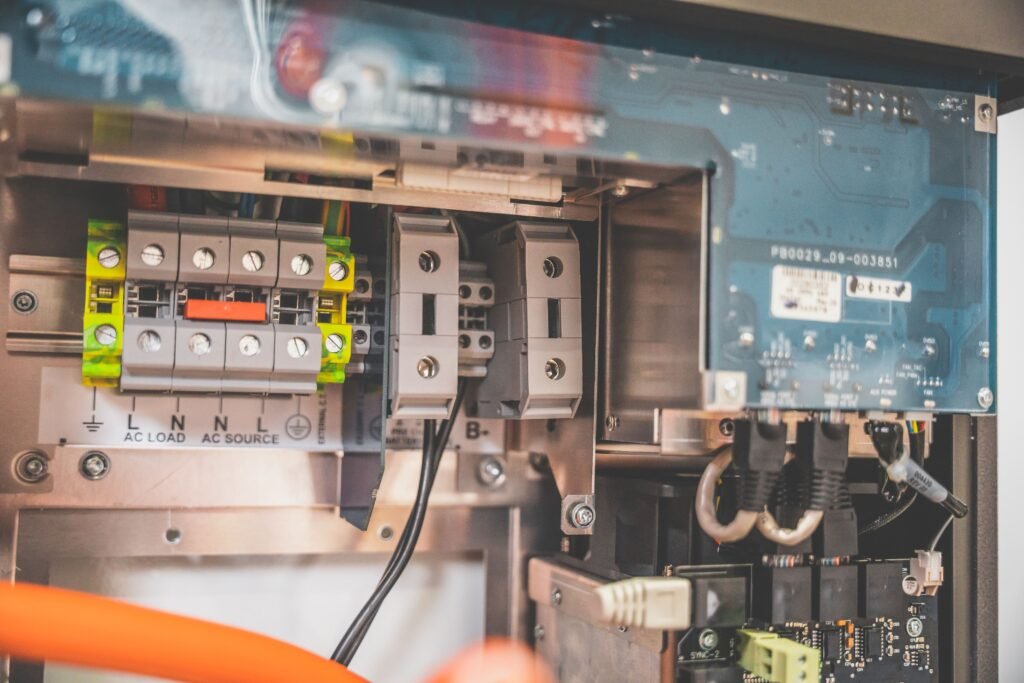
If solar panels are the face of a rooftop solar system, the inverter is its brain. Panels capture energy from sunlight, but that energy arrives as direct current, or DC, electricity, while homes, businesses, and the electricity grid all run on alternating current, or AC. The inverter’s job is to bridge that gap, converting DC into usable AC power and managing how that power flows between the panels, any battery storage, and the grid.
What most first-time solar buyers do not realize is that there are four meaningfully different inverter architectures used in solar installations today, each converting that DC to AC in a different way, at a different point in the system, and with a different set of tradeoffs. String inverters, microinverters, central inverters, and hybrid inverters are not simply different sizes of the same device. They are genuinely different engineering approaches, suited to different scales of installation and different priorities.
Here is a clear look at all four.
First, Why the Architecture Matters
Before exploring each type, consider why the choice of inverter architecture matters beyond simply selecting the right size for your system.
Every solar inverter is the single component that determines how well the rest of the system performs. It decides how much of your panels’ potential output actually becomes usable electricity, how the system behaves when some panels are shaded while others are not, whether the system continues working during a power outage, and whether battery storage is even possible. A mismatch between inverter type and installation conditions can cost a system meaningful output over twenty-five years of operation, even if the panels themselves are excellent.
Understanding the four types makes it possible to have an informed conversation with an installer rather than simply accepting whatever is proposed.
1. String Inverter: The Standard Residential Choice
A string inverter is a single, centralized inverter unit connected to a series of solar panels wired together in a chain, which installers call a string. All the panels in that string feed their combined DC output into this one inverter, which converts the total to AC electricity for use in the home or export to the grid.
String inverters are the most common inverter type in residential solar installations worldwide and in India specifically, for straightforward reasons. They are the most affordable option, the simplest to install, and the easiest to service since there is only one unit to diagnose and replace if something goes wrong. For a rooftop with full, unobstructed sun exposure throughout the day, a string inverter delivers efficient, reliable performance at the lowest system cost.
The limitation is shading sensitivity. Because all panels in a string are wired in series, the electrical output of the entire string is constrained by the weakest-performing panel in that string. If one panel is shaded by a chimney, a tree branch, or bird droppings for even part of the day, the output of every other panel in that string drops to match it, not just the shaded panel’s contribution. This can result in a significant, often underappreciated reduction in total energy yield for rooftops with any partial shading.
String inverters also shut down completely during a grid power outage, a mandatory safety feature called “anti-islanding protection” that prevents the system from sending power into grid lines that electricity workers may be repairing, but this means no solar power is available during a blackout unless a separate battery system with its own inverter is added.
Suits: Rooftops with consistent, unobstructed sun exposure throughout the day, straightforward residential installations where budget efficiency matters more than maximizing yield from a complex rooftop, and buyers for whom battery backup is not a priority.
2. Microinverter: The Panel-Level Performer
A microinverter is a small inverter attached directly to each individual solar panel, converting that single panel’s DC output to AC right at the panel itself rather than combining multiple panels into a shared centralized unit. Each panel operates as its independent power-generating unit, completely decoupled from every other panel in the array.
This distributed architecture solves the shading problem that string inverters face directly. Because each panel operates independently, a shaded or underperforming panel only reduces its own output, leaving every other panel in the array unaffected. On a rooftop with complex geometry, multiple orientations, or any partial shading at different times of day, this independence can recover a meaningful amount of energy that a string inverter would lose to the weakest-panel drag effect.
Microinverters also enable panel-level monitoring as a standard feature, since each unit reports its own output independently through the monitoring system. Identifying a single faulty or underperforming panel is straightforward from a smartphone app rather than requiring a technician with test equipment to isolate the problem.
The tradeoffs are cost and maintenance complexity in a different form. A microinverter system for a 10-panel array requires ten individual inverter units rather than one, which increases the upfront cost substantially. Because the inverters are mounted on the roof alongside the panels, accessing them for servicing or replacement requires working at height rather than simply swapping a wall-mounted box in a utility room. Microinverter units also tend to experience more thermal stress than string inverters in a shaded location, since they sit in direct sunlight on the roof.
Suits: Rooftops with partial shading from trees, chimneys, or neighboring structures at any time of day, complex rooftops with multiple orientations or split pitches, buyers who want panel-level monitoring and maximum energy harvest from a non-ideal roof, and installations where shading conditions will be difficult to eliminate.
3. Central Inverter: The Large-Scale Workhorse
Central inverters are the utility-scale and large commercial equivalent of string inverters, handling power conversion for large solar installations, typically starting from tens of kilowatts and scaling up to megawatts in utility-scale solar farms. Rather than one string of panels feeding one inverter, a central inverter consolidates the output of many strings across a large array into a single, physically large, high-capacity conversion unit.
In a large solar farm, dozens or hundreds of panel strings are wired together and fed into a central inverter, which may itself be one of several central inverters operating in parallel across the full installation. These units are large enough to require their own dedicated housing or enclosure and are designed for continuous industrial-grade operation rather than the stop-start residential duty cycle of a smaller string inverter.
Central inverters are the most cost-efficient option per watt of converted power at a large scale, since the per-unit cost of a large, efficient industrial inverter is significantly lower than the equivalent capacity assembled from many smaller residential string or microinverter units. However, they are not relevant to residential or small commercial buyers: the minimum useful capacity of a central inverter far exceeds what any household installation needs, and their size, installation requirements, and servicing complexity are suited to professional solar farm operators rather than individual homeowners.
The key vulnerability of central inverters is their single point of failure characteristic: if one large central inverter fails in a solar farm, a significant portion of the farm’s generation capacity goes offline until it is repaired or replaced, which is why large installations typically use multiple central inverters in parallel rather than a single unit for the entire array.
Suits: Utility-scale solar farms, large industrial and commercial rooftop installations in the hundreds of kilowatts or megawatt range, and ground-mounted solar parks operated by energy companies and project developers.
4. Hybrid Inverter: The Battery-Ready System
A hybrid inverter performs all the functions of a standard string inverter, converting solar panel DC output to AC for home use and grid export, but adds a critical additional capability: built-in battery management. A hybrid inverter can simultaneously manage power flow between solar panels, a battery bank, household loads, and the grid, automatically prioritizing solar power when available, charging batteries from excess solar generation, drawing from batteries when solar is insufficient, and falling back to grid power when both solar and battery reserves are depleted.
This integrated management is what makes the hybrid inverter the natural choice for any installation where battery backup is a priority, since it eliminates the need for a separate battery inverter and charge controller alongside the main solar inverter. The system is designed from the outset to handle all power sources together rather than treating battery storage as an add-on to a system that was originally designed without it.
During a grid power outage, a hybrid inverter with batteries connected continues supplying power to the home’s essential circuits, switching to battery power within milliseconds of the grid failing. This seamless transition is one of the most valued features for Indian households in areas with frequent or prolonged power cuts, since it means the solar investment also functions as reliable backup power rather than going dark precisely when grid-connected systems become most frustrating.
Hybrid inverters are more expensive than standard string inverters of the same solar capacity, reflecting the additional battery management electronics involved. They are also generally priced lower than assembling a separate string inverter, plus a dedicated battery inverter, plus a charge controller, making them cost-effective for buyers who know from the outset that battery storage is part of their plan.
Suits: Homes in areas with frequent power outages, buyers planning to add battery storage now or in the near future, installations where energy independence and backup power are as important as bill reduction, and anyone who wants a system designed from the ground up to manage solar, battery, and grid power together.
| A Quick Comparison at a Glance | |||||
|---|---|---|---|---|---|
| Type | Scale | Shading Tolerance | Battery Support | Outage Performance | Relative Cost |
| String | Residential to mid commercial | Poor | Requires separate hardware | Shuts down | Lowest |
| Microinverter | Residential | Excellent | Requires separate hardware | Shuts down | Highest |
| Central | Large commercial, utility | Poor (single point of failure risk) | Not applicable | Shuts down | Lowest per watt at scale |
| Hybrid | Residential to mid commercial | Same as string | Built-in | Continues (with battery) | Moderate to high |
How to Choose Among the Four Types
For a standard Indian residential rooftop with good sun exposure and no battery priority, a string inverter remains the most practical, cost-effective choice and the one most installers will recommend as a starting point.
For a rooftop with partial shading from trees, water tanks, or neighboring structures, microinverters offer a meaningful energy yield advantage that can justify their higher cost depending on the degree of shading and the system’s expected lifespan.
For a home in an area with frequent power outages where backup power matters alongside solar generation, a hybrid inverter is the architecture designed specifically to deliver both without needing to bolt on a separate battery management system later.
For large commercial buildings, factories, or solar farms where scale justifies the complexity, central inverters deliver the lowest cost per watt of converted power and are the standard choice at utility scale.
Frequently Asked Questions
Q1: Can I add a battery to a string inverter system later?
Yes, but doing so requires adding a separate battery inverter or charge controller alongside the existing string inverter, since a standard string inverter has no battery management capability of its own. Starting with a hybrid inverter is generally more cost-effective if battery storage is planned from the beginning.
Q2: Are microinverters worth the extra cost for a shaded rooftop?
For rooftops with meaningful partial shading at any time during the day, yes. The energy recovered by allowing each panel to operate independently, rather than being dragged down by the weakest string panel, can be substantial enough over a 25-year system life to justify the higher upfront cost.
Q3: What is the difference between a hybrid inverter and a standard inverter with a separate battery system?
A hybrid inverter integrates solar conversion, battery charging, battery management, and grid switching into a single unit. A standard string inverter with a separate battery system requires two or more devices to manage the same functions, adding cost, wiring complexity, and more components that could individually require servicing.
Q4: Why do string and microinverter systems shut down during a power outage?
Both types shut down during grid outages as a mandatory safety measure called anti-islanding protection. This prevents the solar system from sending power into the grid lines while they are being repaired by utility workers. Hybrid inverters with batteries bypass this issue by switching to an isolated mode that supplies the home from battery power without connecting to the grid.
Q5: Are central inverters used in any Indian residential solar installations?
No. Central inverters are designed for large commercial and utility-scale installations, typically starting from several hundred kilowatts. The minimum useful capacity of a central inverter far exceeds what any residential rooftop installation in India would need, making them irrelevant for household solar buyers.
Four types, four different architectures, each solving the same fundamental conversion problem in a way suited to a different scale, a different rooftop, and a different set of priorities. Matching the inverter type to the actual conditions and goals of your specific installation is one of the most consequential decisions in any solar project, and understanding the difference between these four types puts you in a position to make that decision with genuine clarity.

My work focuses on finding the human stories behind the headlines, from documenting unique cultural traditions to covering stories from communities across Bengal. Previously, I worked as an SEO Content Writer with Penning Down and Collegedunia, combining digital content expertise with newsroom journalism.
I believe impactful journalism is built on accuracy, empathy, and stories that stay with readers.
- Cocoa Butter Formula, Body Massage Lotion for Stretch Marks - April 9, 2016
- Ultra-calming makeup removing wipes - April 9, 2016
- Eczema therapy hand cream - April 9, 2016
Blog Insights
View All CouponTalk Blogs
12 Best LED Lighting Brands In India

10 Best Water Pump Brands In India
10 Best RO Membrane Brands In India
10 Best Electric Wire Brands In India

10 Best Electric Pressure Cooker Brands In India

10 Best Air Fryer Brands In India



10 Best Pliers Brands In India

8 Best Smart Dustbin Brands In India

10 Best PVC and CPVC Pipe Brands In India
Types of Gearbox