Best Crash Guard for Hero Splendor in India

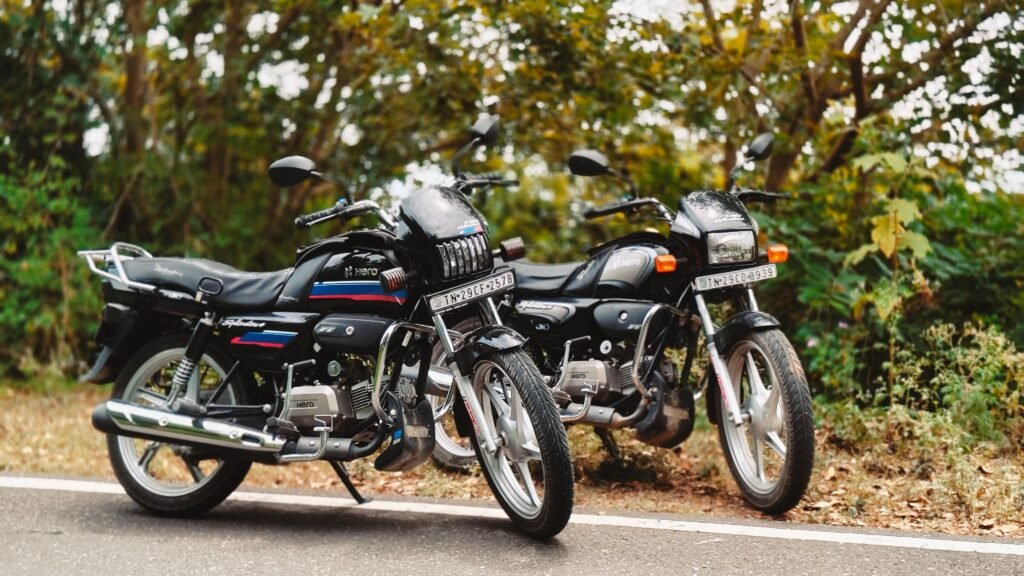
It was not even a fall. The Splendor was parked on its side stand on a slight incline outside a kirana shop, a delivery bag hooked on the handlebar pulling it just far enough that the stand gave way. The bike went down slowly, almost gently, onto the left side. The engine cover cracked. The indicator lens shattered. The handlebar end bent at an angle it was not supposed to reach. A paint scrape ran the full length of the fuel tank’s left panel.
Total repair bill: somewhere between ₹2,800 and ₹3,500, depending on the shop.
A crash guard costs between ₹400 and ₹1,800. It mounts to the frame, sticks out far enough that the bike rests on it rather than on the engine casing or the body panels when it tips over, and absorbs the contact that would otherwise go directly to the parts that are expensive to replace. On a Splendor, which is one of the most parked, most loaded, and most frequently toppled motorcycles in India, simply because of how many of them are on the road and how they are used, a crash guard is one of the more quietly sensible things you can add to the bike.
The market for Splendor crash guards in India runs from sheet metal guards welded at a roadside fabricator to proper steel tube guards from organised brands with proper mounting brackets. Knowing which type does what, and which one suits how and where the Splendor is used, is what this list is built around.
First, a Word About What a Crash Guard Actually Protects
A crash guard on a commuter like the Splendor is designed primarily to protect against one specific event: a slow-speed tip over. Not a high-speed crash, not a highway accident, but the ordinary fall that happens when the bike is parked on uneven ground, when it rolls forward off a centre stand, when a fully loaded carrier shifts the balance at a traffic stop, or when someone bumps the handlebars in a crowded parking area.
In a slow-speed tip-over, the energy involved is low, but it is directed exactly at the parts that sit lowest and outermost on the bike. The engine casing is on the left side. The exhaust pipe and its bracket. The footpeg and the frame section near it. The lower body panels. These are the parts a crash guard positions itself in front of, taking the contact so the costly parts behind it do not.
A crash guard is not a roll cage, and it is not rated to withstand impact at riding speed. At highway speeds, a crash guard changes how the bike slides and tumbles in ways that are hard to predict, and no manufacturer makes safety claims about high-speed crash performance for this type of product. The honest purpose is low-speed tip-over protection, and that is exactly the situation most Splendor owners will actually encounter.
1. Autofurnish Tubular Crash Guard: The Everyday Commuter’s Most Common Pick
Autofurnish is one of the most widely distributed motorcycle accessory brands in India across both e-commerce and local spare parts markets, and their tubular steel crash guard for the Splendor is probably the most commonly fitted aftermarket guard on this bike nationwide. The reason is not that it is the most engineered option on this list. It is available nearly everywhere, fits the Splendor’s frame mounting points without modification, comes with all the hardware needed for installation, and costs less than the parts it is protecting.
The guard uses round steel tubing bent into a profile that extends outward from the frame-mounted bracket far enough to contact the ground before the engine cover or body panels do when the bike tips. The mounting bracket is specific to the Splendor’s engine bolt positions rather than a universal clamp, which means it sits stable rather than slipping around the frame, the way universal clamp-on guards sometimes do.
It is not the heaviest gauge steel available, and the powder coat finish will eventually chip if the guard actually does its job. Both of these are acceptable trade-offs at this price point. The guard does not need to look good after a fall. It needs to prevent the parts behind it from needing replacement.
Pricing typically falls between ₹450 and ₹750.
Best for: Daily commuters and delivery riders who want basic tip-over protection at the lowest practical cost, particularly those who park the Splendor in busy areas where contact from other vehicles is a regular possibility.
2. Roots Steel Crash Guard for Splendor: The Better Build Quality Step Up
Roots is a brand that sits a step above the generic accessory market in terms of material quality and mounting precision, and the Splendor crash guard they produce reflects that. The steel tubing is a heavier gauge than the Autofurnish option, the bends are cleaner, and the mounting bracket is thicker and more precisely drilled for the Splendor’s engine bolt positions.
The practical difference this makes is longevity and fit. A heavier gauge guard deforms less in a tip over and protects the engine casing effectively, even after the first fall, rather than bending enough on the first contact that it needs replacement itself. A precisely drilled bracket that fits the engine bolts without play sits flat against the engine rather than developing a slight tilt that grows more pronounced over months of vibration.
The finish is a semi-gloss black powder coat that is more durable than the flat black used on many cheaper alternatives, though it will still chip eventually if the guard contacts the ground, which is the point of having it.
Pricing typically falls between ₹700 and ₹1,100.
Best for: Riders who want a guard that will protect the bike reliably across multiple tip-overs rather than needing replacement after the first one. Worth the extra cost over the Autofurnish option for anyone who parks the Splendor in locations where falls are more than an occasional possibility.
3. Saiga Parts Crash Guard With Footrest Extension: The Loaded Bike Pick
Saiga Parts produces Splendor accessories that address one specific use pattern the other brands on this list do not design for explicitly: the Splendor running as a daily load carrier, whether that is a delivery bike, a farmer’s bike in a rural area, or any Splendor regularly ridden with a passenger and a loaded rear carrier.
A loaded Splendor tips differently from an unloaded one. The rear weight means the centre of balance during a slow tip over is further back and lower, and the contact point when the bike goes down is often further along the frame than a front-mounted guard protects. The Saiga guard addresses this by extending further along the lower frame rail than most crash guards and adding a reinforced footpeg plate that protects the footpeg bracket area, which is a common contact point on a loaded tip-over.
The guard also comes with a slightly extended rider footrest as a combined accessory, which improves rider comfort on long, loaded runs and is a genuine practical addition on a bike used for rural or delivery riding.
Pricing typically falls between ₹900 and ₹1,400.
Best for: Splendors used as delivery bikes, daily load carriers, or any Splendor regularly ridden two-up with a loaded carrier, where the tip-over contact point is different from an unloaded commuter.
4. Steelbird or Vega Branded Crash Guard Sets: The Resale Value Pick
Several helmet and accessory brands, including Steelbird and Vega, sell branded crash guard sets for popular commuters, including the Splendor, positioned slightly above the generic market with quality control that is more consistent than unbranded alternatives on e-commerce platforms.
The specific advantage of going with an organised brand’s crash guard rather than a generic listing is consistency across units. A generic crash guard listing on Flipkart or Amazon may ship from multiple warehouses with varying quality control, so the guard one buyer receives may be built slightly better or worse than the one a different buyer gets for the same listing. A branded unit from Steelbird or Vega is more consistent between batches because the brand has reputational skin in the game.
They also tend to be better packaged with complete hardware rather than the occasional missing bolt or washer that plagues generic listings, for a rider who is installing the guard themselves rather than handing it to a mechanic, receiving the complete hardware set in the box matters.
Pricing typically falls between ₹600 and ₹1,000.
Best for: Riders who buy online and want more consistent quality than the generic listings offer, and who install accessories themselves, where missing hardware is a genuine inconvenience rather than something a mechanic works around.
5. Custom Fabricated Crash Guard From a Local Welder: The Heavy-Use Working Bike Option
This is not a product from a brand. It is a category of solution that exists across almost every town and city in India and is worth naming directly because, for a specific type of Splendor owner, it is the most practical answer available.
A local fabricator working in mild steel or square-section tube, given the bike to measure against, will build a crash guard that is heavier and more robust than anything available off a shelf. The material is thicker, the welds are broader, and the result is a guard that will absorb repeated falls on rough terrain without bending or needing replacement. For a Splendor used in agriculture, construction site access, or any rural context where the bike tips regularly on uneven ground and where a branded accessory shop is not nearby, a fabricated guard from the local welder is a legitimate and often excellent solution.
The trade-offs are weight and aesthetics. A fabricated guard is heavier than a branded tube guard, which adds to the bike’s already reasonable weight. The finish is whatever paint the welder applies, which rarely matches the bike’s look. And the mounting, while often robust, may not use the engine bolt positions a purpose-built bracket would use, relying instead on frame clamps that should be checked periodically for tightness.
Fabrication cost typically falls between ₹400 and ₹800, depending on the complexity and the local rate for labour and material.
Best for: Splendors used in agriculture, rural delivery, or any heavy working context where the bike tips regularly on uneven terrain, and durability over aesthetics is the only criterion that matters.
How to Actually Choose
If the Splendor is a city commuter parked in a busy neighbourhood and the main concern is the occasional tip over from uneven parking or heavy traffic, the Autofurnish or Roots guard covers the need well. The Roots guard is worth the extra few hundred rupees if the bike is parked on inclines regularly or in an area where contact from other vehicles is frequent.
If the bike runs loaded daily as a delivery or load carrier, the Saiga guard’s extended frame coverage and footpeg protection address the specific fall geometry of a loaded Splendor better than a standard front-only guard.
If the purchase is being made online and consistent hardware quality matters for a self-installation, the Steelbird or Vega-branded options offer more reliable packaging and quality control than the generic listings in the same price range.
If the Splendor is a working rural or agricultural bike that tips regularly on rough ground and needs a guard that survives multiple falls without bending out of the way, a locally fabricated guard in heavy mild steel is often the most practical answer, regardless of what any online listing offers.
What a Crash Guard Cannot Fix
A crash guard changes where the contact happens when a bike falls. It does not change the fact that the bike fell, and it does not protect every part of the bike equally.
The handlebar end, the indicator lens, and the mirror are all above and outside the protection radius of most crash guards and will still make contact in a fall. Handlebar end weights or bar end sliders, which are separate accessories, protect the handlebar end specifically. Indicator guard cages protect the indicator lenses. A crash guard alone does not address these.
A crash guard adds weight to the front of the bike, typically between 600 grams and 1.5 kg, depending on the gauge and design. On a Splendor, this is not significant to the riding feel, but it is worth knowing that the bike’s already moderate front weight increases slightly.
A guard that is bent out of position by a previous fall and not corrected or replaced stops doing its job. After any tip-over where the guard has contacted the ground, check that it still sits in the correct position and that the mounting bolts are fully tight. A bent guard that has rotated inward may contact the engine casing rather than protecting it.
Finally, a crash guard does not prevent falls. Parking habits, terrain choice, and side stand surface awareness prevent falls more than any guard does. On soft ground, carrying a side stand pad, which is a flat plate placed under the stand to prevent it from sinking, prevents the most common cause of a parked Splendor going down.
Frequently Asked Questions
Q1: Does fitting a crash guard void the Hero warranty on a Splendor?
Installing aftermarket accessories that use existing engine bolt positions as mounting points is a grey area under standard warranty terms. In practice, Hero service centres across India see crash guards on Splendors constantly and do not refuse service on that basis alone. If a specific component fails and the guard is argued to be related to that failure, it becomes more complicated. For most routine warranty service, it is not an issue.
Q2: Can I install a crash guard myself, or do I need a mechanic?
Most tube crash guards designed for the Splendor use the engine mounting bolts as anchor points. The installation involves removing those bolts, placing the mounting bracket behind them, and re-tightening them to the correct torque. It requires a socket set and basic mechanical familiarity. Most local mechanics will do it during a service visit for a small labour charge of ₹100 to ₹200 if self-installation is not preferred.
Q3: Will a crash guard affect the Splendor’s ground clearance?
A correctly fitted crash guard on the Splendor does not reduce ground clearance in any meaningful way. The guard extends outward and slightly forward from the engine mounting point rather than downward, so the lowest point of the bike remains the engine sump and the footpegs, not the guard. A poorly fitted or universal clamp guard that hangs lower than the design intends is worth checking after installation.
Q4: How long does a crash guard last on a Splendor used daily?
A steel tube guard used on a daily commuter that does not experience falls can last the lifetime of the bike with no maintenance beyond occasional cleaning. A guard that has absorbed a tip-over may have bent slightly at the impact point. Checking it after any fall and replacing it if it has deformed out of the protective position is the only maintenance the guard needs.
Q5: Does a crash guard on a Splendor protect the exhaust pipe?
Most crash guards for the Splendor are fitted on the left side of the engine, which is the side that carries the engine casing and the lower body panel. The exhaust and exhaust bracket sit on the right side of the bike and are not protected by a standard left-side crash guard. A right-side guard or an engine protector wrap around the exhaust bracket addresses the right-side vulnerability separately.
Final Thoughts
Go back to that slow fall outside the kirana shop. The bag on the handlebar, the slight incline, the side stand giving way. A crash guard does not stop that from happening. What it does is change what the ground contacts when it does.
The engine cover that cracked, the indicator that shattered, the handlebar end that bent, and the paint scrape along the tank panel. Four repair items adding up to a bill between ₹2,800 and ₹3,500 for a fall that lasted less than two seconds and happened at zero kilometres per hour.
A crash guard on the left side of that bike would have taken the ground contact instead. It would probably have a small scrape on its powder coat. The repairs behind it would not have happened.
That is the entire case for a crash guard on a Splendor. It costs less than one repair bill, fits in an afternoon, and sits there doing nothing for years at a stretch until the one moment it earns its place and saves you the trip to the spare parts market.

My work focuses on finding the human stories behind the headlines, from documenting unique cultural traditions to covering stories from communities across Bengal. Previously, I worked as an SEO Content Writer with Penning Down and Collegedunia, combining digital content expertise with newsroom journalism.
I believe impactful journalism is built on accuracy, empathy, and stories that stay with readers.
- Cocoa Butter Formula, Body Massage Lotion for Stretch Marks - April 9, 2016
- Ultra-calming makeup removing wipes - April 9, 2016
- Eczema therapy hand cream - April 9, 2016
Blog Insights
View All CouponTalk Blogs
12 Best LED Lighting Brands In India

10 Best Water Pump Brands In India
10 Best RO Membrane Brands In India

10 Best Electric Wire Brands In India

10 Best Electric Pressure Cooker Brands In India

10 Best Air Fryer Brands In India



10 Best Pliers Brands In India
10 Best Car Bass Tube Brands In India