3 Types of Solar Systems: On-Grid vs Off-Grid vs Hybrid

Every discussion about transitioning to solar energy ultimately leads to the same critical decision point. Not which brand of panels to choose, not which installer to trust, but a more fundamental question: what type of solar system do you truly envision for your needs of solar system do you actually want?
It is a question most buyers are not fully prepared for when it comes up, because the three main options, on-grid, off-grid, and hybrid, sound like variations on the same thing but are fundamentally different in how they work, what they cost, and what they actually do for a household when the sun goes down or the grid goes dark.
Getting this choice right before signing anything is the most important single decision in a solar installation. Here is a clear, complete explanation of all three.
First, let’s discuss the one thing that all three types of solar systems share.
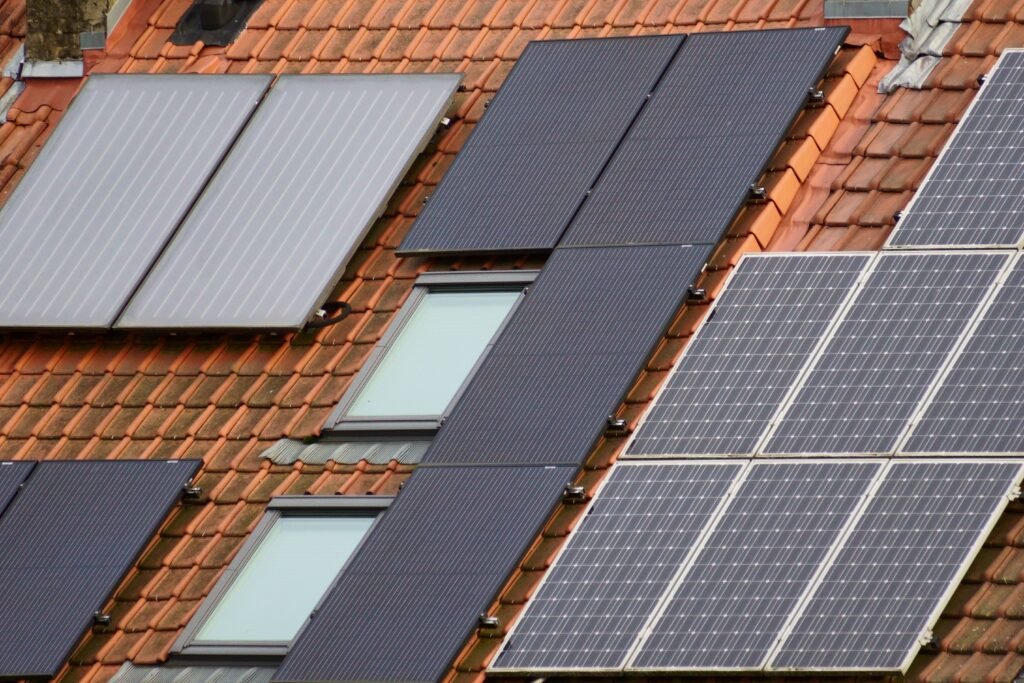
Before separating them, here is what every solar system type has in common. All three start with solar panels on the rooftop capturing sunlight and converting it to DC electricity. All three use an inverter of some kind to convert that DC into usable AC power. And all three reduce reliance on conventionally generated electricity to some degree.
The differences lie in what happens to the electricity after it is generated, how the system handles the absence of sunlight, and what relationship the installation maintains with the electricity grid.
1. On-Grid Solar System: The Bill-Reducer
An on-grid solar system, also called a grid-tied system, is the simplest and most common type installed in Indian homes today. It connects directly to the electricity grid and works in a continuous relationship with it: when the panels are generating more electricity than the household is consuming, the excess is exported to the grid. When the panels are not generating enough, the shortfall is drawn from the grid automatically, as it always was before solar was installed.
There is no battery in an on-grid system. Every unit of solar power not immediately consumed in the home goes straight to the grid, and the household’s electricity bill is reduced, sometimes dramatically, through net metering, where the utility credits the account for exported power and offsets it against units drawn from the grid.
This simplicity is OnGrid’s greatest strength. Without battery storage, the system has fewer components, lower upfront cost, and less ongoing maintenance than either of the other two types. For a household in an area with a reliable electricity grid where the primary goal is reducing monthly bills and maximizing the return on a solar investment, on-grid delivers the fastest payback period and the cleanest financial case.
The limitation is equally straightforward: an on-grid system goes completely dark during a power outage. This is not a design flaw but a mandatory safety feature called anti-islanding protection, which prevents the system from feeding power into grid lines while utility workers may be working on them. Without battery storage, there is nothing to keep the lights on when the grid fails, which means an on-grid system provides no backup power whatsoever.
For Indian households in areas with a stable, reliable grid and infrequent power cuts, this tradeoff is entirely acceptable. For households that experience frequent or prolonged outages, it is a significant gap that the other two system types address directly.
Suits: Urban and suburban homes with reliable grid supply; buyers whose primary goal is reducing electricity bills and achieving the fastest investment payback; installations in states with active net metering policies and favorable solar tariffs.
2. Off-Grid Solar System: The Independent Alternative
An off-grid solar system operates with no connection to the electricity grid at all. It generates power from the panels, stores it in a battery bank, and draws from that battery bank whenever the household needs electricity, whether the sun is shining or not. The system is entirely self-contained, and its performance depends entirely on how well the panels and battery bank are sized to meet the household’s actual daily consumption, including through nights, cloudy days, and consecutive days of poor sunlight.
This independence is off-grid’s defining characteristic and its most significant cost driver. The battery bank must be sufficiently large to meet the household’s total consumption during periods of inadequate solar generation, which typically necessitates sizing for at least one to three days of reserve consumption, depending on local weather patterns, due to the absence of a grid to rely on. That battery requirement adds substantially to both the upfront system cost and the long-term maintenance cost, since batteries have a finite lifespan and require replacement during the system’s operating life.
Off-grid systems are the right choice for locations where a grid connection is unavailable, impractical, or prohibitively expensive to establish, such as remote farmhouses, isolated rural properties, or installations far from existing electricity infrastructure. They are also the appropriate choice for anyone who genuinely wants to be fully independent of the utility grid regardless of grid availability, though this combination of motivation and location is less common in typical urban or suburban Indian contexts.
The tradeoff for independence is cost and complexity. An off-grid system for a household with typical Indian electricity consumption is considerably pricier than an equivalent on-grid system due to the battery requirement, and the system demands more active management of consumption to avoid depleting the battery bank during extended low-sunlight periods.
Suits: Remote properties without grid access, rural installations where grid connectivity is unavailable or unreliable, buyers who genuinely require complete independence from the electricity utility, and off-grid applications such as agricultural pump systems and telecom towers far from grid infrastructure.
3. Hybrid Solar System: The Best-of-Both Approach
A hybrid solar system is connected to the electricity grid like an on-grid system while also incorporating battery storage like an off-grid system. This combination allows it to use solar power when available, store excess generation in batteries rather than sending it all to the grid, draw from batteries when solar generation drops in the evening or on cloudy days, and fall back on grid power only when both solar and battery reserves are insufficient.
The practical result is a system that reduces electricity bills like an on-grid installation while also providing backup power during outages like a battery-equipped system. During a grid failure, a hybrid system with batteries switches to battery power within milliseconds, keeping essential household loads running without interruption until grid power is restored or solar generation resumes.
This combination of bill reduction and backup power is precisely why hybrid systems are the fastest-growing segment of the Indian residential solar market. For a country where power outages remain a reality in many areas and where the cost of grid electricity continues to rise, the hybrid system resolves the single biggest limitation of the standard on-grid installation without requiring the full battery bank sizing and complexity of a true off-grid system.
The hybrid approach does cost more than a straightforward on-grid installation, since the battery storage and more sophisticated hybrid inverter add to both the upfront and maintenance expenses. The battery is typically sized to cover essential loads for the duration of a typical outage rather than the household’s full consumption for multiple days, which keeps costs more manageable than a full off-grid setup while still providing meaningful backup capability.
Most hybrid systems in India also remain eligible for net metering, allowing excess solar generation to be exported to the grid and credited against future bills, just as an on-grid system would, while the battery handles short-term storage for evening use and outage protection.
Suits: Homes in areas with occasional but meaningful power outages, households that want both reduced electricity bills and reliable backup power, buyers who plan to add battery storage as part of their initial installation rather than retrofitting later, and anyone who wants the flexibility of grid connection alongside the security of local storage.
Comparison of the Three Types Based on Key Factors
Grid connection: On-grid requires it and depends on it entirely. Off-grid has none. Hybrid maintains a connection while also functioning independently during outages.
- Battery storage: On-grid has none. Off-grid has a full, heavily sized battery bank as the backbone of the system. Hybrid has a moderate battery bank sized for backup and evening use rather than full multi-day independence.
- Performance during power outages: On-grid goes dark. Off-grid is unaffected since it never depended on the grid. Hybrid continues supplying essential loads from battery storage until either grid power returns or solar generation resumes.
- Upfront cost: On-grid is the lowest since there is no battery. Off-grid is the highest due to the full battery bank requirement. Hybrid sits in between, with cost varying based on how much battery capacity is included.
- Net metering eligibility: On-grid is fully eligible in states with active net metering policies. Off-grid systems are generally ineligible because they lack a grid connection for exporting power. Hybrid is typically eligible for the grid-connected portion of its operation.
- Government subsidy eligibility: On-grid installations are the primary category covered by central and state subsidy schemes, including PM Surya Ghar. Hybrid systems are generally eligible for the panel and inverter portion of the subsidy, though battery costs are typically excluded. Off-grid systems have limited or no subsidy access in most Indian states.
Frequently Asked Questions
Q1: Which solar system type is most commonly installed in Indian homes?
On-grid systems are the most commonly installed type in Indian urban and suburban homes, primarily because they offer the lowest upfront cost, fastest payback period, and full eligibility for government subsidies and net metering incentives.
Q2: Can I convert an on-grid system to hybrid later if I want to add batteries?
In many cases, you can convert an on-grid system to a hybrid system, but this typically requires replacing the standard string inverter with a hybrid inverter and adding a battery bank, as standard on-grid inverters lack battery management capability. Checking hybrid inverter compatibility with your existing system before installation is worth doing if future battery addition is a possibility you want to keep open.
Q3: Is an off-grid solar system a viable choice for a city home in India?
Generally not. Off-grid systems work best in places where there is no grid access. For a city home with an existing grid connection, the higher cost of off-grid, combined with the loss of net metering benefits and government subsidies, typically makes on-grid or hybrid a significantly better financial decision.
Q4: How much battery storage does a hybrid system typically include?
For a typical Indian residential hybrid installation, battery storage is usually sized to cover essential loads, lighting, fans, the refrigerator, and Wi-Fi for four to eight hours of typical outage duration rather than the household’s full daily consumption. Larger battery banks are available but add proportionally to the system cost.
Q5: Which type of solar system qualifies for the PM Surya Ghar subsidy?
The PM Surya Ghar scheme primarily supports on-grid, grid-connected residential solar installations. Hybrid systems may qualify for the panel and inverter portion of the subsidy in many cases. Off-grid systems are generally not eligible. Subsidy terms can change, so verifying current eligibility with your state’s nodal solar agency before purchasing is always recommended.
There are three types of systems, each providing a different answer to the question of what solar power should actually do for a household. On-grid reduces the bill. Off-grid eliminates the dependency. Hybrid does both, at a price that reflects that ambition. Which one is right depends not on which sounds most impressive but on where you live, how reliable your grid is, and what you actually need solar to deliver on the days when the sun is not cooperating.

My work focuses on finding the human stories behind the headlines, from documenting unique cultural traditions to covering stories from communities across Bengal. Previously, I worked as an SEO Content Writer with Penning Down and Collegedunia, combining digital content expertise with newsroom journalism.
I believe impactful journalism is built on accuracy, empathy, and stories that stay with readers.
- Cocoa Butter Formula, Body Massage Lotion for Stretch Marks - April 9, 2016
- Ultra-calming makeup removing wipes - April 9, 2016
- Eczema therapy hand cream - April 9, 2016
Blog Insights
View All CouponTalk Blogs
12 Best LED Lighting Brands In India

10 Best Water Pump Brands In India

10 Best RO Membrane Brands In India

10 Best Electric Wire Brands In India

10 Best Electric Pressure Cooker Brands In India

10 Best Air Fryer Brands In India



8 Best SandPaper Brands In India

10 Best Floor Cleaning Mop Brands In India

10 Best Kitchen Faucet Brands In India
5 Best Solar Panel Brands In India