Best 5 Solar Power Banks Reviewed: 10000mAh and Above in India

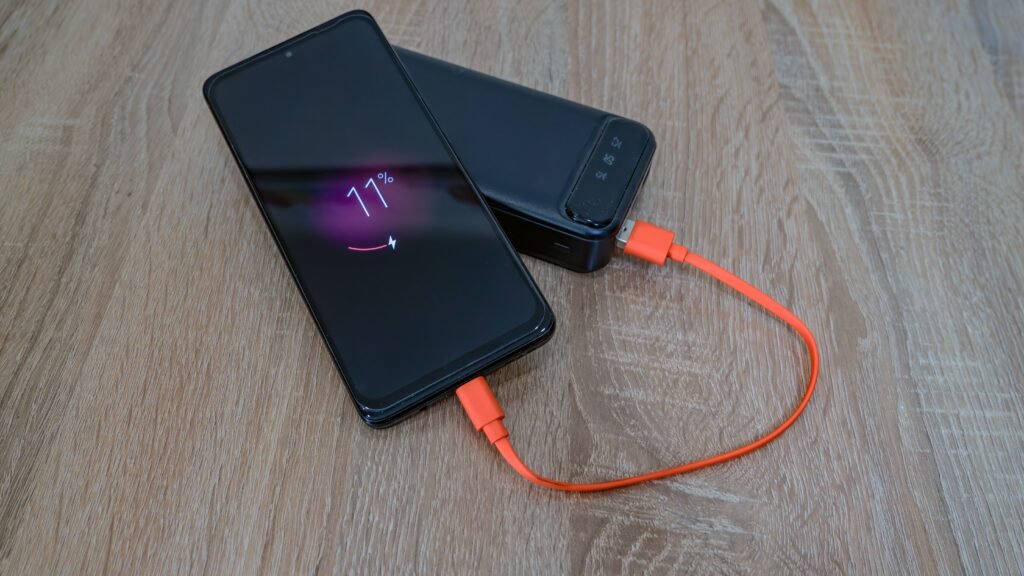
A trekker heading into the Chopta valley buys a solar power bank before the trip specifically to stay charged without carrying extra batteries. Three days in, he has learned something the product listing did not explain clearly. The solar panel on the back of the power bank, in full direct Himalayan sunlight, adds roughly 200 to 300 milliamperes of charging current per hour. His phone pulls 2000 milliamperes when fast charging. At that rate, eight to ten hours of direct sun exposure adds one partial phone charge. Not one full charge per day. One partial charge across a full day of sun.
This is not a defect. It is physics, and it applies to every solar power bank on the market at every price point. The solar panel on a power bank is the size of a playing card. A playing card-sized solar panel generates playing card-sized amounts of power. Solar power banks are genuine and useful products, but the solar panel is a supplement to a stored battery, not a replacement for a wall charger.
The buyers who get full value from a solar power bank are the ones who understand this before buying. They charge the battery fully at home before any trip, use the solar input to recover some of what they spend during the day, and arrive at camp with more charge remaining than they would have had without the panel. They do not expect to start each morning at zero and end at full from sunshine alone.
With that foundation in place, here is an honest look at the five best solar power banks above 10000mAh available in India, what each one does well, and who each one actually suits.
First, a Word About Solar Charging Numbers and What They Mean
Every solar power bank sold in India lists a panel wattage or a charging current rating somewhere in the specifications. Understanding what those numbers mean in practice separates the useful ones from the disappointing ones before any money changes hands.
A 1-watt solar panel in ideal conditions, which means direct sunlight at the correct angle with no cloud cover and a panel that is not overheated, generates roughly 200 to 250 milliamperes at 5 volts. A 2-watt panel generates twice that. A 10000mAh power bank depleted to zero would need approximately 40 to 50 hours of direct optimal sunlight from a 1-watt panel to charge fully. In real Indian conditions, where the panel sits at an imperfect angle, heats up and loses efficiency, and deals with haze and intermittent cloud, the actual recovery rate is lower than the theoretical maximum.
This does not make solar power banks useless. It makes them most useful as slow top-up devices for people who spend long hours outdoors and as emergency backup input for situations where no wall socket will be available for several days.
The products that earn their place on this list do so primarily on battery quality, build durability, and the additional features that make them genuinely useful off-grid, with the solar panel treated as what it is: a useful slow supplement, not a primary charging source.
1. Goertek Solar Power Bank 20000mAh: The Outdoor Trekker’s Workhorse
Goertek has built a following among Indian outdoor enthusiasts for producing power banks that are honest about their solar limitations while delivering good quality on the battery side, which is the part that actually does most of the work.
The 20000mAh capacity is the right starting point for anyone using this as a primary off-grid power source for multiple days. At 20000mAh, the bank holds enough charge to fully charge most smartphones four to five times before the solar input becomes the only source, which gives a realistic buffer before the panel’s slow recovery rate becomes the bottleneck.
The build is IP65 rated for dust and water resistance, which matters on a trek more than almost any other specification. An IP65 power bank survives a rain shower without special protection. A non-rated bank in the same rain shower requires being packed away, which is exactly when the phone most needs charging because the weather is changing and the maps are out.
The dual USB-A output ports handle two devices simultaneously, and the 10-watt wall charging input means it fills up fully overnight before any trip without needing to be plugged in for twelve hours.
The solar panel generates approximately 1.5 watts in ideal conditions, which is realistic about its contribution.
Pricing typically falls between ₹1,800 and ₹2,600.
Best for: Multi-day trekkers in the Himalayas, Western Ghats, and Northeast India who want a genuinely durable bank with enough stored capacity to power through the days when cloud cover makes solar input negligible.
2. Ambrane Solar Power Bank 15000mAh: The Budget Indian Brand Pick
Ambrane is one of the most recognized Indian power bank brands, with a service network and availability footprint that most imported brands cannot match. The solar power bank in their lineup at 15000 mAh sits at a price point that makes it the most accessible option on this list without cutting corners on battery quality in the way the cheapest unbranded alternatives do.
The bank outputs at 2.4 amperes on each USB-A port, which is fast enough for most devices even if it is not a fast-charging standard. The solar panel is a 1-watt unit that functions as a slow trickle input during outdoor use. Ambrane does not oversell the solar charging speed, which is a mark in their favor compared to brands whose marketing implies the solar panel is a primary charging method.
The build is not IP-rated, which is its clearest limitation. For city use, weekend camping on established sites, and travel where the bank is generally protected from direct rain, this is acceptable. For serious trekking in monsoon conditions, the lack of waterproofing is a genuine concern.
After-sales service through Ambrane’s India-wide service network is one of the strongest practical advantages this bank has over imported alternatives, particularly for buyers in smaller cities where returning an imported product is a logistical complication.
Pricing typically falls between ₹1,200 and ₹1,800.
Best for: Buyers who want a reliable solar power bank from an Indian brand with accessible service support, for use in moderate outdoor conditions rather than extreme weather or multi-day remote trekking.
3. BLAUPUNKT Solar Power Bank 10000mAh With USB-C: The Modern Connectivity Pick
Most solar power banks in the Indian market lag behind current charging standards by prioritizing the older USB-A format, while USB-C has become the dominant connector on phones, tablets, and earbuds across all price segments. The BLAUPUNKT solar bank addresses this by including a USB-C port that handles both input and output, which means it can be charged from a USB-C laptop charger and it can charge a modern USB-C phone without an adapter.
At 10000mAh it is the smallest capacity on this list, which makes it the most pocketable and the lightest option here. The trade-off is that it holds fewer charges before the solar panel becomes the limiting factor rather than the battery. For a one-night camp or a long day hike where two phone charges are sufficient, 10000mAh is adequate. For a three-day trek with no wall power, it is tight.
The solar panel is rated at 1 watt. The build includes a rubberized outer shell that handles drops and minor weather exposure reasonably well without carrying a full IP rating.
Pricing typically falls between ₹1,500 and ₹2,200.
Best for: Riders, hikers, and travelers who have already moved fully to USB-C devices and need a solar bank that connects without adapters and for whom the smaller form factor and lighter weight matter more than maximum stored capacity.
4. Hiluckey Solar Charger 25000 mAh: The Maximum Capacity Pick
Hiluckey is a brand that has built a strong presence in the Indian e-commerce market by focusing specifically on high-capacity solar power banks, and the 25000 mAh unit is the largest capacity product on this list.
At 25000 mAh, the bank holds enough charge to fully top up most smartphones five to six times from a full start, which provides a meaningful buffer across four to five days of moderate use before the solar panel needs to have made any meaningful contribution at all. For a long trek, a remote photography assignment, or a camping trip with multiple devices to keep charged, the larger capacity reduces the anxiety around solar input being too slow.
The bank includes four solar panels rather than one, which increases the total solar collection area and raises the practical solar input to approximately 2 to 2.5 watts in good conditions. This does not transform the solar charging speed into something dramatic, but it does mean the daily solar recovery is roughly double what a single-panel unit collects, which adds up over a five-day trip in a meaningful way.
The IP65 waterproof and dustproof rating, the LED torch built into the unit, and the dual USB-A plus USB-C output make it a genuine field device rather than a slightly ruggedized city power bank with a solar sticker on the back.
The weight and size are the honest trade-offs. At around 530 grams, it is the heaviest option on this list, and it does not fit into a jeans pocket. For a trekker carrying a proper backpack, this is manageable. For someone who wants a portable charger for daily carry, it is too large.
Pricing typically falls between ₹2,500 and ₹3,800.
Best for: Extended off-grid trips of four days or more where maximum stored capacity and the largest solar collection area on this list combine to produce the best practical daily charging outcome. Serious trekkers, wildlife photographers, and overlanding riders who need to manage multiple devices for five or more days.
5. Realme or Mi Solar Power Bank 10000mAh (When Available): The Ecosystem Pick
Both Realme and Xiaomi have at various points released solar power bank variants in India through their standard retail channels, and when these are available, they offer one specific advantage that purpose-built outdoor brands cannot match: seamless integration with the fast-charging standards used by their own phones.
A Realme solar bank used with a Realme phone, or an Mi bank used with a Redmi or Xiaomi phone, delivers the proprietary fast-charging rate that the wall charger delivers rather than the standard 10-watt or 18-watt output that third-party banks default to. For a buyer whose phone is from one of these ecosystems and who wants the fastest possible charging from stored capacity, the ecosystem-matched bank is the practical choice.
The solar panel on both is a modest 1-watt unit treated correctly as a slow supplemental input. The build quality matches what these brands produce in their standard power bank lines, which is good for the price without being rugged or waterproofed for serious outdoor use.
Availability is the honest caveat. Both brands cycle these products in and out of their lineup, and stock is not always consistent. Checking current availability before planning a purchase around this option is necessary.
Pricing typically falls between ₹1,400 and ₹2,000 when available.
Best for: Buyers heavily invested in the Realme or Xiaomi phone ecosystem who want fast-charging compatibility from stored capacity and are comfortable with the solar panel as a slow background supplement rather than a meaningful primary input.
How to Actually Choose Between These
If the bank is going on a multi-day trek in the mountains or anywhere with no wall power for three or more days, the Hiluckey 25000mAh is the most capable option on this list for that specific use case. The larger capacity and the four-panel solar array both earn their place across a long trip.
If the budget is the primary constraint and the use is moderate outdoor activity rather than serious remote trekking, the Ambrane 15000mAh covers most of what a casual camper or road tripper needs from an Indian brand with accessible after-sales support.
If USB-C connectivity is a non-negotiable requirement and the weight and size of larger banks are a genuine concern, the BLAUPUNKT 10000 mAh is the right trade-off between modern connectivity and a manageable form factor.
If the solar bank is going on serious outdoor expeditions where rain, dust, and drops are guaranteed rather than occasional, the IP65 rating on the Goertek or the Hiluckey is not a nice-to-have. It is the specification that determines whether the bank works at the end of a wet day in the field.
If the phone is a Realme or Xiaomi device and fast-charging from stored capacity is the priority, check current stock on the ecosystem-matched option before defaulting to a third-party alternative.
What a Solar Power Bank Cannot Replace
The solar panel on any power bank in this category cannot replace a wall charger for primary charging. Starting a multi-day trip with a depleted bank and expecting the solar panel to keep up with normal daily phone use will produce disappointment every time.
The correct use pattern is: charge fully at home before the trip, use stored capacity first, let the solar panel recover what it can during daylight hours outdoors, and arrive at any available wall socket with more remaining capacity than you would have had without the panel. The panel is a buffer extender, not a primary source.
Leaving a solar power bank on a motorcycle luggage rack or dashboard in full sun to charge while riding does not produce efficient solar input because the vibration and the angle changes during riding prevent the panel from maintaining optimal sun exposure. The panel works best when the bank is stationary and deliberately angled toward the sun.
Heat reduces solar panel efficiency rather than improving it. A solar panel left in direct sun for hours in Indian summer conditions will heat up to the point where its output drops below what it would produce at a cooler temperature. Positioning the bank where it receives sunlight but stays cooler, such as in partial shade with only the panel face exposed, produces better output than leaving it flat on a hot rock.
Finally, no solar panel coating on a production power bank is scratch-proof. The tempered glass or plastic over most solar panels scratches easily if packed loose against other gear. Keeping the bank in a small cloth pouch inside the bag rather than loose in a main compartment keeps the panel surface clean and unscratched, which matters because scratches reduce the light that reaches the photovoltaic cells beneath.
Frequently Asked Questions
Q1: Can a solar power bank fully charge a phone using only sunlight, without any stored battery?
Technically yes, but practically it takes far too long to be useful. A 1-watt solar panel in ideal conditions generates 200 milliamperes of current. A typical smartphone battery is 4000 to 5000mAh. Direct solar-to-phone charging without using the bank’s stored battery would take 20 to 25 hours of ideal sunlight, which is not a realistic scenario. Always use the stored battery capacity as the primary source and the solar panel as a slow recovery supplement.
Q2: How do I get the most out of the solar panel during outdoor use?
Clip or strap the bank to the outside of a backpack so the solar panel faces the sky during the walk. This is the most practical way to accumulate solar input over a full day of hiking without stopping to hold the bank at a specific angle. Most solar power banks with carabiner clips or attachment loops are designed specifically for this use pattern.
Q3: Do solar power banks work on cloudy days or during the Indian monsoon?
Yes, but at significantly reduced output. Cloud cover typically reduces solar panel output by 70 to 80 percent compared to clear-sky conditions. During heavy monsoon cloud cover, the practical solar input on any bank in this category drops to a level that takes days to add a meaningful amount of charge. In monsoon conditions, the stored battery capacity is what matters, not the solar panel.
Q4: Is IP65 waterproofing necessary for a solar power bank?
For use in rain, near rivers or waterfalls, or in humid outdoor conditions where the bank may get wet, IP65 or equivalent waterproofing is worth having rather than relying on careful handling. For city use and dry-weather camping on established sites, a non-rated bank kept in a bag during rain is adequate. The IP rating becomes important when the bank needs to stay accessible and usable in wet conditions rather than packed away.
Q5: Can a solar power bank charge a laptop?
Not from any of the banks on this list. Laptops require significantly more power than a smartphone power bank at any capacity in this category can deliver through a USB port. Laptop charging from a portable bank requires a high-capacity bank with a dedicated laptop output rated at 45 watts or above, which is a separate product category from the solar power banks reviewed here.
Final Thoughts
Go back to the trekker in the Chopta valley. Three days in, he understands something that would have been useful to know before the trip. The solar panel is not the product. The battery is the product. The solar panel is a slow, patient, occasionally useful bonus that works best when the battery underneath it is already doing its job.
He still has enough charge to finish the trip comfortably, because the bank he brought had 20000 mAh stored before he left home, and the panel has been quietly adding to it all afternoon while it clips to his pack strap. He arrives at camp with more remaining than he expected.
That is the experience a good solar power bank actually delivers. Not independence from wall chargers. Not infinite charge from sunlight. Just a little more runway at the end of the day than a standard power bank would have left him with.
That is worth paying for. It is worth understanding correctly before you do.

My work focuses on finding the human stories behind the headlines, from documenting unique cultural traditions to covering stories from communities across Bengal. Previously, I worked as an SEO Content Writer with Penning Down and Collegedunia, combining digital content expertise with newsroom journalism.
I believe impactful journalism is built on accuracy, empathy, and stories that stay with readers.
- Cocoa Butter Formula, Body Massage Lotion for Stretch Marks - April 9, 2016
- Ultra-calming makeup removing wipes - April 9, 2016
- Eczema therapy hand cream - April 9, 2016
Blog Insights
View All CouponTalk Blogs
12 Best LED Lighting Brands In India

10 Best Water Pump Brands In India

10 Best RO Membrane Brands In India

10 Best Electric Wire Brands In India

10 Best Electric Pressure Cooker Brands In India

10 Best Air Fryer Brands In India




10 Best Wall Primer Brands In India


10 Best Ro Booster Pump Brands In India